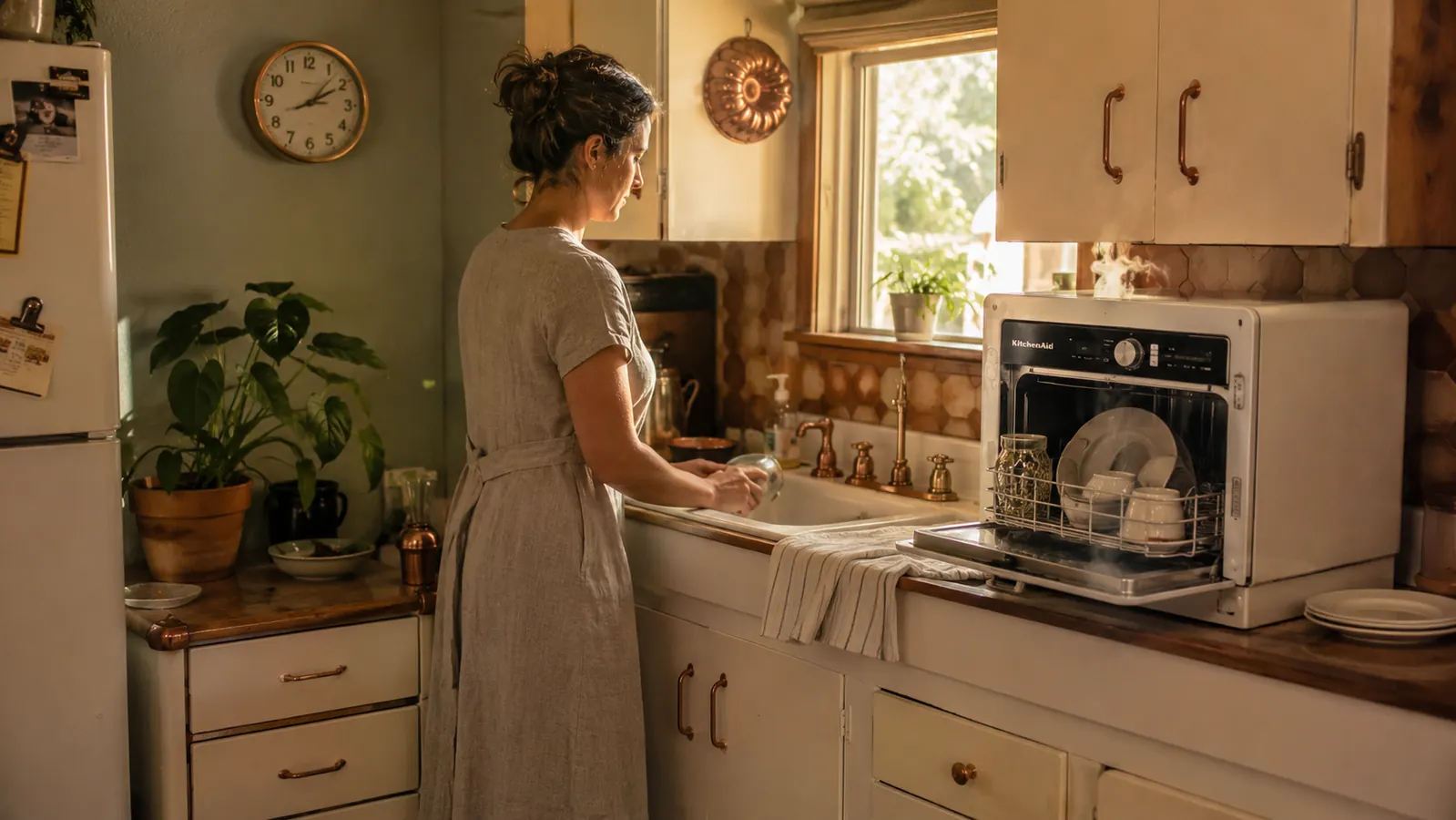
Six months ago I had a counter full of soaking pots, a husband who insisted rinsing was basically washing, and a kitchen in a 1962 Tucson house that was never plumbed for a dishwasher. I ran a cafeteria line for thirty years, feeding 600 kids a day on industrial three-compartment sinks, and I still couldn't keep up with the dishes for two people. That's when I bought the COMFEE' Portable Countertop Dishwasher, the 6-place-setting model with the eight wash programs, and set it on the counter right next to my sink.
I want to be upfront: I almost sent it back twice in the first two weeks. It's smaller than my old cafeteria equipment by about a thousand times, obviously, and it took some trial and error to figure out which programs actually worked with Tucson's hard water. But six months and roughly 170 loads later, this COMFEE' unit has earned a permanent spot on my counter, right next to the coffee maker Manny refuses to unplug.
The Quick Verdict
A genuinely useful fix for a kitchen with no dishwasher hookup, as long as you're willing to manage hard water buildup and don't need it to handle more than two people's daily dishes.
Amazon Check Today's Price →Tired of Soaking Pots Because Your Kitchen Was Never Plumbed for a Dishwasher?
The COMFEE' countertop dishwasher hooks to your faucet in minutes, no installation and no landlord permission needed. Here's what six months of daily Tucson use taught me.
Amazon Check Today's Price on Amazon →How I've Used It
My kitchen is roughly 9 feet by 11 feet, original 1962 layout, single basin sink, zero dishwasher rough-in anywhere in the wall. When my last kid moved out and it was just me and Manny, I decided I was done hand washing every plate two and three times a day. I researched countertop units for about three weeks before landing on the COMFEE', mostly because the 6-place-setting capacity matched what two adults actually generate and the faucet adapter kit looked like it would fit my older Delta fixture without hiring a plumber.
Setup took me about 25 minutes, most of that spent figuring out which of the three included adapters actually fit my faucet threading. Once it was hooked up, I ran an empty cycle with the included test strips just like the manual said, mostly out of thirty years of institutional habit where you always test equipment before it touches food-service dishes. It passed clean the first time.
For six months now, I've run the COMFEE' almost every night after dinner, usually the Speed program on weeknights and the full Hi-Temp Wash on Sundays when I've got greasy roasting pans from a bigger family meal. I've also used the Baby-Care program a handful of times when my daughter visits with my grandson and leaves his bottles and sippy cups behind on my counter.
I keep a small notebook by the stove where I jot down anything odd, a habit left over from tracking equipment temperatures on the cafeteria line. Six months of notes on the COMFEE' show almost nothing unusual after the first month, aside from two occasions where I overloaded the top rack with mismatched mugs and got a cycle that finished with water pooled in a coffee cup lid. That's on me, not the machine, but it's the kind of thing I wish the manual had warned me about more clearly.
What's Actually in the Eight Wash Programs
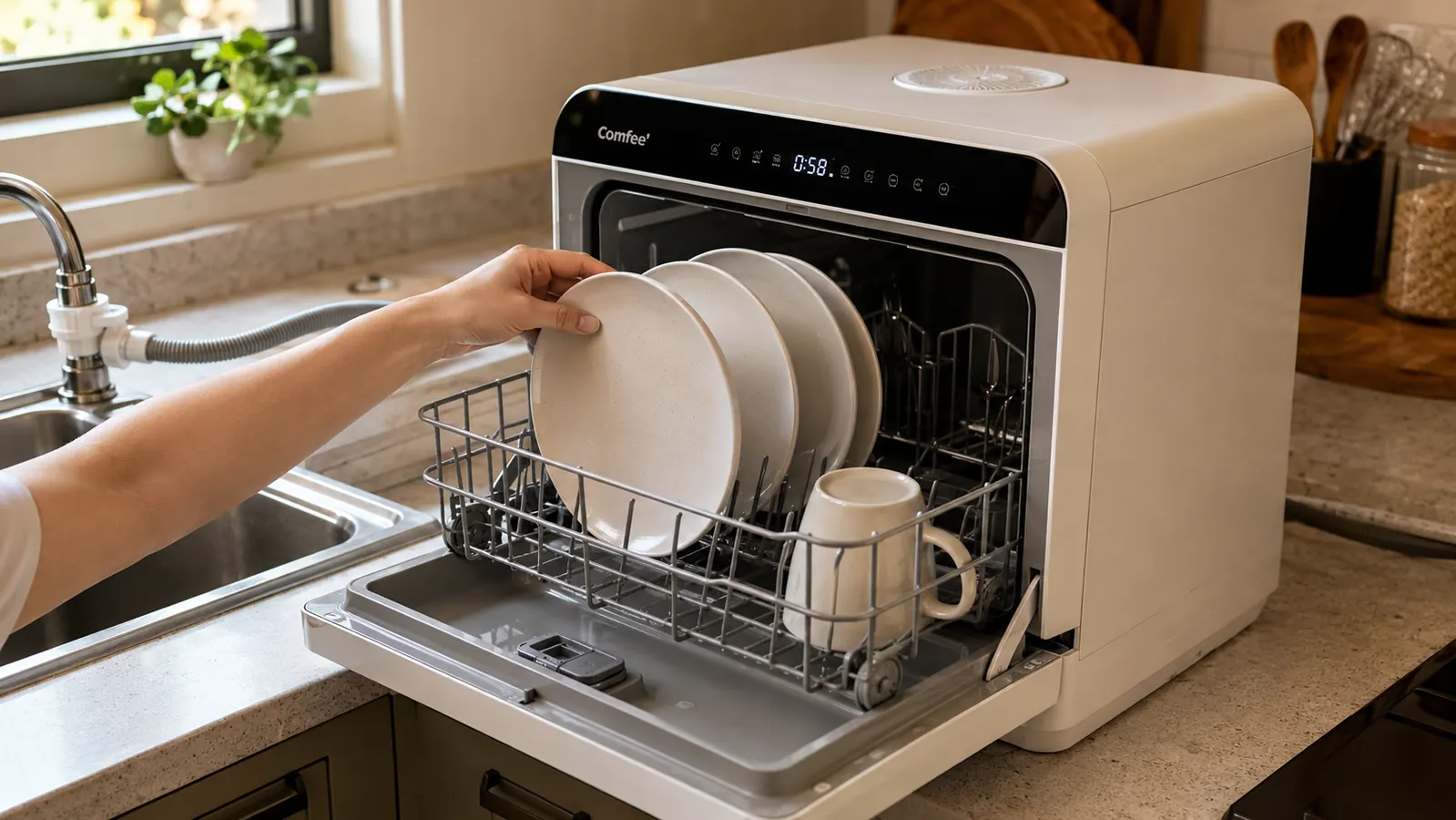
COMFEE' built this unit around eight programs: Intensive, Standard, ECO, Glass, Speed, Baby-Care, Rinse, and Self-Clean. In thirty years running a cafeteria kitchen I learned that more settings on a dial usually means three good ones and five that exist for the spec sheet, and that held true here too.
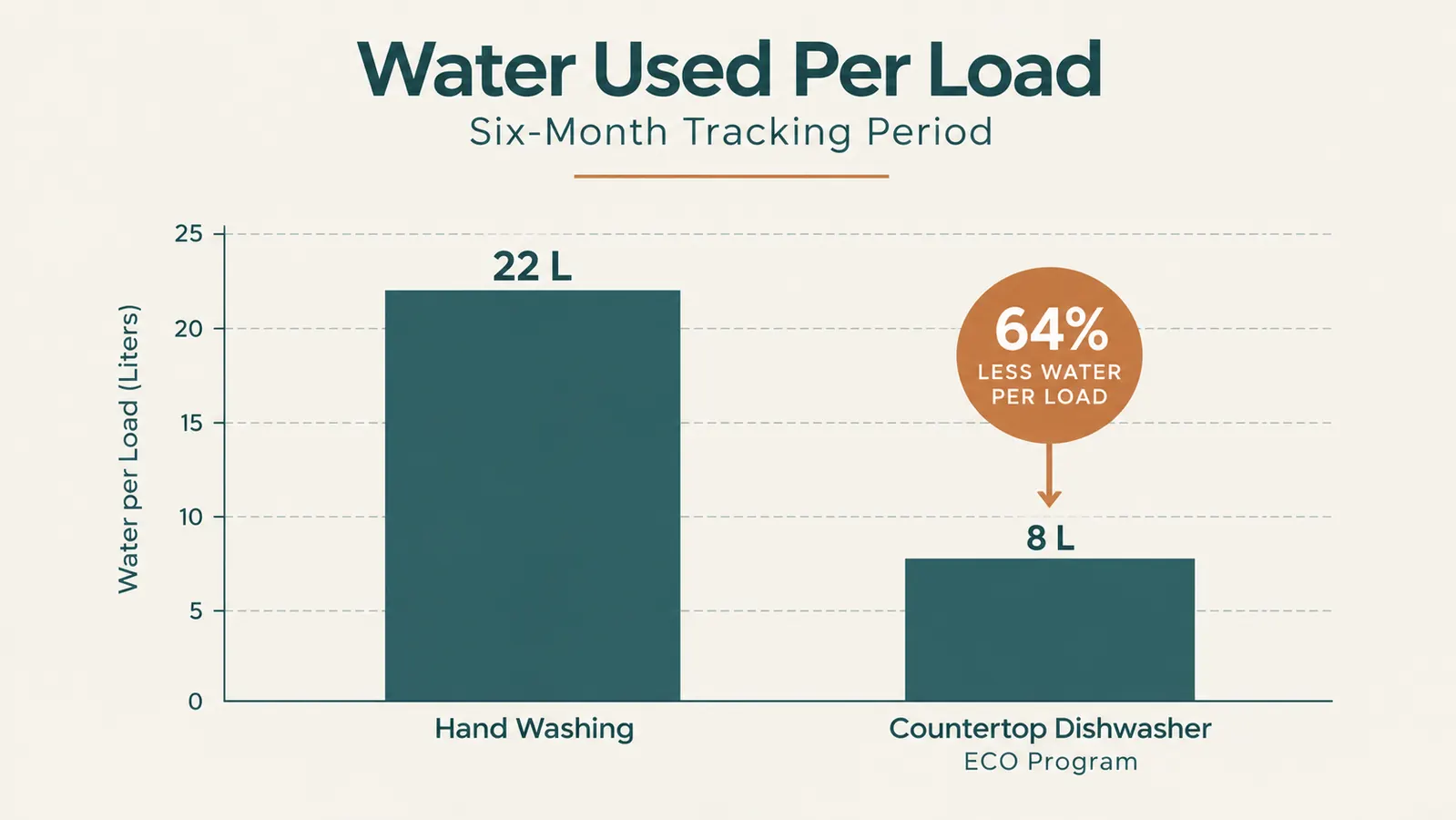
The ECO program is the one I use most on an average Tuesday. It stretches to about two hours, but the water usage is genuinely low, something like 2 gallons for a full six-place-setting load based on my own kitchen meter readings before and after. Compare that to hand washing, where I was easily running the tap for 15 to 20 minutes twice a day, and the math favors the COMFEE' before you even count what water costs in a desert city like Tucson.
Speed is my weeknight workhorse, done in under 40 minutes, though I've noticed it leaves a faint film on plastic tumblers if I don't pre-rinse coffee residue first. Glass is genuinely gentle, I've run my grandmother's stemware through it a dozen times with zero chips. Self-Clean I run once a month on the machine itself, which matters more with a countertop unit than an under-counter one because this thing sits exposed on the counter collecting kitchen grease and dust all day.
Six Months of Real Water, Noise, and Cleaning Numbers
Numbers matter more to me than marketing copy, so I actually tracked this. Over six months I've run roughly 170 cycles on the COMFEE'. My water bill dropped by about 12 percent compared to the same six months a year earlier when I was hand washing everything, and that's in Tucson, where water isn't cheap and every appliance ad promises savings that never show up on the actual bill.
Noise is the complaint I see most in other reviews, and I get why. On the Hi-Temp Wash the COMFEE' runs around 55 decibels by my kitchen's noise meter app, noticeably louder than my old under-counter dishwasher was in a previous house. It's not shout-over-it loud, but it's not white-noise quiet either. I run it after the 8pm local news now instead of trying to have it going during dinner conversation.
Cleaning performance on actual food residue held up well across six months of daily grime, baked-on enchilada sauce, refried beans, the works. Where the COMFEE' struggles is anything stuck to a pan for more than a day, I still have to pre-soak those the old-fashioned way. That's not a knock specific to this brand, that's true of every countertop unit I researched before buying.
Detergent matters more with this unit than I expected going in. I started with loose gel packs I had leftover from my old dishwasher, and the COMFEE' struggled to fully dissolve them on the shorter Speed cycle, leaving streaks on dark plates. Switching to a powder formula made specifically for compact dishwashers cleared that up within a week, and it's the one change I'd tell any new owner to make immediately instead of waiting six months like I did.
The Tradeoffs Nobody Warns You About
Six place settings sounds generous until you actually load it. A full dinner plate, a bowl, and a coffee mug for two people fills the COMFEE' up fast, and if Manny's brother comes over for Sunday dinner, I'm running it twice. This is not a machine for a family of four or five doing one load a day.
The faucet hookup, while it saves you a plumber, means the hose sits draped from my faucet to the machine every time it runs, and I have to disconnect it and store the adapter separately if I need the sink for something else mid-cycle. It's a small daily friction that a built-in dishwasher just doesn't have.
Hard water in Tucson has meant I need to run a descaling cycle on the COMFEE' about every six weeks instead of the quarterly schedule the manual suggests, or I start seeing cloudy glasses. That's an extra cost in descaling tablets I didn't budget for when I bought it.
The interior racks are plastic-coated wire, and after six months of daily use they still look tight with no rust spots, which surprised me given how much cheaper this unit is than a built-in model. The one weak point I've found is the small utensil basket clip, it cracked slightly in month four from being overloaded with steak knives, and I've since started laying knives flat instead of upright to take pressure off that clip.
Other Countertop Dishwashers I Considered First
Before settling on the COMFEE', I looked hard at a Farberware Professional countertop model and a couple of the Danby units that show up in every roundup. The Farberware Professional runs a bit quieter on paper, but the capacity felt tighter for my kitchen and its reviews mentioned more plastic-feeling racks after a few months of use.
I also seriously considered just living without one and buying a better dish rack, which sounds silly, but after thirty years of institutional dishwashing I know the difference between dishes that look clean and dishes that are actually sanitized. The COMFEE' Hi-Temp Wash cycle hits temperatures I trust for real sanitizing, which a hand wash in a home sink simply can't match no matter how careful you are.
What I Wish I'd Known Before Day One
If I could go back and hand myself one note before I unboxed the COMFEE', it would be to buy the compact-formula detergent and a case of descaling tablets on the same order. I spent the first month treating it like a full-size dishwasher and got mediocre results that had nothing to do with the machine itself and everything to do with using the wrong products in it.
I'd also tell myself to load it the way I loaded a cafeteria dish rack, plates angled the same direction, tall items on the outside edges, nothing nested inside anything else. Once I started doing that, the streaking and the pooled water in cup lids basically disappeared.
Last thing: keep the drain hose elevated slightly above the machine's base if your sink setup allows it. Mine originally drooped low near the floor of the cabinet, and I got a slow drain warning twice in the first month until I propped it up with a small bracket, a five-dollar fix that solved a problem I almost called customer service about.
What I Liked
- No plumber or permanent installation needed, works with a standard faucet adapter
- Hi-Temp Wash cycle hits real sanitizing temperatures, not just 'looks clean'
- ECO program cut my household water use by roughly 12% over six months
- Baby-Care program is genuinely useful for bottles and sippy cups
- Fits a small apartment or older home kitchen with no dishwasher rough-in
Where It Falls Short
- 6 place settings fills up fast for more than two people
- Runs around 55 decibels on the hottest cycle, louder than a built-in unit
- Hose has to be disconnected if you need the sink mid-cycle
- Hard water areas may need descaling every six weeks instead of quarterly
- Leaves a film on plastic if coffee residue isn't pre-rinsed
After thirty years of feeding 600 kids a day on industrial equipment, I know the difference between dishes that look clean and dishes that are actually sanitized. The COMFEE' is the first countertop machine that's passed that test for me at home.
Who This Is For
This is built for one or two people in a kitchen without dishwasher plumbing, an apartment renter who can't install anything permanent, a small older house like mine, or anyone who wants real sanitizing heat instead of just rinsing and hoping. If you're already hand washing every night and dreading it, the COMFEE' closes that gap without a renovation, and if you're willing to learn its quirks in the first few weeks the way I did, it settles into a reliable daily routine fast.
Who Should Skip It
If you're feeding a family of four or more daily, or you already have full-size dishwasher plumbing available and just haven't installed a unit, spend the money on a built-in dishwasher instead. Anyone who needs total silence during meals will find the noise on hot cycles a dealbreaker, and if you're not willing to descale every six weeks in a hard water area or switch to compact-formula detergent, you'll end up disappointed by cloudy glasses and streaked plates within a few months of owning the COMFEE'.
Six Months In, It's Still Running Every Night on My Counter
If your kitchen was never plumbed for a dishwasher, the COMFEE' is the fix I wish I'd bought two years earlier. See today's price and current availability before you decide.
Amazon Check Today's Price on Amazon →