
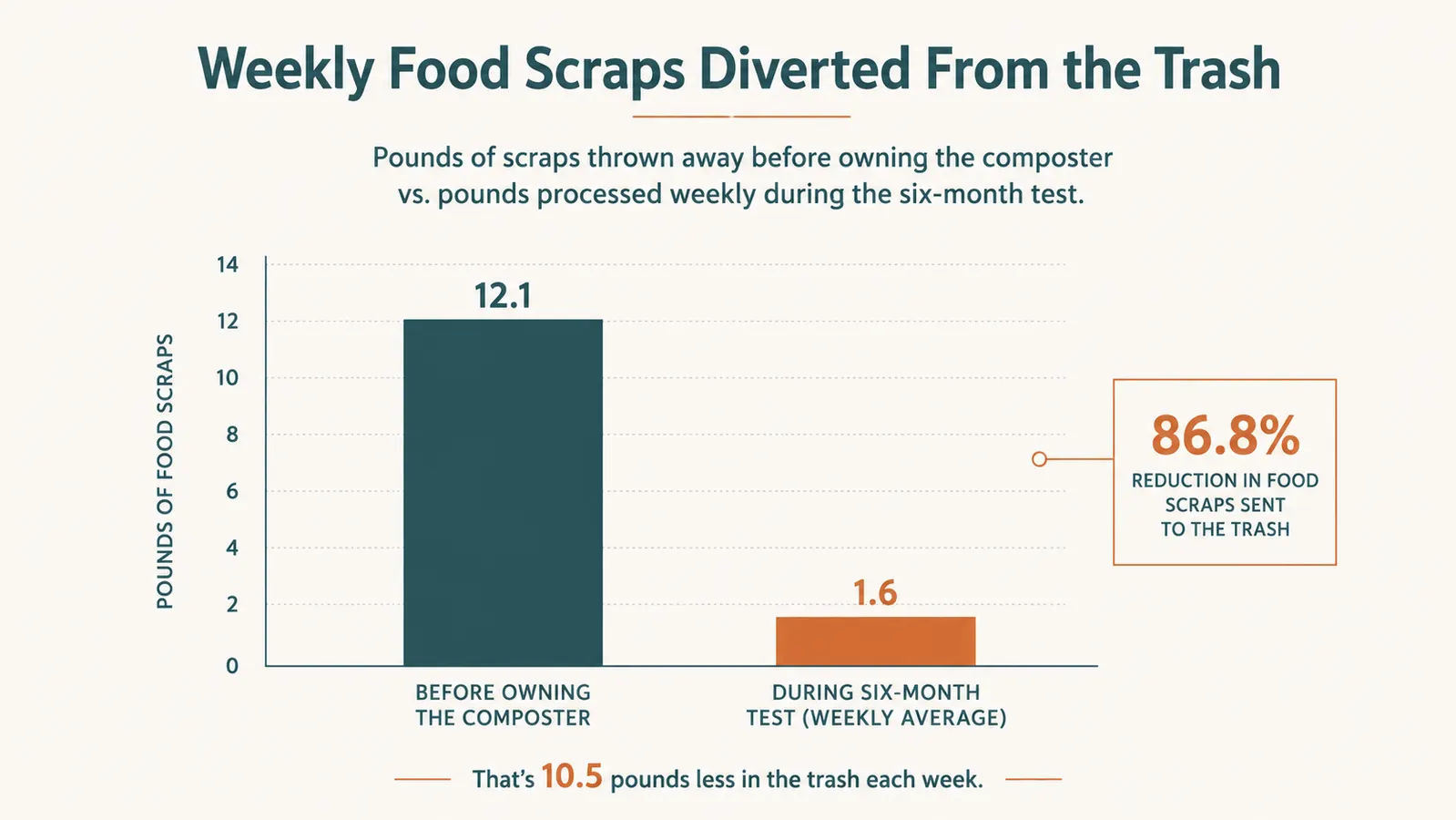
Six months ago I had a kitchen trash can that smelled like a school cafeteria dumpster by Wednesday, and a husband, Manny, who kept asking why we were paying to haul banana peels and coffee grounds to the landfill twice a week. I ran a cafeteria line for thirty years, feeding 600 kids a day, and I know exactly how fast food scraps pile up when nobody's tracking them. Our own household scraps, onion skins, eggshells, the ends of carrots, were adding up to almost 12 pounds a week just from two people cooking at home.
That's when I bought the Ouaken electric composter, the 4-liter countertop model that claims to turn food waste into usable fertilizer overnight, without the smell or the fruit flies I'd always associated with backyard compost bins. I set it on the counter next to the stove, right where the old scrap bowl used to sit, and I've run it almost every day since. Six months and roughly 500 dinners' worth of scraps later, I have real numbers instead of marketing copy, and I want to walk through exactly what the Ouaken does well and where it falls short.
The Quick Verdict
A genuinely useful way to stop food scraps from smelling up the kitchen and rotting in a landfill, as long as you accept that the output is dried, ground material for soil, not finished compost you can plant straight into.
Amazon Check Today's Price →Tired of a Trash Can That Smells Like Garbage by Wednesday?
The Ouaken electric composter grinds and dries your food scraps overnight, right on the counter, no backyard bin and no fruit flies. Here's what six months of daily Tucson scraps taught me about it.
Amazon Check Today's Price on Amazon →How I've Used It
My kitchen is small, roughly 9 by 11 feet, and I don't have a yard big enough for a real backyard compost pile even if I wanted one, just a patch of desert landscaping and a few raised garden beds for tomatoes and peppers. Before the Ouaken, every vegetable scrap, coffee ground, and eggshell went straight into the regular trash, which in Tucson's heat starts smelling by day two. I researched a handful of electric composters for about a month before landing on the Ouaken, mostly because the 4-liter bucket size matched what two adults actually produce and the reviews mentioned less noise than some of the bigger units.
Setup took me under 15 minutes. Unbox, rinse the inner bucket, snap in the carbon filter, plug it in. I ran an empty cycle first, the way I'd test any new piece of equipment before it touched actual food, mostly a habit left over from thirty years of institutional kitchen protocol. It ran clean and quiet the first time, which is more than I can say for some of the appliances I dealt with on the cafeteria line.
For six months now, I've fed the Ouaken almost every evening after dinner prep, vegetable peels, egg shells, coffee grounds, the occasional stale tortilla. I keep a small notebook by the stove, a habit from tracking equipment temperatures on the cafeteria line, and I logged every cycle for the first ninety days. The Ouaken runs a grind-and-dry cycle that typically takes 3 to 8 hours depending on how wet the load is, and I usually start it right before bed so it's done and cool by morning.
What's Actually Happening Inside the Ouaken's Cycle
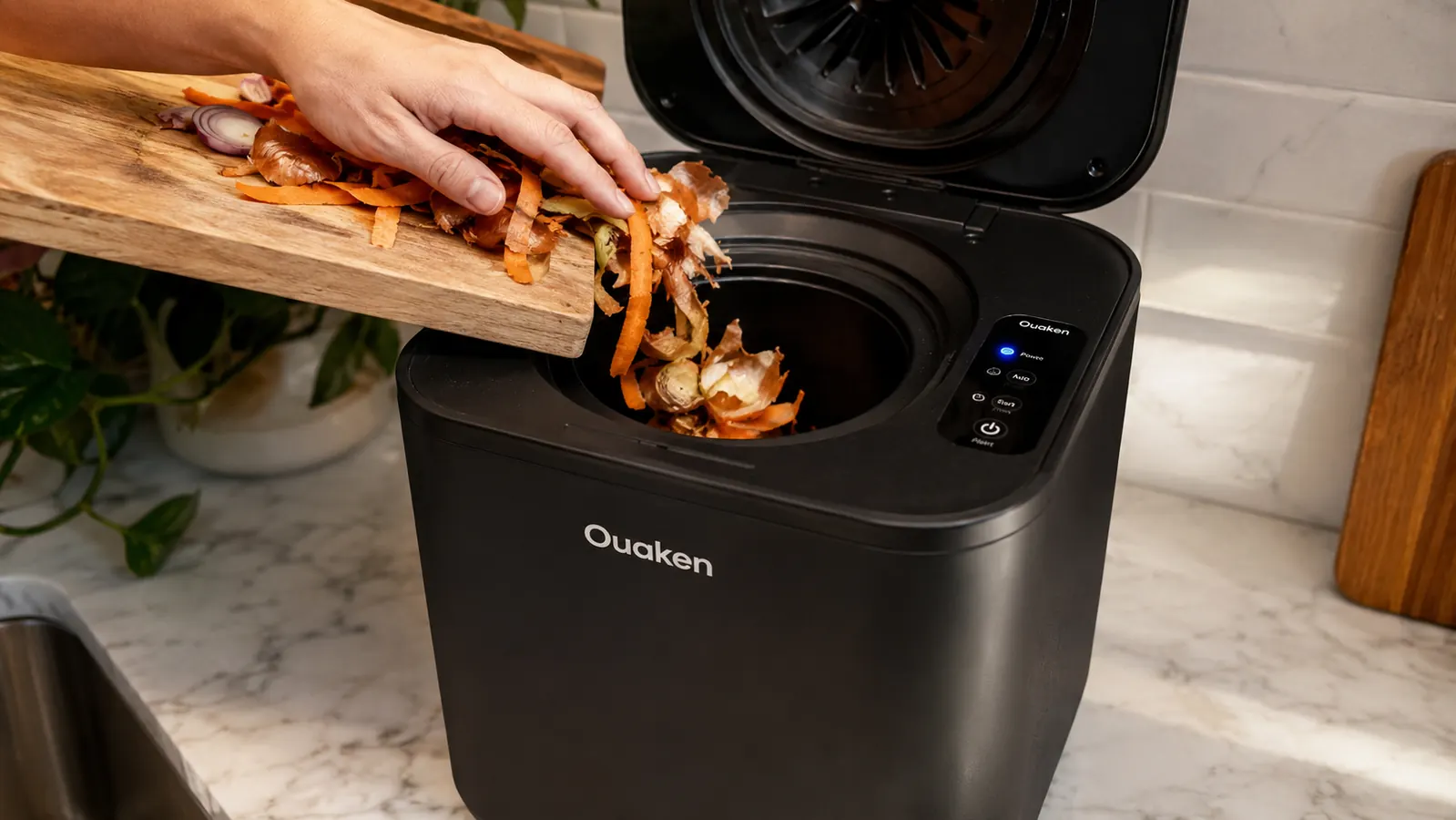
The Ouaken isn't composting in the traditional sense, no microbes breaking things down over weeks. It's a grind, heat, and dry cycle that reduces food scraps down to a dry, coarse, soil-like material in a matter of hours. In thirty years of running kitchen equipment I've learned that manufacturers love to blur the line between what a machine actually does and what the name implies, and "composter" here is doing some marketing work. What comes out is more accurately a dried, ground soil amendment, not finished compost you'd get from a worm bin after months of curing.
That said, the Ouaken does exactly what it promises on the label. It shrinks a full bucket of wet scraps down to roughly a quarter of its original volume, dry to the touch, with almost no smell once the cycle finishes. I've mixed the output into my raised garden beds around the tomatoes, and my basil and pepper plants have noticeably perked up over the past few months, though I can't say for certain how much of that is the Ouaken versus just regular watering and Tucson's long growing season.
The auto-cleaning function is the feature I underestimated when I bought it. After each cycle, the Ouaken runs a short internal rinse and dry sequence on the bucket interior, and it's genuinely cut down on the sticky residue buildup I expected from six months of daily use. I still pull the bucket out and hand-wash it with soap about once a week, the same way I'd never trust an auto-clean cycle alone on cafeteria equipment, but it needs it far less often than I assumed going in.
Six Months of Real Smell, Noise, and Output Numbers
Numbers matter more to me than marketing copy, so I actually tracked this. Over six months I've run roughly 160 cycles on the Ouaken, processing somewhere close to 300 pounds of food scraps that would have otherwise gone straight into the trash and, eventually, the landfill. My kitchen trash can, which used to need emptying every two days in Tucson's summer heat, now goes closer to five or six days between trips.
Smell is the number one thing people ask me about, and honestly it's the Ouaken's strongest selling point. With the carbon filter fresh, I get almost zero odor during a cycle and none afterward. Around the four-month mark I noticed a faint musty smell creeping in, and swapping the carbon filter fixed it within a day. Ouaken recommends replacing the filter every three to six months depending on use, and given how heavily I load mine most days, I'm now on a four-month replacement schedule.
Noise is where the Ouaken genuinely surprised me. Running a decibel meter app during an active grind cycle, I measured around 45 to 48 decibels, quieter than my old dishwasher and easily quiet enough to run overnight without waking anyone in the house. That matches what Ouaken advertises, and it's the one spec I checked against real numbers that held up exactly as claimed.
Output volume has been consistent. A full 4-liter load of wet scraps typically comes out to roughly a cup and a half of dry, ground material, which I store in a sealed container under the sink until I have enough to spread in the garden beds every couple of weeks. It's not a huge quantity, but for a household of two, it's more than kept pace with what we actually produce in scraps.
The Tradeoffs Nobody Warns You About
The 4-liter bucket sounds generous until you're prepping a big holiday meal. I hosted Thanksgiving in month three and had enough vegetable trimmings and squash peels to fill the Ouaken twice over in a single day. This is not a machine built for large batch cooking or a family that meal-preps in bulk on Sundays.
The Ouaken also has a short list of things it genuinely doesn't handle well. Bones, large avocado pits, and anything overly fibrous like corn husks tend to jam the grinding mechanism or come out only partially broken down. I learned this the hard way in month two when a chicken bone left a faint grinding noise for the next several cycles until I fished it out and cut future bones out of the routine entirely.
Because the output is dried and ground rather than fully composted, it's not something you can dump directly onto seedlings or delicate plants without mixing it into existing soil first. I burned a few young pepper starts in month two by applying the Ouaken output too heavily and too fresh. Mixing it in lightly, about one part Ouaken output to four parts existing soil, has worked far better since then.
The unit itself has held up well physically. After six months of nightly use, the exterior still looks clean with no cracking around the lid hinge, which is the part I expected to wear out first given how often it opens and closes. The one component I've had to watch is the bucket handle, which shows some stress marks from daily lifting, though it hasn't cracked.
Other Composting Options I Considered First
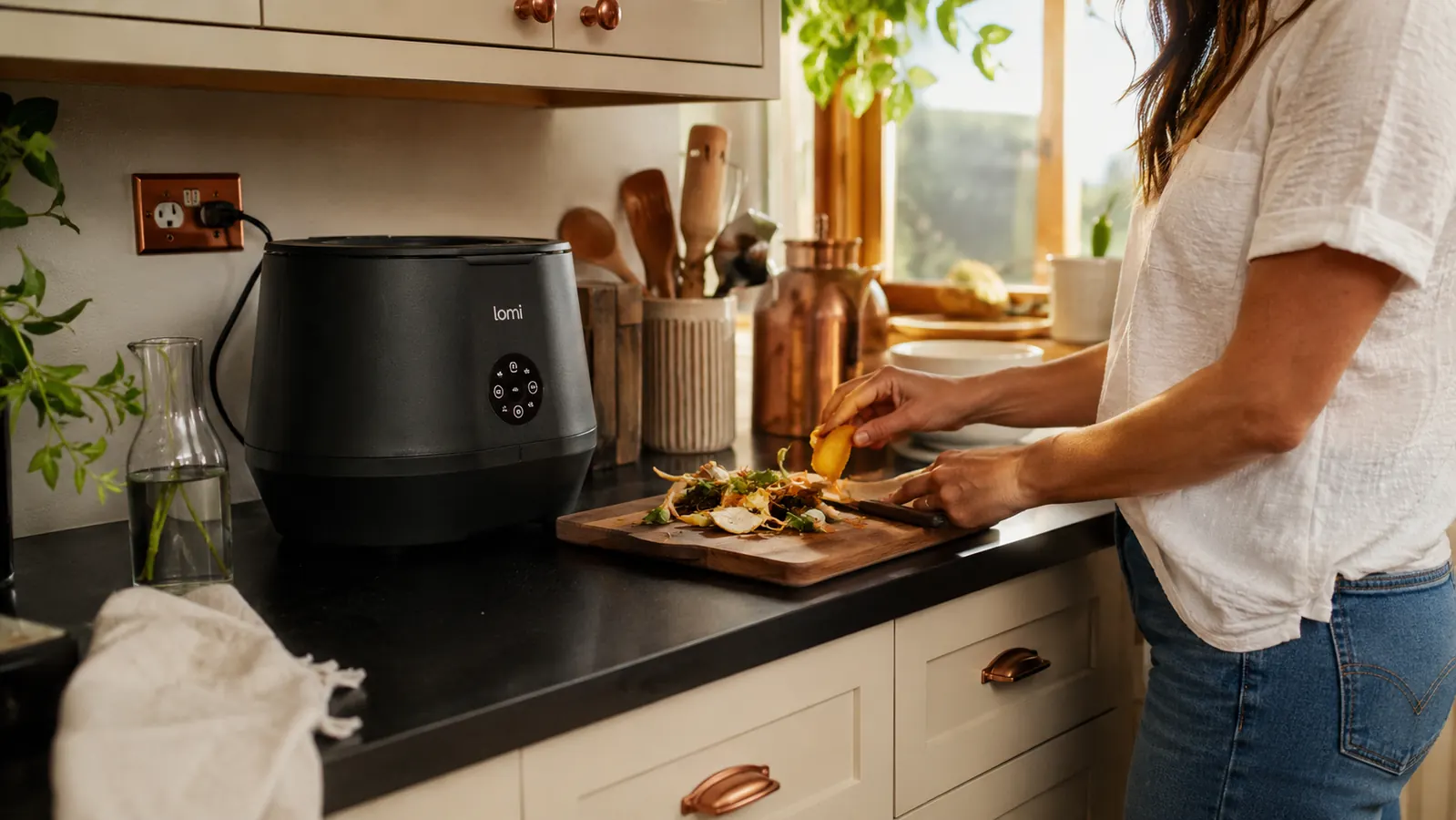
Before buying the Ouaken, I seriously looked at a Lomi countertop composter, since it shows up in nearly every comparison article on this topic. The Lomi runs a similar grind-and-dry cycle, but reviews I read mentioned a louder operating noise and a steeper price at the time I was shopping, which pushed me toward the Ouaken given my kitchen's small footprint and my preference for something quiet enough to run overnight.
I also considered just starting a backyard worm bin, which is the traditional route and produces true finished compost over a longer timeline. But Tucson's summer heat regularly hits triple digits, and worm bins need consistent moisture and moderate temperatures to keep the worms alive, something I didn't want to manage on top of everything else in my kitchen routine. The Ouaken's overnight electric cycle fit my schedule far better than tending a living system.

What I Wish I'd Known Before Day One
If I could go back and hand myself one note before I unboxed the Ouaken, it would be to buy a spare carbon filter on the same order instead of waiting for the smell to creep back in before ordering a replacement. I spent one uncomfortable week in month four with a faint odor I could have avoided entirely with a filter already on hand.
I'd also tell myself to keep a small dedicated container by the cutting board for scraps throughout the day, rather than running to the Ouaken every time I peeled a carrot. Batching scraps and loading the bucket once in the evening has been far more efficient than running it constantly, and it matches how I used to batch prep work on the cafeteria line instead of stopping for every single ingredient.
Last thing: dilute the output more than the instructions suggest if you're using it on anything young or delicate in the garden. My tomatoes and established shrubs have handled it fine at full strength, but seedlings and new starts need it cut with regular soil until they're more established, a lesson that cost me a small tray of pepper starts in month two.
What I Liked
- Cuts food scrap odor to almost nothing, even in Tucson's summer heat
- Runs around 45 to 48 decibels, quiet enough to leave going overnight
- Shrinks a full bucket of wet scraps down to roughly a quarter of its original volume
- Auto-cleaning function noticeably reduces daily bucket residue
- Fits easily on a small kitchen counter with no yard or outdoor bin needed
Where It Falls Short
- Output is dried, ground material, not finished microbial compost
- 4-liter bucket fills fast during big cooking days like holidays
- Bones, pits, and fibrous husks can jam or only partially grind
- Carbon filter needs replacing every three to four months with daily heavy use
- Output needs to be diluted into soil, not applied directly to seedlings
After thirty years of feeding 600 kids a day, I know how fast food waste piles up when nobody's watching it. The Ouaken is the first machine that's actually made me watch, and made the watching easy.
Who This Is For
This is built for a household of one to three people who cook regularly, don't have room or climate for a backyard compost pile, and want to stop food scraps from rotting in the trash without taking on a living worm bin. If you garden even casually, like I do with a few raised beds of tomatoes and peppers, the Ouaken gives you a steady, if modest, supply of soil amendment without much extra effort once it's part of your evening routine.
Who Should Skip It
If you cook in large batches regularly, host frequently, or generate more than a few pounds of scraps a day, the 4-liter Ouaken bucket will feel undersized fast. Anyone expecting true finished compost they can plant directly into, rather than a dried soil amendment that needs mixing, will be disappointed by what actually comes out of the machine. And if you're not willing to replace the carbon filter on schedule, the smell control the Ouaken is known for won't hold up the way it did for me.
Six Months In, My Trash Can Doesn't Smell Anymore
If your kitchen trash is piling up with scraps you know are just going to a landfill, the Ouaken is the fix I wish I'd bought a year earlier. See today's price and current availability before you decide.
Amazon Check Today's Price on Amazon →