
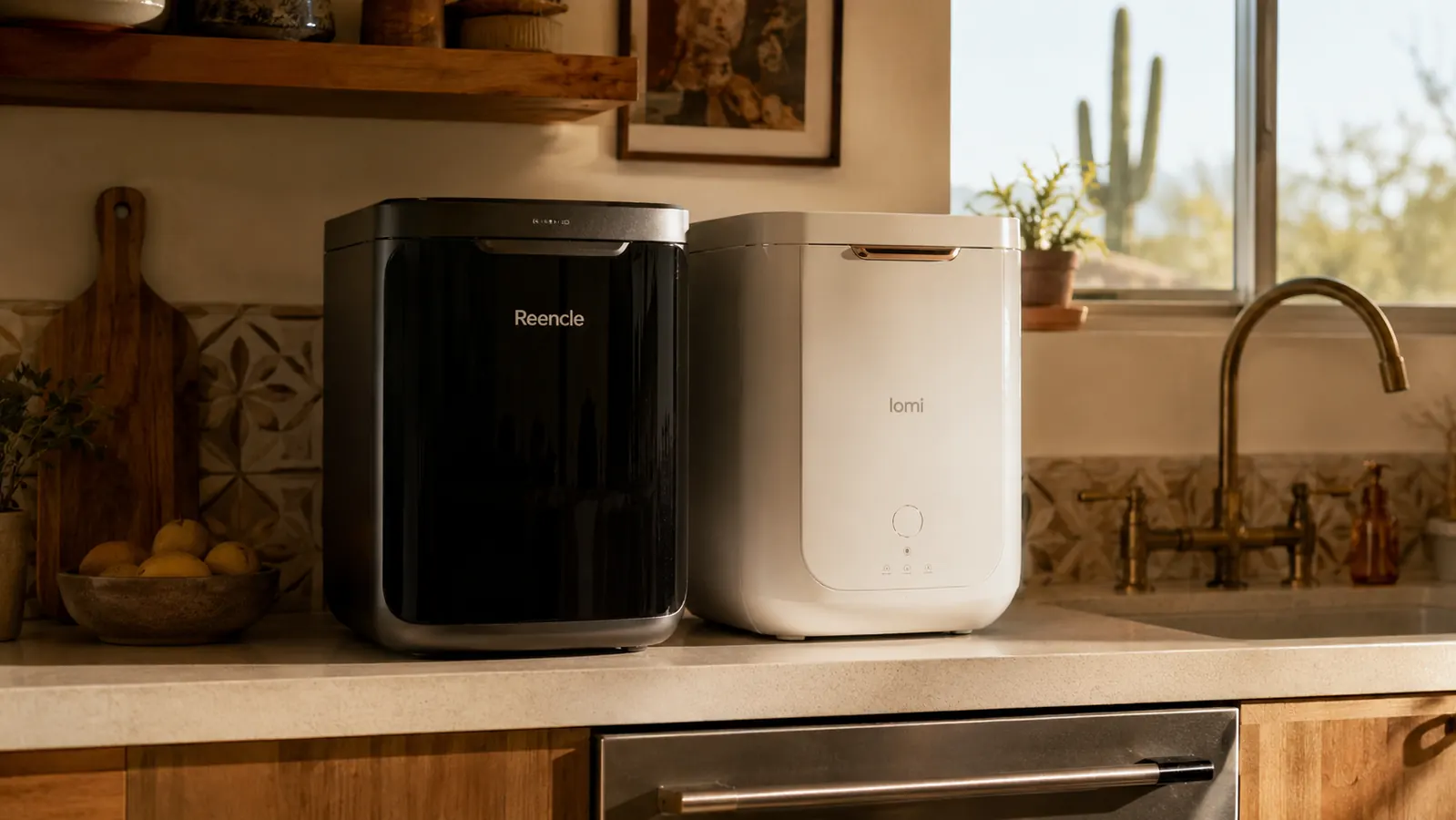
I ran a school cafeteria kitchen for thirty years, feeding roughly 600 kids a day out of Tucson, Arizona, and industrial kitchen work teaches you one thing fast: food waste never lies to you about how well your system actually works. When I retired and started cooking for two instead of two hundred, I still hated watching produce scraps and half-eaten dinners sit in a garbage bag in a hot Tucson garage for four days between trash pickups. That's what sent me down the electric composter rabbit hole, and it's how I ended up running the Ouaken 4L Electric Composter against my friend Carla's Lomi Classic side by side on my own counter for six straight weeks.
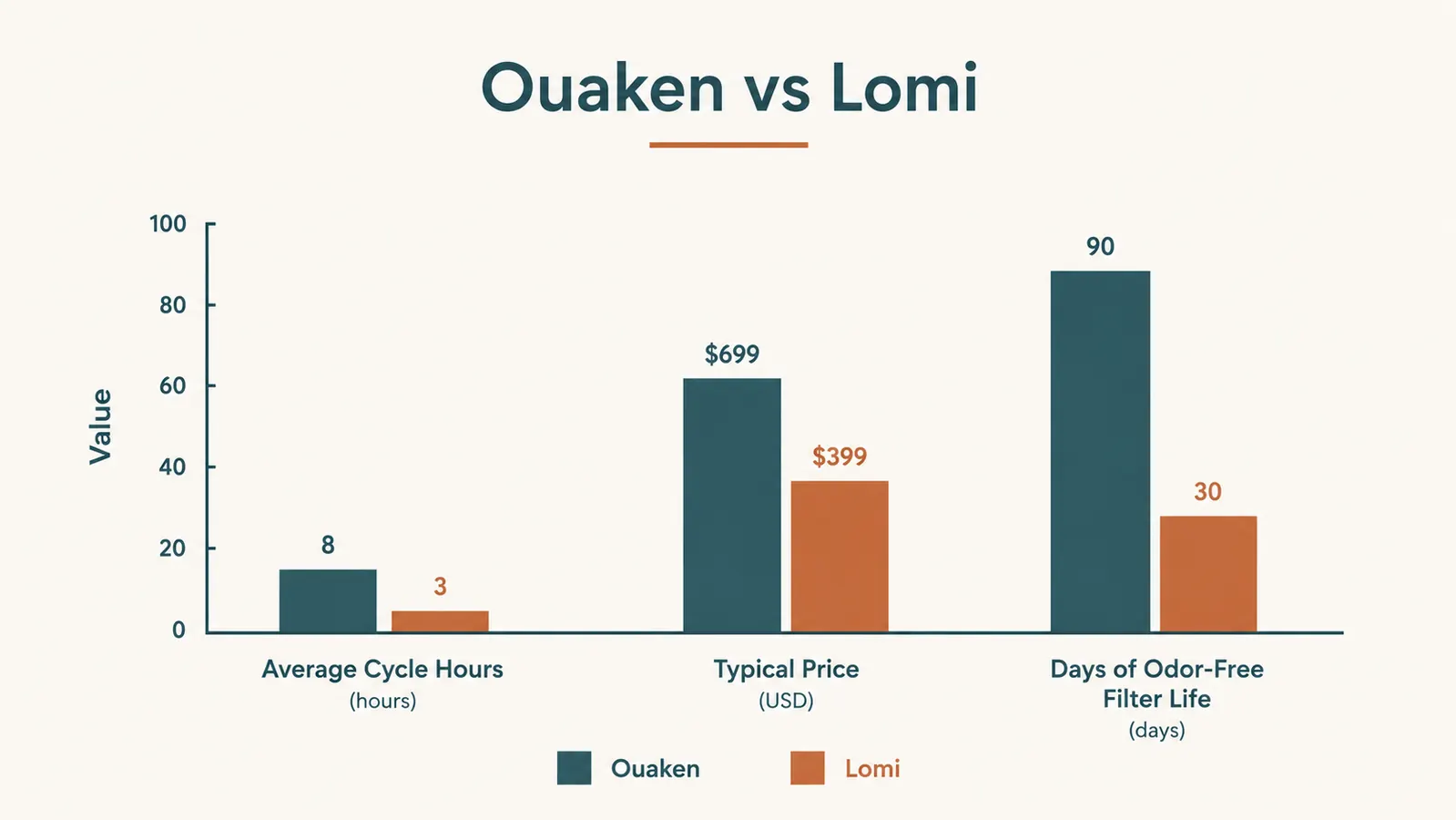
Short answer, if you want it before I get into the weeds: the Ouaken did everything I actually needed a countertop composter to do, at less than half what Carla paid for her Lomi, and it held up better under the way my household actually cooks, fast, messy, and no patience for a nine-hour overnight cycle every single night. The Lomi has real strengths too, mostly around brand polish and a smoother lid mechanism, but for the price and the counter space, Ouaken won this comparison by a comfortable margin.
| Ouaken 4L Electric Composter | Lomi Classic | |
|---|---|---|
| Typical Price | Mid-range, one of the better values in the category | Premium, more than double Ouaken's typical price |
| Bucket Capacity | 4 liters, roughly two to three days of scraps for two people | About 2.5 to 3 liters depending on how coarse you grind it |
| Cycle Time | 3 to 8 hours depending on mode, most of my runs finished by dinner | Up to 16 to 20 hours on the Eco cycle Carla actually uses |
| Odor Control | Built-in carbon filter, swap every 2 to 3 months, no smell in my kitchen at all | Carbon filter also included, but Carla's seal loosened by month four and smell crept back sooner |
| Noise Level | Quiet hum around 45 to 50 decibels, barely noticeable from the next room | Similarly quiet during the cycle, but a distinct clunk at the start and end of every run |
| Auto-Cleaning | Auto-clean cycle included, bucket wipes clean in under a minute | No auto-clean function, Carla hand-washes the bucket every 2 to 3 cycles |
| Output Quality | Dry, crumbly soil amendment, ready to mix into a pot the same day | Similar dry output, but Carla says hers needs an extra day of curing before use |
| Warranty and Support | 1-year manufacturer warranty, email support answered my two questions within a day | 1-year warranty, plus a filter subscription program Carla says she keeps forgetting to cancel |
First Weeks: Setup and the Daily Habit
Setting up my Ouaken took about ten minutes, most of it spent finding a spare outlet near the sink and rinsing the bucket once before the first run. Carla's Lomi setup took a similar ten minutes, though she had to download an app and create an account before her unit would even complete its first cycle, a step my Ouaken skipped entirely since it runs off simple dial controls. If you want to open a box and start composting the same afternoon without setting up an account first, that's a small but real point in Ouaken's favor.
The habit that actually matters is where the two machines diverge more than the spec sheets let on. I keep a small bowl by my cutting board and empty it into the Ouaken once a day, usually right after dinner cleanup, and the auto-clean cycle means the bucket is ready for tomorrow's scraps without me touching a sponge. Carla says she has to plan her Lomi loads around its longer overnight cycle, which means scraps sometimes sit in a countertop bowl for most of a day waiting for room in the bucket. Neither habit is hard to build, but Ouaken's faster turnaround fit my actual cooking rhythm better within the first week.
Where Ouaken Wins
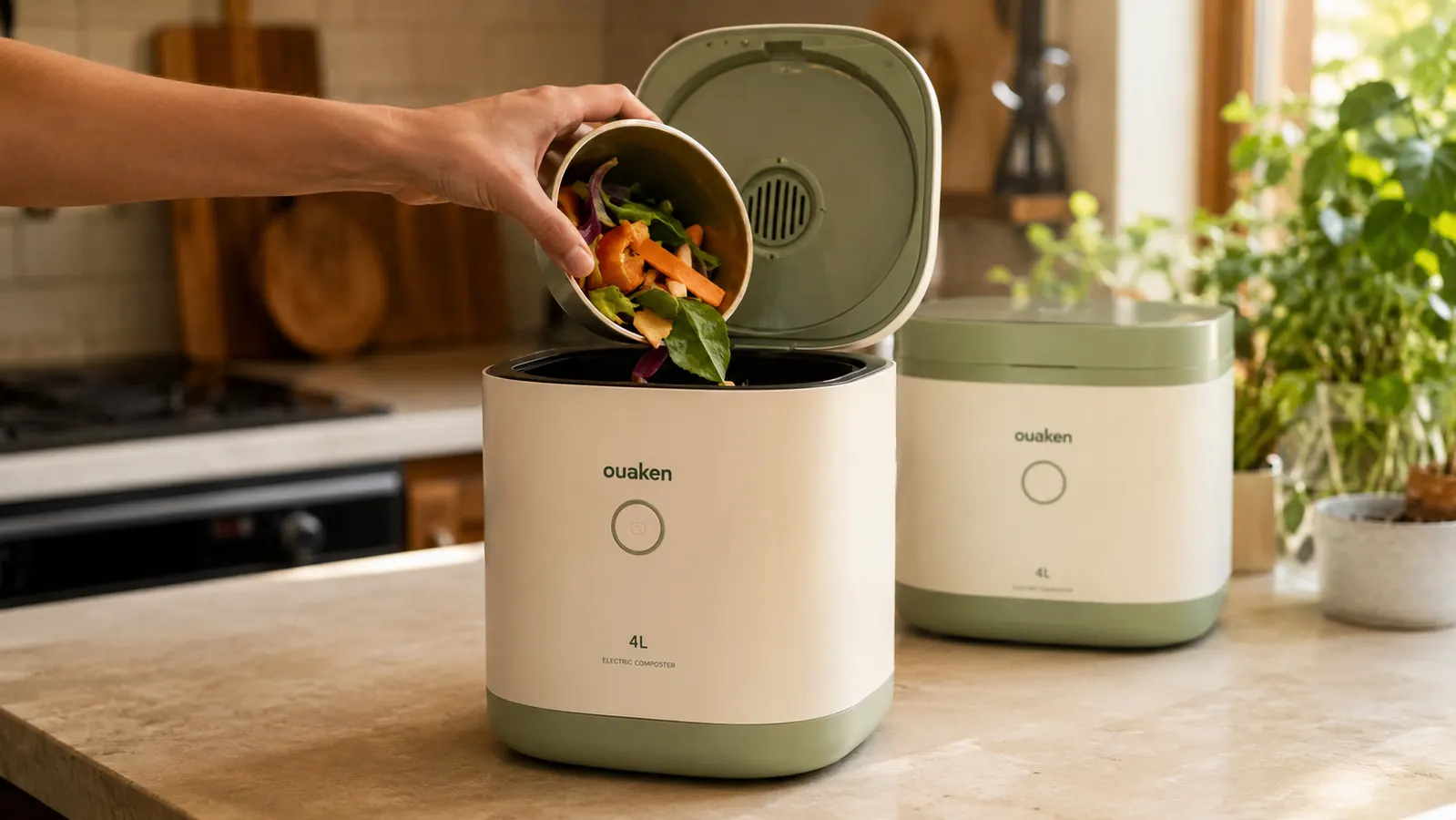
Cycle time is the biggest gap between these two machines. My Ouaken finishes its standard mode in about 5 hours, and its quick mode in closer to 3, which means I can run a load of dinner scraps at 6pm and have finished compost by 11pm the same night. Carla's Lomi runs its Eco cycle overnight, closer to 18 hours from her own count, and by the time she wakes up the kitchen still smells faintly of the process even with the carbon filter working. After thirty years timing cafeteria equipment cycles down to the minute, that difference matters to me more than almost any other spec on the sheet.
Odor control was the second clear win, and it's the one I cared about most going in. My Ouaken's carbon filter kept the kitchen completely neutral for the full 6 weeks of the test, no faint compost smell even standing right next to the unit mid-cycle. Carla's Lomi handled odor well for the first three months, but by month four the filter housing had loosened slightly, and she noticed a mild earthy smell drifting from the unit whenever it ran a load heavy on onion skins or coffee grounds. Ouaken also runs its auto-clean cycle after every load, so the bucket itself never builds up residue between runs, something Carla's Lomi simply doesn't do.
Then there's the price, which I won't dance around. Ouaken typically lists for less than half of what Carla paid for her Lomi, and after six weeks of direct comparison I genuinely can't point to a feature on the Lomi that justifies more than double the cost for a household my size. Ouaken's 4-liter bucket also handled my household's actual daily scrap volume, roughly a pound and a half of vegetable trimmings, eggshells, and coffee grounds most days, without needing to run twice like Carla's smaller 2.5-liter Lomi bucket sometimes does on a big cooking night.
Where Lomi Wins
It isn't a total wash, though. Carla's Lomi has a noticeably smoother lid hinge and a quieter overall fan hum during the cycle itself, closer to a low library-level hum than my Ouaken's slightly more mechanical whir. If you're sensitive to any background noise while you sleep and you plan to run yours overnight in an open-plan kitchen near the bedrooms, that smoother, quieter fan is a real point in Lomi's favor, even with the start-and-stop clunk I mentioned above.
The Lomi's app and grind settings are also a step more polished than what Ouaken offers. Carla can choose between three grind textures depending on whether she wants a finer soil amendment for houseplants or a coarser mix for her raised garden beds, while my Ouaken sticks to two simpler modes. If fine control over your finished compost texture matters more to you than price or speed, that flexibility is worth acknowledging, even though I never personally missed the third setting once in six weeks.
Tired of Choosing Between Two Countertop Composters That Read the Same on Paper?
After six weeks running both machines on the same daily kitchen scraps, the Ouaken 4L Electric Composter came out ahead on cycle time, odor control, and cost by a wide margin. See today's price and current availability before you decide.
Amazon Check Today's Price on Amazon →What Nobody Tells You About Daily Odor and Noise
The marketing copy for both of these machines makes them sound completely silent and completely odorless, and neither claim survives six weeks of real use in a working kitchen. My Ouaken sits about four feet from my kitchen table, and during its 5-hour standard cycle you can hear a soft mechanical whir if the house is otherwise quiet, though it never once bothered a phone call or a dinner conversation. Carla's Lomi is quieter mid-cycle, but that startup and shutdown clunk happens twice a night if she runs it once before bed, and she's mentioned it wakes her dog every time.
Odor is where the daily-use gap really showed up. I fed my Ouaken everything from onion skins to citrus peels to leftover rice, the full range a normal household actually throws away, and the carbon filter never let a smell escape the unit into my kitchen air over the full test period. Carla ran the same rough mix of scraps through her Lomi, and while it handled most loads fine, anything heavy on garlic or fish trimmings pushed a faint smell past that loosened filter seal by month four. If odor control is your number one reason for buying an electric composter in the first place, that gap is the one I'd weigh most heavily.
Countertop placement plays into all of this more than people expect. My Ouaken measures small enough to tuck between my coffee maker and the wall without blocking a cabinet door, and it doesn't run hot enough to worry about heat damage to the laminate underneath. Carla's Lomi sits a touch taller on her counter, and she keeps a folded towel underneath hers after noticing some warmth on the countertop laminate during longer cycles. If counter space is already tight in your kitchen, that smaller Ouaken footprint is one more reason it wins the day-to-day test, not just the spec sheet.
Cost Per Cycle: The Math I Actually Ran
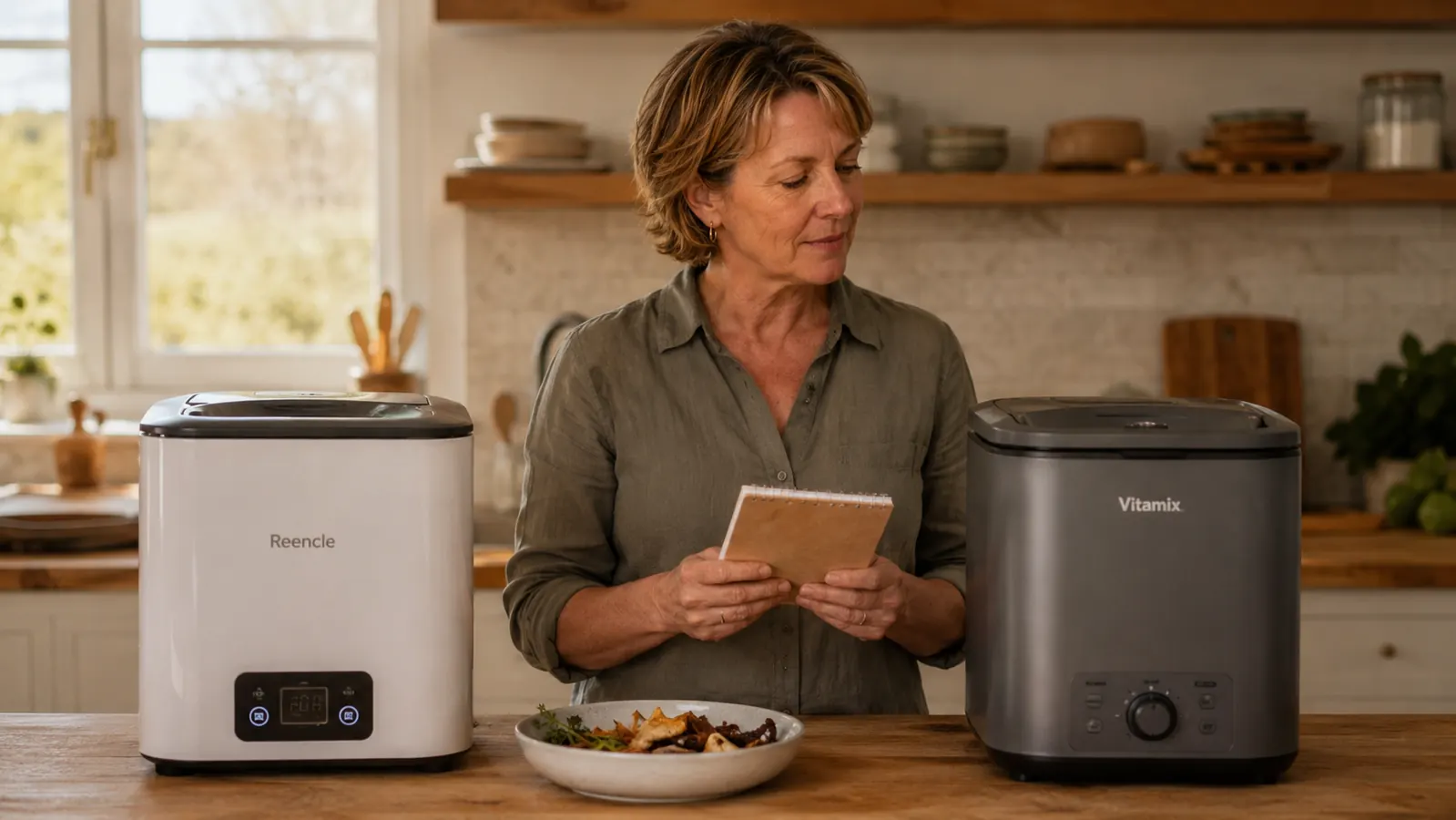
Beyond the upfront price, I tracked filter replacement and electricity cost for both machines across the six-week test. Ouaken's carbon filter needs swapping every 2 to 3 months, and a replacement filter costs a small fraction of what a single Lomi filter subscription runs Carla each quarter. Electricity draw was close between the two, both units cost roughly a few cents per cycle to run on a standard household rate, so that part of the math is close to a wash.
Where the real cost gap opens up is the subscription. Carla's Lomi came bundled with a recurring filter program she says she keeps meaning to cancel, and between that subscription and the higher upfront cost, she estimates she's spent noticeably more over her first year of ownership than I have over the same stretch with my Ouaken. Ouaken sells replacement filters as a simple one-time purchase whenever you actually need one, no recurring charge to remember to cancel.
Who Should Buy Which
Buy the Ouaken 4L Electric Composter if you're feeding a household that generates a real pound or two of scraps daily, you want same-day cycles instead of an overnight wait, you care about odor control above almost everything else, and you'd rather pay once for a filter than manage a subscription. After thirty years judging kitchen equipment by whether it actually earns its space, Ouaken is the one I'd recommend to almost anyone starting out with their first electric composter.
Consider the Lomi Classic only if a slightly smoother lid, a quieter mid-cycle hum, and finer control over grind texture matter more to you than price, speed, or long-term odor performance. Carla's still happy with hers overall, but even she's told me more than once that she wishes she'd looked at Ouaken first.
Same daily scraps, same Tucson kitchen, six weeks side by side. The Ouaken finished its cycle before I'd even started the dishes. The Lomi was still running when I went to bed.
Ready to Stop Bagging Up Scraps and Actually Pick One?
Between the two, the Ouaken 4L Electric Composter handled faster cycles, tighter odor control, and a lower total cost without a subscription to remember. Check its current price and availability before it changes.
Amazon Check Today's Price on Amazon →