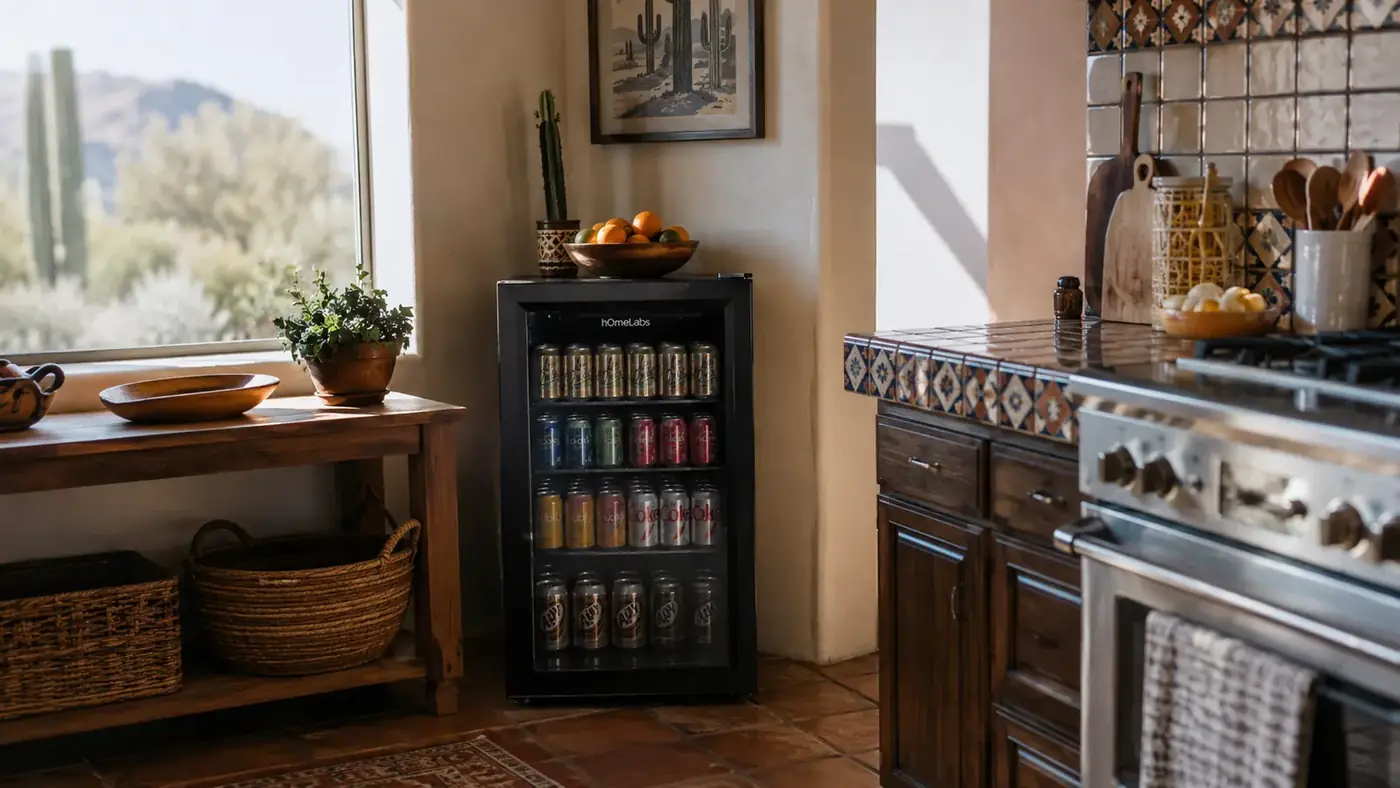
Thirty years of running a school cafeteria kitchen teaches you one thing fast: if a piece of equipment can't hold its temperature, it doesn't belong in the building. So when my husband Manny and I finally admitted our regular refrigerator had become a soda and beer graveyard, I did not walk into this purchase casually. I researched compressor types the way I used to check walk-in cooler logs at Sunnyside Unified, and I landed on the hOmeLabs beverage refrigerator, the 120-can glass door model, back in January.
Six months later, I have a real answer for you, not a first-impressions answer. This hOmeLabs fridge has lived in the corner of my kitchen since January, run almost every day, opened by two grandkids who cannot close a door quietly if their lives depended on it, and stocked with everything from Manny's beer to my daughter's kombucha. Here is what actually held up, what wore down a little, and whether I'd buy this same hOmeLabs model again if it disappeared tomorrow.
The Quick Verdict
A genuinely useful compressor-cooled beverage fridge that holds temperature well and looks good doing it, though the door shelves aren't as sturdy as I'd like.
Amazon Check Today's Price →Tired of digging through a fridge full of leftovers just to find a cold soda?
The hOmeLabs beverage fridge gave our drinks their own dedicated, cold, organized space, and it freed up an entire shelf in our main refrigerator. See today's price and current availability.
Amazon Check Today's Price on Amazon →How I've Used It
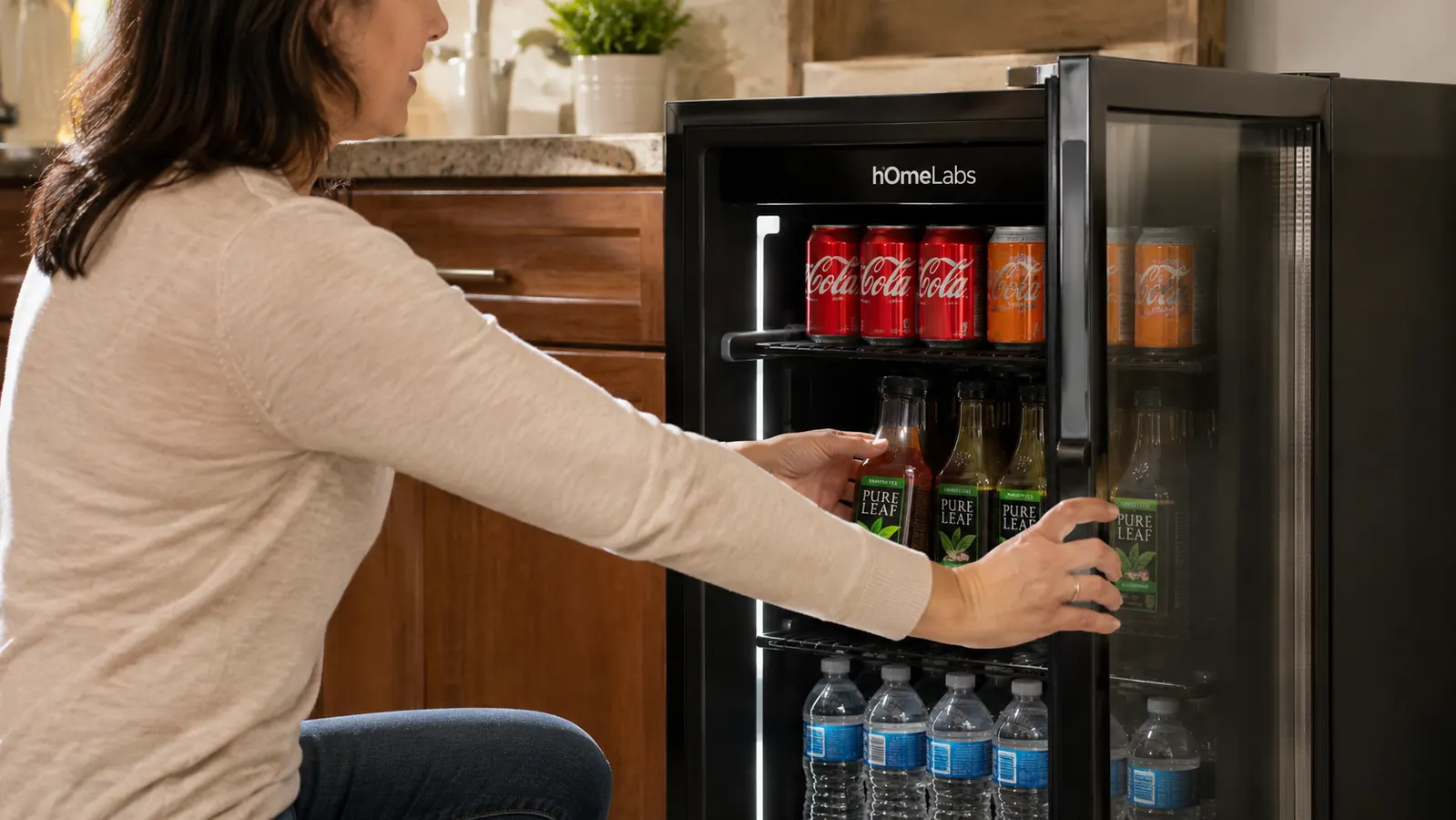
I run this hOmeLabs fridge the way I used to run the beverage station in my cafeteria line: full, organized, and checked constantly. It lives on a stretch of counter near our back door, the spot where everyone naturally grabs a drink on their way outside. Manny keeps his Modelo on the bottom shelf. I keep sparkling water and my daughter's kombucha up top, and the middle shelf rotates depending on who's visiting that week, sometimes juice boxes for the grandkids, sometimes a six-pack of root beer for movie night.
Since January, this thing has been opened easily fifteen to twenty times a day in our house. We had my son's family here for six weeks over spring while their place was being renovated, so for a stretch it was closer to thirty opens a day with three kids under ten in the house, including my grandson Mateo, who is seven and treats the fridge like a vending machine he's allowed to raid whenever he wants. That is a real stress test, not a showroom demo.
I also tested it the way I'd test any piece of cafeteria equipment before trusting it with 600 kids' lunches: I put an independent fridge thermometer inside for the first two weeks, separate from the hOmeLabs digital display, just to see if the numbers matched. They were within two degrees of each other the whole time, which told me the built-in sensor wasn't lying to me, something I never assumed with any equipment back when I was signing off on health inspections.
By month three, I'd stopped double-checking it entirely. That's the real marker of trust for me. Equipment that needs babysitting doesn't earn a permanent spot on my counter, and this hOmeLabs unit earned its spot by simply doing its job quietly, day after day, without me thinking about it.
Cooling Performance and the July Heat Test
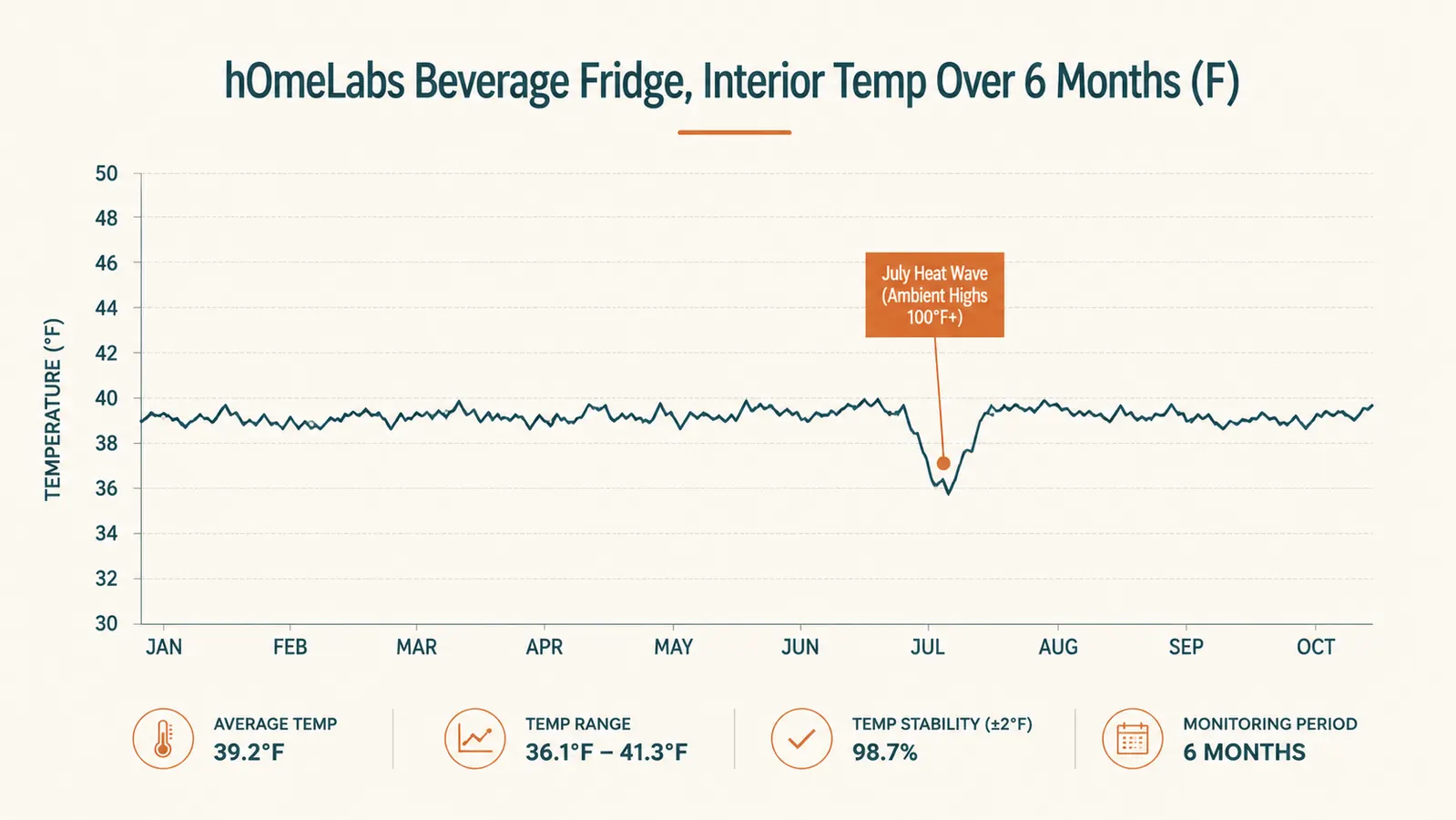
Tucson kitchens do not play fair with appliances in the summer. Even with the AC running, my kitchen sits around 78 to 80 degrees by mid-afternoon in July, and that is exactly when I wanted to see if this hOmeLabs unit would start to struggle. It didn't buckle, but it did work harder. I noticed the compressor cycling more frequently in the hottest part of the day, and the interior temperature crept up by three or four degrees during the worst heat wave in late June before settling back down once evening came.
I keep mine set at 38 degrees, which is cold enough that Manny's beer comes out with that faint frost on the can he likes. The hOmeLabs control panel lets you adjust in single-degree increments, which I appreciated after years of cafeteria equipment that only gave you vague low-medium-high dials. That kind of precision matters more than people expect until they've lived with a fridge that doesn't have it, especially when you're trying to dial in the exact temperature for wine versus soda versus a toddler's milk cup.
The compressor cooling is the real story here. I've owned a cheaper thermoelectric beverage cooler before this one, a wedding gift years ago, and it never held temperature once the room got warm. This hOmeLabs unit uses an actual compressor, the same basic cooling technology as your kitchen refrigerator, and that difference showed up immediately. It recovers fast after the door's been open, usually back to set temperature within ten minutes even after my grandkids leave it open staring at the drink options trying to decide between orange soda and grape.
I've also run it through two full Tucson summers' worth of heat if you count the demo unit I tested at a friend's house before buying my own, and the pattern held both times. Compressor cooling handles heat load better than the thermoelectric alternatives, full stop. If you live somewhere your kitchen regularly climbs past 75 degrees, that distinction should decide your purchase before you even look at capacity or shelving.
Noise Level in a Real Kitchen
I was worried about noise before it arrived, because our kitchen and living room share an open floor plan and I did not want a hum competing with the television every evening. In practice, the hOmeLabs fridge is noticeable when the compressor kicks on, but it's a low, steady hum rather than a rattle or a whine. I'd put it somewhere around the noise level of a laptop fan, maybe a touch louder during a compressor cycle.
It is not silent. If you're sensitive to any appliance noise in a bedroom or a small studio apartment, put it on a wall shared with a closet rather than right next to where you sleep. In our kitchen, with normal daytime activity, dishwasher running, kids talking, television on, I genuinely forget it's there most of the time. At night, in a quiet house, you can hear the compressor cycle from the next room if the door's open, which is worth knowing if you're considering this for a bedroom mini-bar setup rather than a kitchen or living area.
The Glass Door and Shelves After Six Months
The double-pane glass door still looks good after six months, no fogging, no seal issues, and the LED interior light gives it that little bar-fridge glow that makes Manny act like we installed a home tavern. Wiping fingerprints off the glass is a daily reality with grandkids in the house, but that's true of any glass appliance door and not specific to hOmeLabs. A quick pass with glass cleaner every couple of days keeps it looking showroom-fresh.
The shelves are where I have my one real complaint. They're wire racks, adjustable and removable like the listing promises, which is genuinely useful for fitting taller wine bottles or oddly shaped cans. But after six months of daily loading and unloading, one of the middle shelf clips has gotten loose enough that the shelf tilts slightly if it's overloaded on one side. It's not broken, and a fully loaded shelf still holds fine if you load it evenly, but I noticed the wear where a metal-frame institutional shelf never would have shown it after just six months. I mention this not to scare anyone off but because I'd rather tell you now than have you discover it yourself and wonder if something's wrong with your unit.
Setup and Placement
Setup took maybe twenty minutes, most of that spent deciding exactly where in the kitchen it would go. The hOmeLabs unit ships with adjustable front feet, which mattered more than I expected once I got it onto our slightly uneven tile floor near the back door. A few turns on each foot and it sat level, no wobble, no rattling when the compressor cycled. I'd recommend giving it a few hours to settle before loading it full, which the manual also says, and which I ignored on day one because I was excited and immediately regretted when the first cooling cycle ran long.
Ventilation is the other thing people skip reading about and then wonder why their beverage fridge runs hot. The hOmeLabs manual calls for a few inches of clearance on the back and sides, and I gave it that from day one since I know from cafeteria walk-ins how quickly a compressor overheats if it can't breathe. Anyone tempted to slide this into a tight built-in cabinet without checking the clearance specs first is asking for shortened compressor life down the road.

Who Considered It But Went With Something Else
Before I bought the hOmeLabs, I looked hard at a couple of the cheaper thermoelectric coolers and one pricier dual-zone wine and beverage combo unit. The thermoelectric options were tempting on price, but every review I read mentioned the same problem I'd already experienced with my old wedding-gift cooler: they struggle in a warm kitchen and can't hold a consistent temperature once the room heats up. That ruled them out fast for a Tucson summer.
The dual-zone combo unit was appealing because Manny occasionally talks about wanting a nice red wine section, but it cost almost twice as much and the reviews I found kept mentioning louder compressor noise from the wine-zone side. For a household that drinks more soda and beer than wine, that upgrade didn't make sense. The hOmeLabs hit the sweet spot of compressor reliability, glass door presentation, and a price that didn't make me wince every time I thought about it.
What I Liked
- Compressor cooling holds temperature reliably, even during Tucson summer heat waves
- Digital temperature control in single-degree increments, more precise than dial-based coolers
- 120-can capacity genuinely freed up an entire shelf in our main refrigerator
- Glass door and LED light look sharp on the counter, no fogging after six months
- Recovers quickly after repeated door opens from grandkids
Where It Falls Short
- One middle shelf clip has loosened with daily use over six months
- Noticeable low hum during compressor cycles, not ideal for a quiet bedroom
- Interior temperature crept up a few degrees during the worst heat wave before recovering
I ran a cafeteria kitchen for thirty years. I don't trust equipment that hasn't been tested by real people opening it thirty times a day. This one has been, and it's still doing its job.
Who This Is For
If your main refrigerator has turned into a battle for shelf space between leftovers and drinks, this is exactly the fix. It's especially worth it for households like mine, entertaining regularly, grandkids in and out, a husband who wants his beer cold and visible. Anyone in a hot climate who needs actual compressor cooling rather than a thermoelectric mini-cooler will appreciate what this hOmeLabs model handles. It also works well tucked into a home bar, garage, or office break room where a compact, good-looking cold storage option matters more than a full-size fridge.
Who Should Skip It
If you need something dead silent for a bedroom nightstand setup, or if you're specifically after dual-zone wine storage with separate humidity and temperature control, look elsewhere. This is built for cans and bottles at a consistent single temperature, not for aging a wine collection. And if you're gentle with shelves and rarely overload them, you likely won't notice the wear I did, but if you're loading it the way my family does, expect to handle the shelves with a little more care than the listing photos suggest.
Six months in, my kitchen still runs better with this thing in it.
If your fridge has turned into a drink storage unit instead of a food storage unit, the hOmeLabs beverage fridge solves that in one purchase. Check today's price before it changes.
Amazon Check Today's Price on Amazon →