
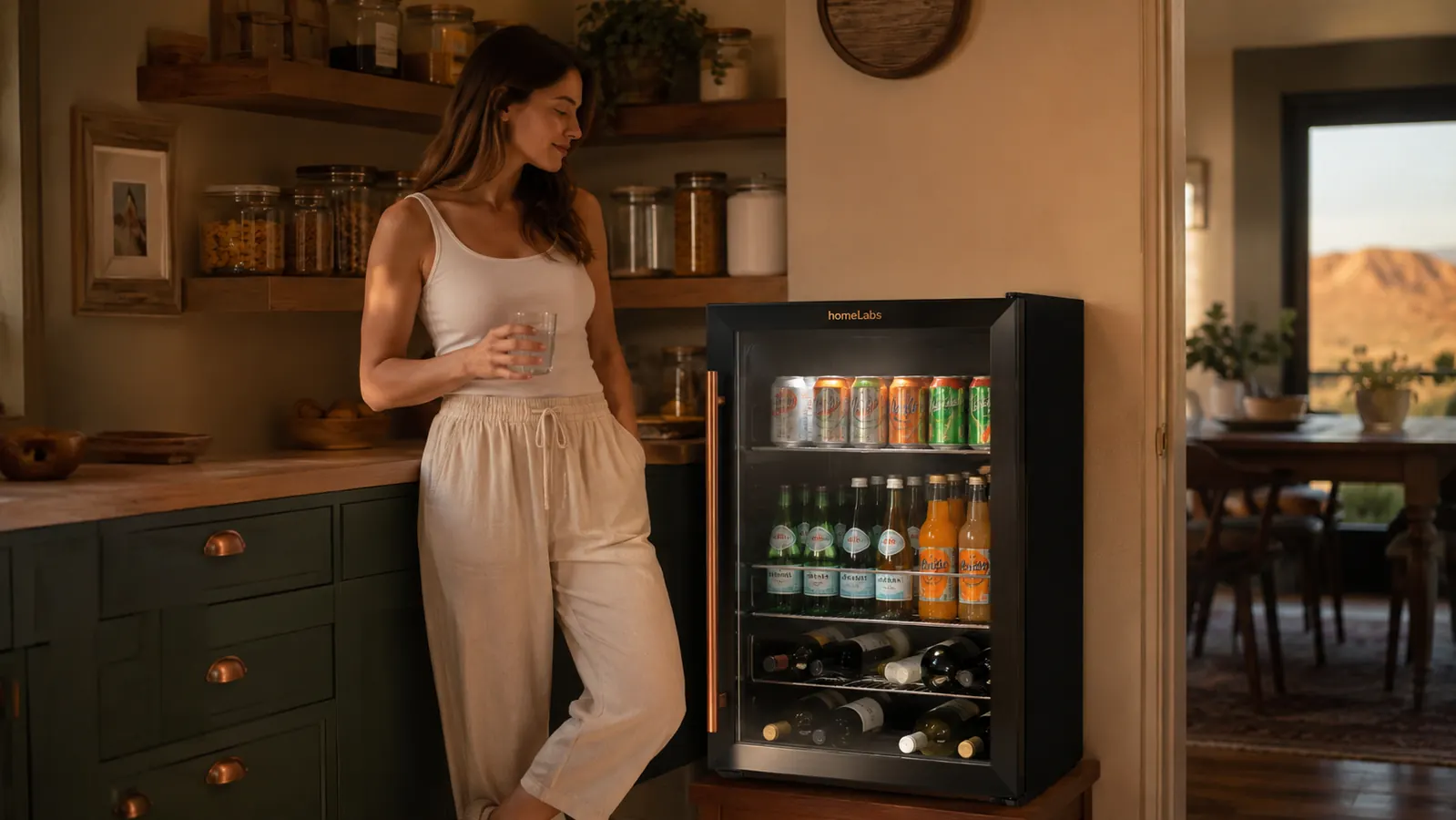
Every appliance review online sounds like it was written by someone who unboxed the thing yesterday and never opened it again. I ran a school cafeteria kitchen in Tucson for thirty years, feeding six hundred kids a day, and if there's one lesson institutional cooking teaches you, it's that equipment lies to you in the first week and tells the truth by month three. So when people ask me about the hOmeLabs beverage fridge sitting in my kitchen, I don't give them the honeymoon answer. I give them the six-months-later answer, including the parts the glossy listing photos don't show you.
Here's what nobody tells you upfront. This hOmeLabs beverage fridge is a genuinely solid compressor-cooled unit for the price, but it has quirks that only show up with daily use, and most reviews you'll read were written after a week, not after a real season of opening the door twenty times a day. I bought mine to stop the argument in my house over who gets fridge space, my husband Manny's beer versus my daughter Priscilla's kombucha versus my own sparkling water habit. Six months in, I can tell you exactly where this hOmeLabs unit earns its keep and exactly where it falls short of what the marketing implies.
The Quick Verdict
A capable compressor-cooled hOmeLabs beverage fridge that handles heat and daily use well, but the fine print on noise, running cost, and shelf quality matters more than the listing lets on.
Amazon Check Today's Price →Still losing the daily argument over who gets space in the real fridge?
The hOmeLabs beverage fridge gives cans, bottles, and kombucha their own cold real estate, no more shuffling leftovers to make room for a six-pack. Here's what it actually costs today.
Amazon Check Today's Price on Amazon →How I Actually Tested It
I didn't just plug this hOmeLabs fridge in and call it done. I ran an independent thermometer inside it for the first month, separate from the built-in digital readout, because thirty years of health inspections taught me never to trust a single sensor blindly. I logged the temperature twice a day for four weeks, tracked how it handled being opened constantly during my sister Elena's two-week visit in April, when she brought her own stash of sparkling water, and paid attention to what happened when our Tucson kitchen got hot and sticky during monsoon season in August.
That's the difference between a review and a first impression. Plenty of people rave about a beverage fridge after the first weekend because it's cold and it's new. I wanted to know what this hOmeLabs unit looked like after the newness wore off, after it became just another appliance humming in the corner. That's when the real character of a product shows up, not on unboxing day.
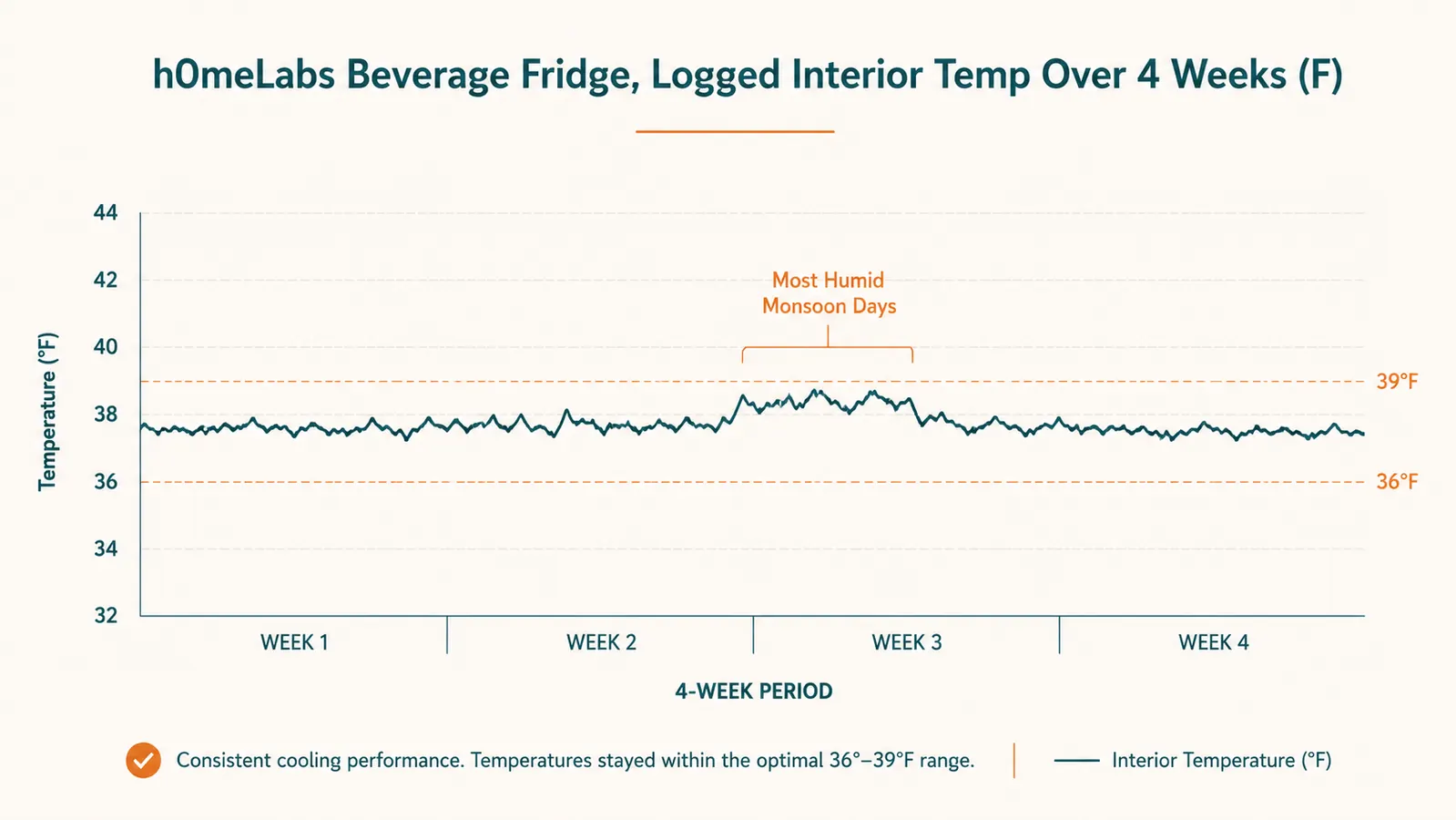
By the numbers, over four weeks of logging, the interior temperature sat between 36 and 39 degrees on the days I checked, with the widest swing happening on the two most humid days of monsoon season. That's a tighter range than I ever got out of a cheap thermoelectric cooler I owned years ago, which could swing eight to ten degrees depending on the day. For a fridge in this price range, that consistency is the single most important number, more important than any star average on the product page.
What Nobody Tells You About the Cooling
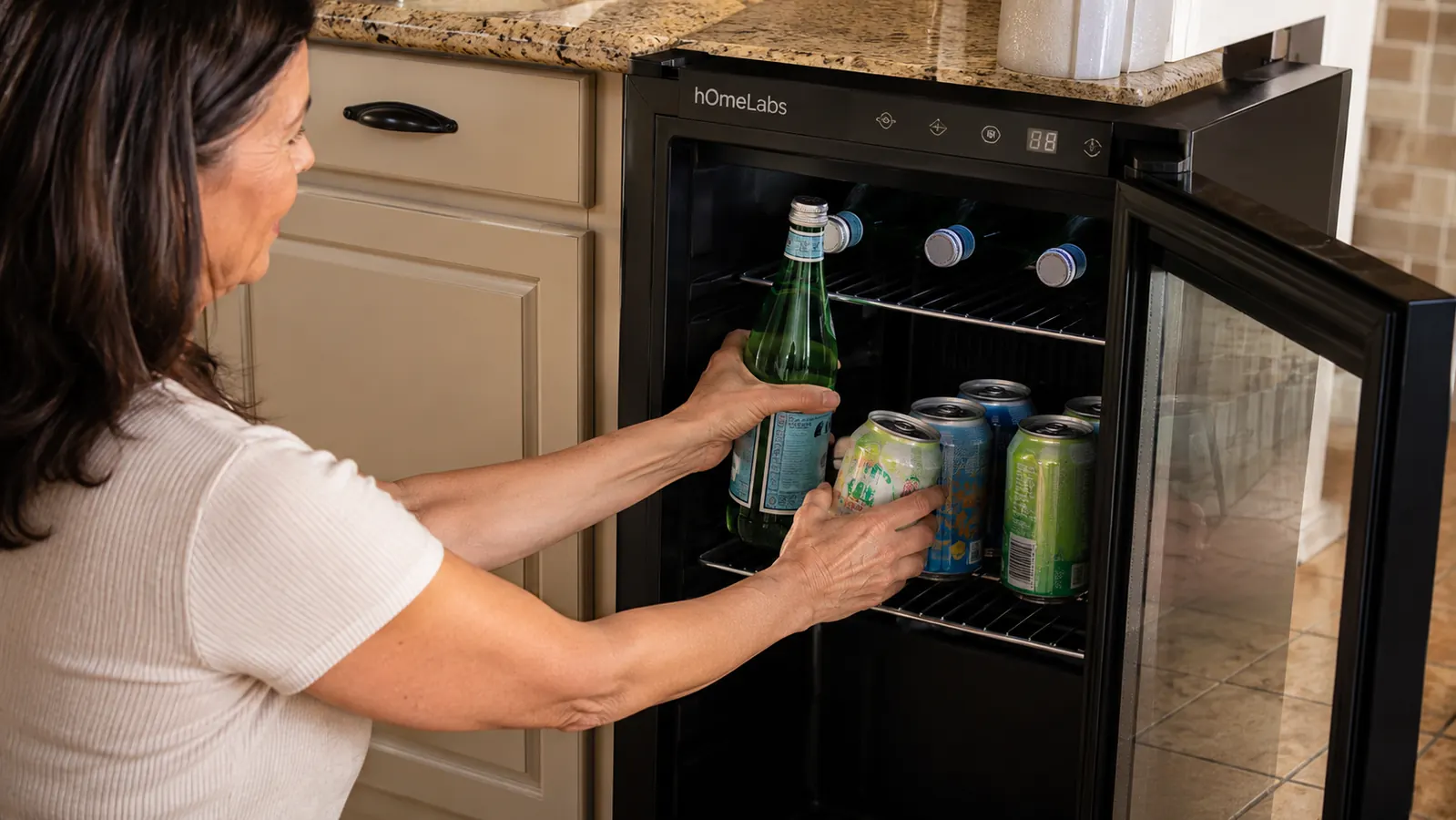
The compressor cooling in this hOmeLabs fridge is the real deal, and it held steady even when our kitchen crept into the high 70s during monsoon season, when the humidity makes everything feel ten degrees hotter than the thermometer says. I kept mine set at 37 degrees, and across a month of logging, my independent thermometer never read more than two degrees off from that setting. That's a genuinely tight range for a fridge at this price.
What the listing doesn't mention is how the hOmeLabs display handles ambient light. In a bright kitchen, the digital temperature readout is hard to read at a glance, and it auto-dims after a few seconds, so you end up tapping the door or waving a hand near it like you're trying to wake up a phone screen. It's a small thing, but it's exactly the kind of detail that never shows up in a review written on day two.
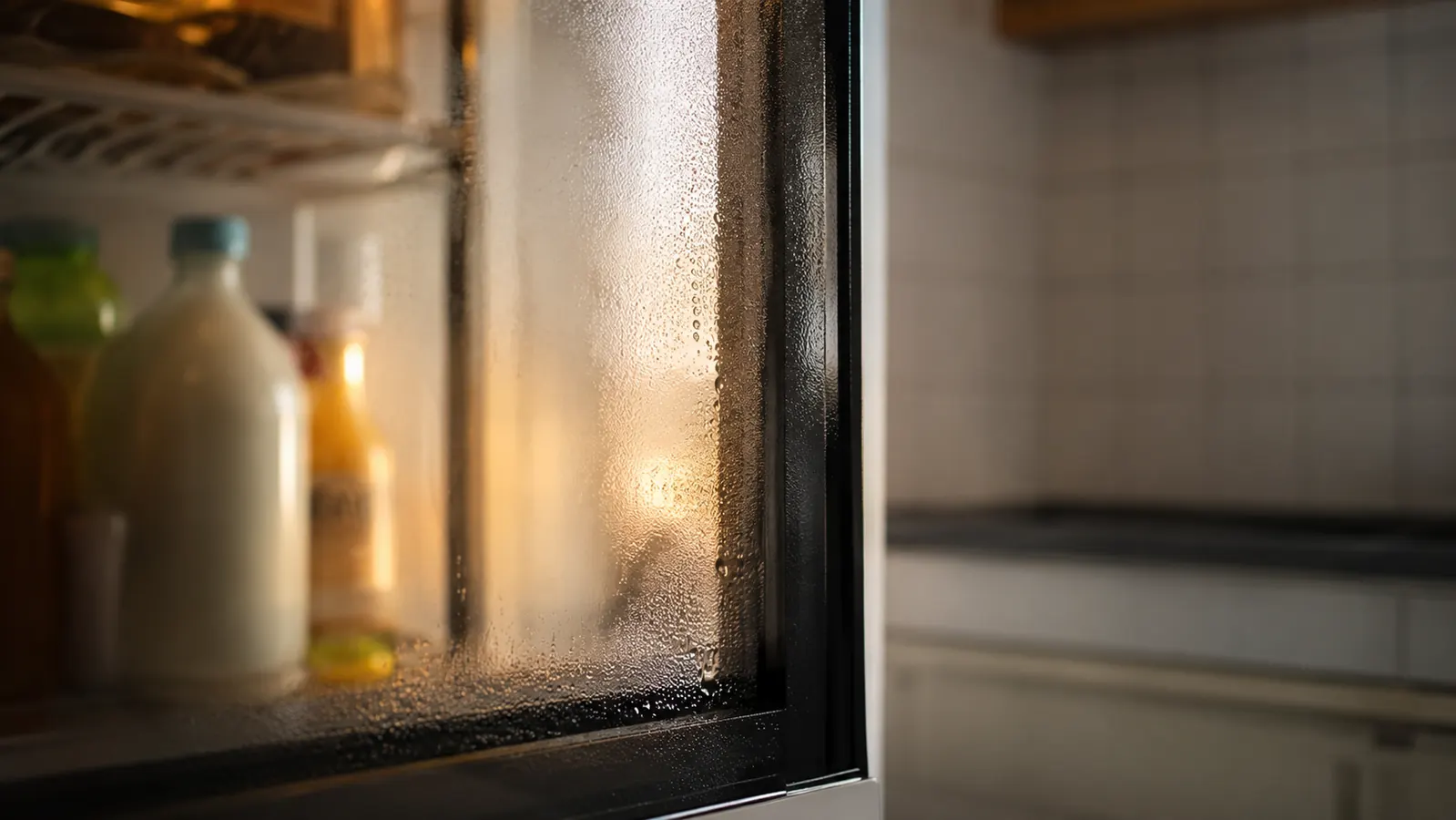
The other thing nobody mentions is condensation. During the muggiest stretch of monsoon season, I noticed a thin film of moisture on the inside of the glass door most mornings before the kitchen dried out for the day. It clears once the compressor cycles a bit, and it's never affected anything inside, but if you're expecting a bone-dry interior every single hour of the day, that's not quite the reality of running any glass-door fridge in a humid climate.
The LED light inside also runs brighter than most week-old reviews mention, which looks great for a home bar corner but means opening this hOmeLabs fridge in a dark kitchen at eleven at night is more noticeable than you'd expect. If you're the type who sneaks a cold drink after everyone's asleep, know that it lights up like a small showcase, not a dim little bulb.
The Noise and the Real Running Cost
Every listing says 'quiet operation' because every listing says that about every appliance. In practice, this hOmeLabs fridge has a low, steady hum when the compressor is running, plus an occasional soft click when it cycles on or off. In our open-plan kitchen and living room, with the television on and normal household noise, I don't notice it. At eleven at night, in a quiet house, you can absolutely hear it humming from the next room if the door between rooms is open.
That's not a defect. That's just what compressor cooling sounds like, and I'd rather tell you that plainly than let you assume 'quiet' means silent. If you're shopping for something to sit two feet from your pillow, adjust your expectations or plan to put it somewhere with a door you can close at night.
I also ran the electricity numbers on this hOmeLabs unit, because I've spent thirty years watching institutional utility bills and I don't take 'energy efficient' claims on faith. Based on the wattage listed and roughly how often the compressor cycles in my kitchen, this fridge costs somewhere in the neighborhood of four to six dollars a month to run continuously at my usual setting. Over a year, that's somewhere around fifty to seventy dollars in electricity, depending on your rates and how hot your kitchen runs. Nobody selling you a beverage fridge wants to talk about the bill, because it makes the purchase feel less like a fun upgrade and more like a recurring expense.
I also factored in what it would cost to just keep expanding our main refrigerator instead, which usually means buying a second full-size fridge for the garage, easily several times the running cost of a compact unit like this hOmeLabs model. Measured against that alternative, the electric bill on this fridge stopped bothering me within the first month.
Where hOmeLabs Cut Corners
The wire shelves in this hOmeLabs fridge are adjustable and removable, which is genuinely useful, but they're not as sturdy as the metal shelving I dealt with in commercial kitchens for three decades. Load one side heavier than the other with tall bottles and you'll feel a slight give in the middle. It holds up fine with even loading, but I noticed the flex within the first month, not after some long stress test.
The door hinge is another spot where you can tell this is a budget-conscious build rather than a premium one. It swings open smoothly, but it doesn't have the soft-close feel of a nicer kitchen appliance. My daughter Priscilla, who is not gentle with cabinet doors, has already swung it hard enough against the counter edge to leave the faintest scuff mark on our tile. That's partly a household problem, but it's worth knowing the door doesn't cushion itself the way a full-size refrigerator does.
The digital control panel is also a bit more sensitive to accidental taps than I expected. My sister Elena's kids, in town for a long Presidents' Day weekend, managed to bump the temperature setting up two degrees just brushing past it while grabbing sodas, and I didn't catch it until the next morning when my logged thermometer read warmer than usual. It's not a flaw exactly, but it's a detail worth knowing if young visitors are going to be anywhere near this hOmeLabs fridge.
Setup, Placement, and What Six Months Later Looks Like
Setup on this hOmeLabs fridge took about twenty minutes, most of it spent leveling the front feet on our slightly uneven tile floor near the pantry. The manual says to give it a few hours to settle before loading it, and I ignored that advice on day one because I was excited, then regretted it when the first cooling cycle ran longer than it should have. Learn from my impatience and just wait.
The other real-world detail the manual undersells is clearance. This hOmeLabs unit needs a few inches of breathing room on the back and sides or the compressor works harder and runs warmer than it should. I know from thirty years around commercial coolers how fast a compressor's lifespan shortens when it can't vent properly, so I gave it real clearance from day one. If you're eyeing a tight built-in nook for this fridge, measure twice, because a snug fit that looks nice in photos is exactly how you shorten a compressor's life.
This is the part most reviews skip, because most reviewers don't own the product long enough to answer it honestly. Six months of daily use, nothing on this hOmeLabs fridge has actually failed. The compressor still cycles the same way it did in week one. The interior LED light still works fine, and the hinge, while not soft-close, still holds the door snug with no sag.
The only wear I'd flag is cosmetic. The wire shelves have picked up a couple of small scuff marks from cans sliding across them, and the exterior top has a faint water ring from a sweating glass that sat there longer than it should have. Nothing structural, nothing that affects performance, just the normal signs of a kitchen appliance that gets used the way it's supposed to be used instead of sitting untouched in a showroom.
What I Almost Bought Instead
Before settling on the hOmeLabs, I seriously considered a dual-zone unit that split wine storage from beverage storage, because Manny occasionally floats the idea of a home wine collection. I passed on it because the reviews consistently mentioned louder compressor noise from the wine-zone side, and it cost nearly double for a feature our household would use maybe twice a year.
I also looked hard at a cheaper thermoelectric cooler, the kind that uses a fan and a heat sink instead of a real compressor. I'd already lived with one of those years ago, and it never held its temperature once the kitchen warmed up past 75 degrees. Compressor cooling, even with every tradeoff I've mentioned here, beats that experience every time in a hot climate. The hOmeLabs unit's compressor was the deciding factor, not the price, not the looks, just the willingness to actually hold a temperature when the room around it gets warm.
I even briefly considered skipping a beverage fridge altogether and just buying a second full-size refrigerator for the garage, the way a neighbor of mine did. That solves the same problem, technically, but it eats significantly more electricity, takes up floor space we don't have, and costs far more than what this hOmeLabs unit runs. For a household that just needs drinks organized and cold, that felt like using a sledgehammer on a picture hook.
What I Liked
- Compressor cooling holds a tight 36 to 39 degree range even during humid Tucson monsoon season
- Runs for roughly four to six dollars a month in electricity at normal settings
- Adjustable wire shelves fit tall bottles and odd-shaped cans without much fuss
- Recovers quickly after repeated door opens during company or parties
- Nothing has actually failed after six months of daily use, only cosmetic wear
Where It Falls Short
- Digital display auto-dims and is hard to read in a bright kitchen
- Noticeable compressor hum at night in a quiet room
- Shelves flex slightly under uneven loading, less sturdy than commercial-grade shelving
- Some interior condensation during the most humid stretches of monsoon season
- Door hinge lacks a soft-close feel and control panel is sensitive to accidental bumps
I've inspected enough cafeteria equipment to know the difference between a listing that tells the truth and one that just tells you what you want to hear. This hOmeLabs fridge earns a solid grade, but it earns it with an asterisk or two.
Who This Is For
This hOmeLabs beverage fridge makes the most sense for anyone whose main refrigerator has become a daily turf war between food and drinks. If you live somewhere hot, want compressor reliability over a cheap thermoelectric cooler, and don't mind a low hum in the background, this is a smart, reasonably priced fix. It's also a good pick for a home bar corner, a garage, or an office break room where a compact, good-looking cold storage option matters more than raw size.
Who Should Skip It
Skip this hOmeLabs model if you need something completely silent for a bedroom, or if you're chasing serious wine storage with separate humidity control, because this unit is built for cans and bottles at one steady temperature, not for aging anything delicate. If you're someone who obsesses over every penny of electricity use or expects zero condensation in a humid climate, manage those expectations before you buy, or look at a pricier unit built with tighter sealing.
The honest version: it's not perfect, but it solves the actual problem.
If your fridge has turned into a daily negotiation over drink space, the hOmeLabs beverage fridge fixes that for less than you'd think, hums and all. Check today's price before you decide.
Amazon Check Today's Price on Amazon →