
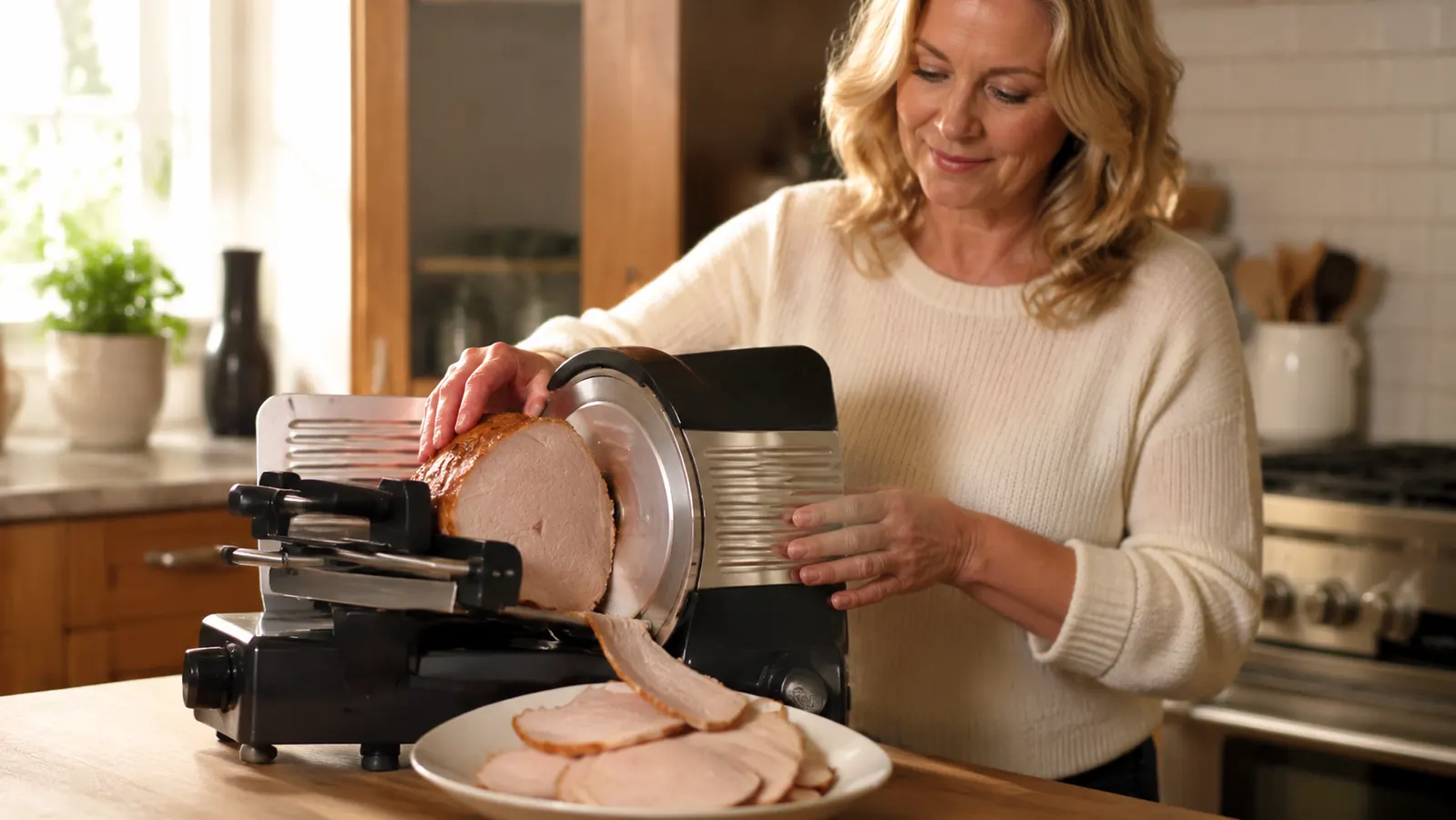
Thirty years of running a school cafeteria kitchen in Tucson taught me that deli-thin slicing is not a knife skill, it's a machine setting. I fed 600 kids a day off industrial slicers that could shave a case of turkey breast into see-through sheets in minutes, and when I finally bought a countertop CUSIMAX electric meat slicer for my own kitchen, I expected the same result right out of the box. It didn't happen that way at first. My first few batches of turkey came out closer to sandwich-shop thick than deli-counter thin, and it took me a few weekends of trial and error to figure out that the machine wasn't the problem. My technique was.
If you've got a CUSIMAX slicer sitting on your counter, or you're deciding whether one is worth the space, this is the guide I wish someone had handed me the day I unboxed mine. Five steps, nothing complicated, covering exactly what changes when your homemade roast beef or turkey breast comes out shaved paper-thin instead of chunky and uneven. The CUSIMAX's 1 to 20mm adjustable thickness dial and its two removable 8.7 inch stainless steel blades give you the range to go from deli-counter thin to thick roast slices on the same machine, but only if you understand what each part of the process is actually doing. I tested these habits over several months slicing turkey breast, ham, roast beef, and blocks of cheese, until getting a consistent shaved slice stopped being a guessing game and started being routine.
Tired of Deli-Counter Prices for Meat You Could Slice Thinner at Home?
The CUSIMAX electric deli meat slicer gives you a 1 to 20mm adjustable thickness dial and two removable 8.7 inch stainless steel blades, so you can shave meat and cheese paper-thin without paying deli-counter markup every week.
Amazon Check Today's Price on Amazon →Step 1: Chill the Meat Until It's Firm, Not Frozen
This is the single biggest reason home slicing goes wrong, and almost nobody talks about it. Room-temperature meat is soft, it squishes and tears under a spinning blade instead of shaving cleanly, and that's true whether you're using a fancy CUSIMAX slicer or a basic one. Before I slice anything on mine, I put the roast, turkey breast, or ham in the freezer for about 20 to 30 minutes first, just long enough to firm up the outside without actually freezing it solid. You want the meat stiff enough to hold its shape against the blade but still soft enough to cut through without fighting the motor.
I learned the hard way that fully frozen meat is just as bad as room-temperature meat. I once tried to save time by tossing a rock-hard frozen turkey breast straight onto the CUSIMAX carriage, and the blade struggled, the slices came out ragged, and the motor strained in a way that worried me. Now I aim for meat that gives slightly when I press a finger into it, firm like a stress ball, not hard like an ice cube. That window is usually 20 to 30 minutes in the freezer for a standard deli-size roast, sometimes closer to 45 minutes for a thicker cut like a whole turkey breast.
If you're slicing cheese instead of meat, the same rule applies but the timing is shorter, about 15 minutes in the freezer for a block of cheddar or provolone. Cheese at room temperature smears against the CUSIMAX's stainless steel blade instead of shaving cleanly, and you end up with a gummy mess instead of the thin, even sheets you're after. Chilled firm, both meat and cheese behave the same way against the blade, cutting cleanly instead of dragging or tearing.
Step 2: Start at the Thinnest Setting and Work Up
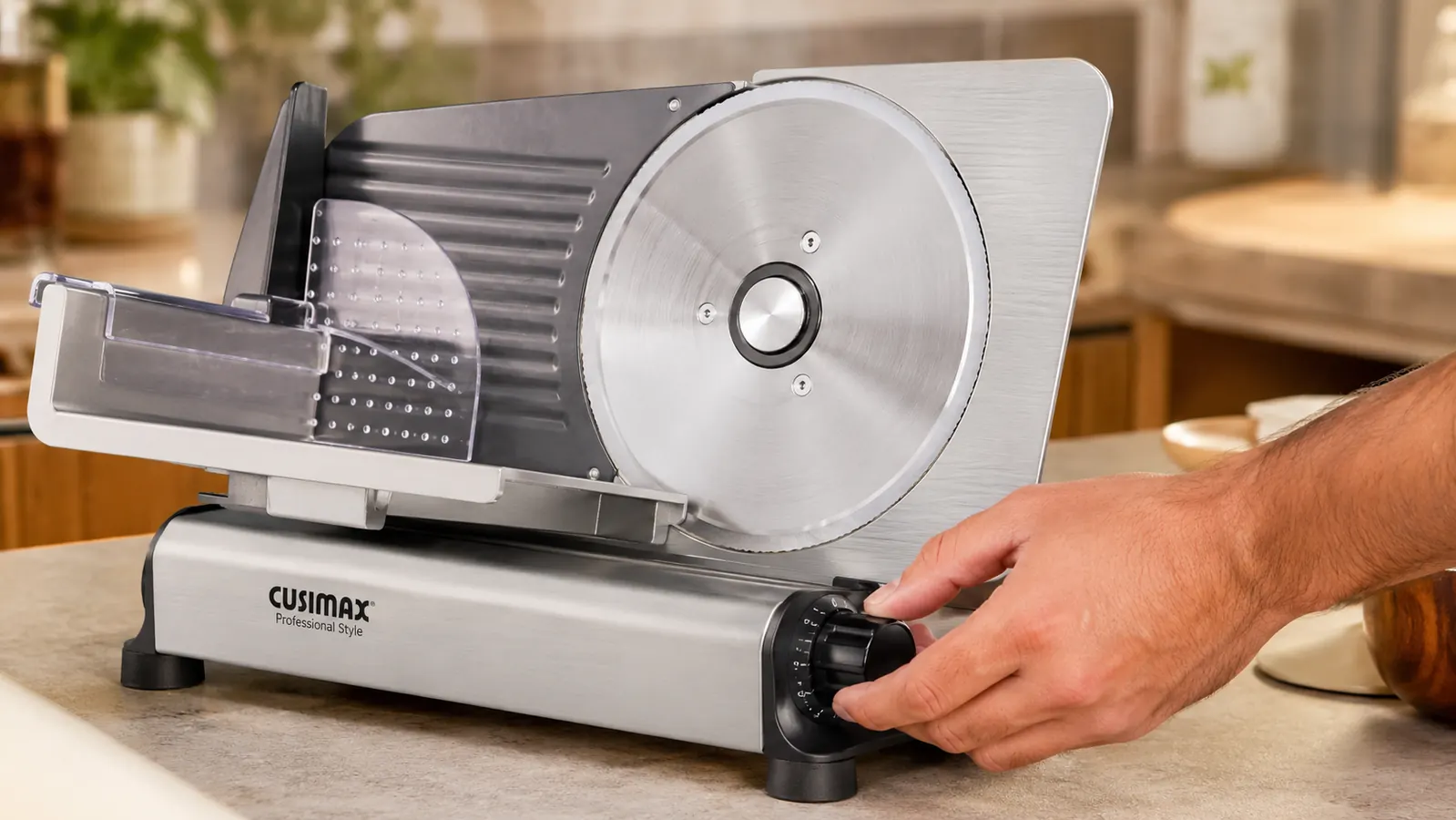
The CUSIMAX's thickness dial runs from 1mm all the way up to 20mm, which is a wide enough range to cover shaved deli meat on one end and a thick roast beef slice on the other. My advice for anyone trying to get true deli-thin results is to start at the lowest setting the dial allows, run a single test slice, and adjust from there instead of guessing at a number in the middle and hoping it looks right. I made the mistake early on of setting the dial to what looked like a reasonable middle ground, and my turkey came out closer to sandwich-shop thick than the see-through slices I actually wanted.
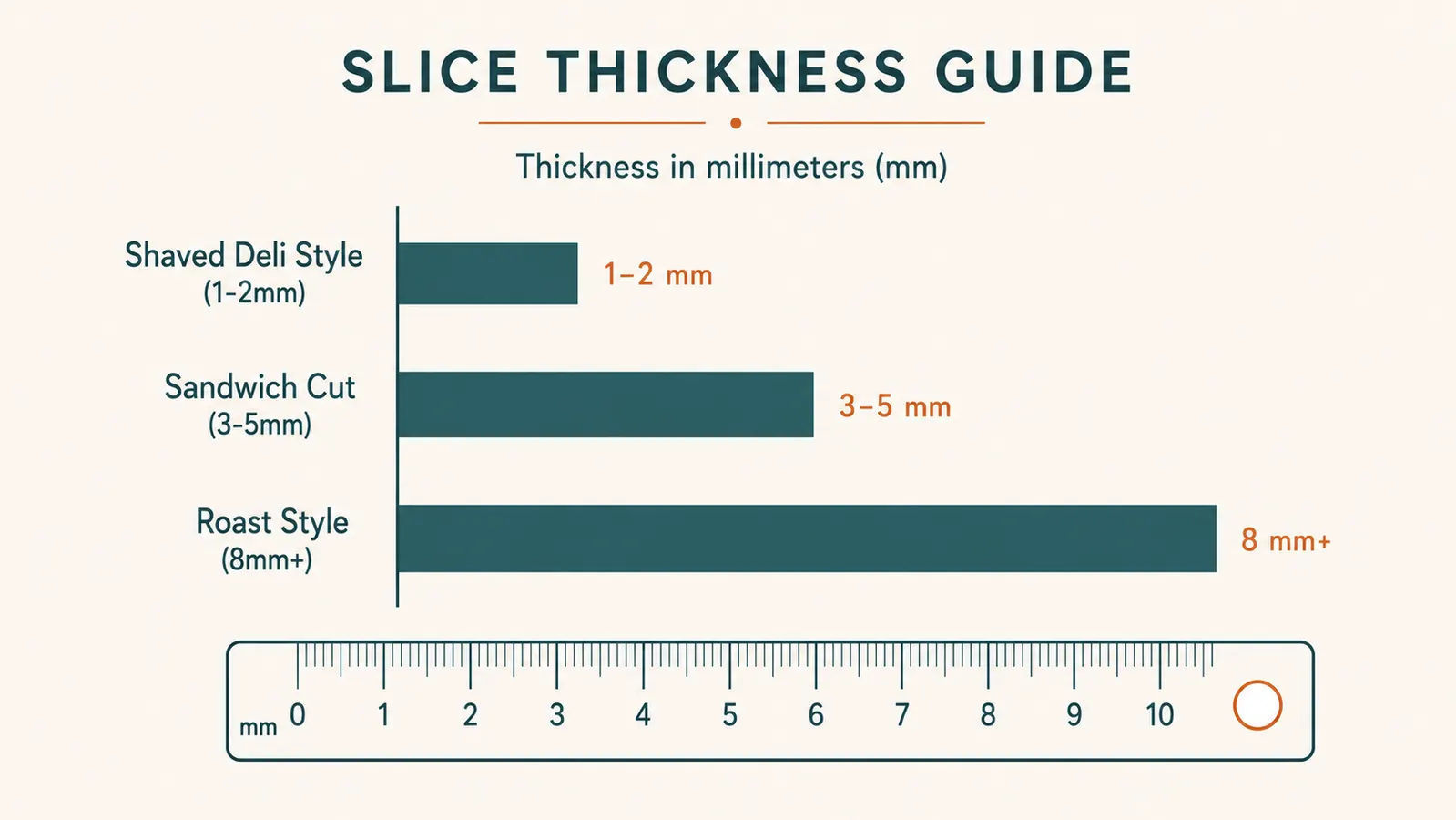
For genuine deli-counter results, meaning slices thin enough to see your countertop through them, I keep the CUSIMAX dial between 1 and 2mm. That range is what most deli counters are actually cutting at, even though it feels almost too thin the first time you dial it in. For everyday sandwich meat that holds together well between two slices of bread, I move up to 3 to 5mm. Anything past that, 8mm and up, starts feeling more like a roast beef dinner slice than deli meat, which is still useful but a different job entirely.
One thing I didn't expect when I bought my CUSIMAX: the dial doesn't just control thickness, it also adjusts how much of the blade's cutting edge is exposed to the food carriage. At the thinnest settings, less of the blade is exposed, which is part of why paper-thin slices take a steadier, slower feed than thicker cuts. Rushing a 1mm setting the way you'd rush an 8mm setting is how you end up with torn, uneven shavings instead of the clean sheets you're going for.
Step 3: Load the Food Carriage Correctly and Keep Your Hand Behind the Guard
The removable food carriage on the CUSIMAX is there for a reason beyond convenience, it's the barrier between your hand and a spinning stainless steel blade. I set the meat firmly into the carriage, squared up against the back plate, before I ever turn the machine on. A crooked load produces crooked, uneven slices no matter how well you've chilled the meat or set the thickness dial, so I always take the extra ten seconds to square it up first.
Once the machine is running, my hand stays on the carriage handle and nowhere near the blade itself, the same rule I drilled into every cafeteria line cook I ever trained on institutional equipment. The CUSIMAX's carriage is designed to keep your fingers a safe distance from the exposed edge, but that only works if you actually use the handle instead of pushing the meat with your fingers when it gets down to the last inch or two. For that last stubborn end piece, I stop the machine, unplug it, and either finish that piece with a knife or save it for the next slicing session rather than reaching in close to a live blade to save one bite of meat.
I also keep a cutting board or plate positioned right where the slices fall, close enough that they land flat instead of curling or stacking unevenly on the counter. Deli-thin slices are delicate. If they fall too far or hit an angled surface, they tear or fold on themselves, and you end up reassembling torn scraps instead of laying whole sheets onto your sandwich.

Step 4: Feed at a Steady, Even Pace and Let the Blade Do the Work
This is where most people rush and ruin an otherwise good setup. The CUSIMAX's motor and stainless steel blade are built to do the cutting, your job is just to feed the meat forward at a slow, steady speed and let the blade's spinning motion do the actual slicing. Pushing the carriage too fast, especially at a thin 1 to 2mm setting, is the most common reason home slicers get torn, ragged pieces instead of clean, even sheets.
I count in my head as I feed, roughly one full pass every two to three seconds for the thinnest deli-style settings, a little faster for thicker roast-style cuts around 8 to 10mm. That pace feels almost too slow the first time you try it, especially if you're used to a knife where speed feels like efficiency. With an electric slicer, speed is exactly the opposite of what you want. Slow and steady is what produces the sheet-thin, uniform slices that make a sandwich actually taste like it came from a deli counter instead of a home kitchen.
If I notice slices coming out torn or uneven partway through a roast, I stop and check two things before blaming the CUSIMAX itself: is the meat still cold enough, and am I feeding too fast. Nine times out of ten, it's one of those two, not the machine. A blade that's been cleaned and maintained properly, which I'll cover next, rarely struggles with a properly chilled piece of meat fed at a reasonable pace.
Step 5: Clean and Store the Blade Right After Every Use
A dull or gunked-up blade is the fastest way to ruin deli-thin slicing, and it happens gradually enough that you might not notice until your slices start coming out ragged instead of clean. The CUSIMAX comes with two removable 8.7 inch stainless steel blades, which means you can swap in a clean one while the other soaks, but even with two blades on hand, I clean mine after every single use rather than letting meat residue dry onto the edge overnight.
Removing the blade on the CUSIMAX takes maybe thirty seconds once you've done it a few times, and I always unplug the machine first, no exceptions, before I touch anything near the cutting edge. I wipe down the blade, the carriage, and the thickness dial area with warm soapy water and a cloth, never tossing the blade loose into a sink full of other dishes where you might reach in and not see it. A blade that's coated in dried meat fat or cheese residue doesn't cut cleanly no matter how well you've chilled your food or how slowly you feed the carriage, it just drags and tears instead of shaving.
I also check the blade's edge every few uses for nicks or dullness. A CUSIMAX blade kept clean and dry between uses stays sharp far longer than one left damp or stored touching other metal utensils in a drawer. Since I started drying the blade fully before putting it away, and storing it in the case it came with rather than loose in a drawer, my slices have stayed consistently thin, and I haven't needed to replace a blade yet.
What Else Helps
A few smaller habits round this out. I always slice against the grain for roast beef and pork, which keeps the shaved pieces tender instead of stringy, the same rule that applies whether you're using a knife or a CUSIMAX blade. I keep a damp towel nearby for wiping my hands between batches, since firm, chilled meat can still leave your hands slick enough to lose grip on the carriage handle. I also slice in smaller batches rather than trying to run an entire three-pound roast through in one sitting, because the meat warms up as you handle it, and slice quality drifts as the piece gets less firm toward the end of a long session.
None of this requires special training. It requires understanding that a slicer, even a solid one like the CUSIMAX, is only as good as the temperature of your meat, the thickness setting you actually use, and how clean the blade is when you start. Master those three things and shaved, deli-thin slices at home stop being a special occasion and start being a Tuesday-night habit. The removable food carriage makes cleanup simple, the two included blades mean you're rarely stuck slicing with a dull edge, and the 1 to 20mm range covers everything from shaved turkey to a thick roast dinner on the same countertop machine.
Deli-thin slicing was never about a fancy knife or a special technique. It was about cold meat, a steady feed, and a blade that's actually clean, the same three things that mattered on an industrial slicer feeding 600 kids a day.
Ready to Skip the Deli Counter for Good?
If chilling, dialing in thickness, and cleaning a blade sounds like a lot less work than driving to the deli counter every week, the CUSIMAX electric meat slicer's adjustable dial and removable stainless steel blades make paper-thin slices a routine part of your kitchen, not a special occasion.
Amazon Check Today's Price on Amazon →