
Thirty years running a cafeteria kitchen for six hundred kids taught me one thing fast: food waste does not wait around to be dealt with politely. Leave a scraped hotel pan sitting out for twenty minutes on an Arizona afternoon and the whole kitchen knows it by the smell alone. I retired four years ago and figured a kitchen for two people would never turn the way a commissary kitchen could. I was wrong. Between coffee grounds, onion skins, chicken bones, and the produce that always seems to go soft before we get to it, my trash can here in Tucson was smelling by Tuesday, every single week, no matter how often I took the bag out. That is what finally pushed me to bring in the Ouaken electric composter, and it is the reason I am writing this.
I am Rosa Delgado, and I am not going to pretend a countertop composter is some miracle box you plug in and forget. It is a machine with a cycle, a filter, and a routine, and if you skip the routine, it will smell just like the trash can did. What follows is the exact five-step process I settled on with the Ouaken after about six months of daily use, including the mistakes I made in the first few weeks so you can skip straight past them.
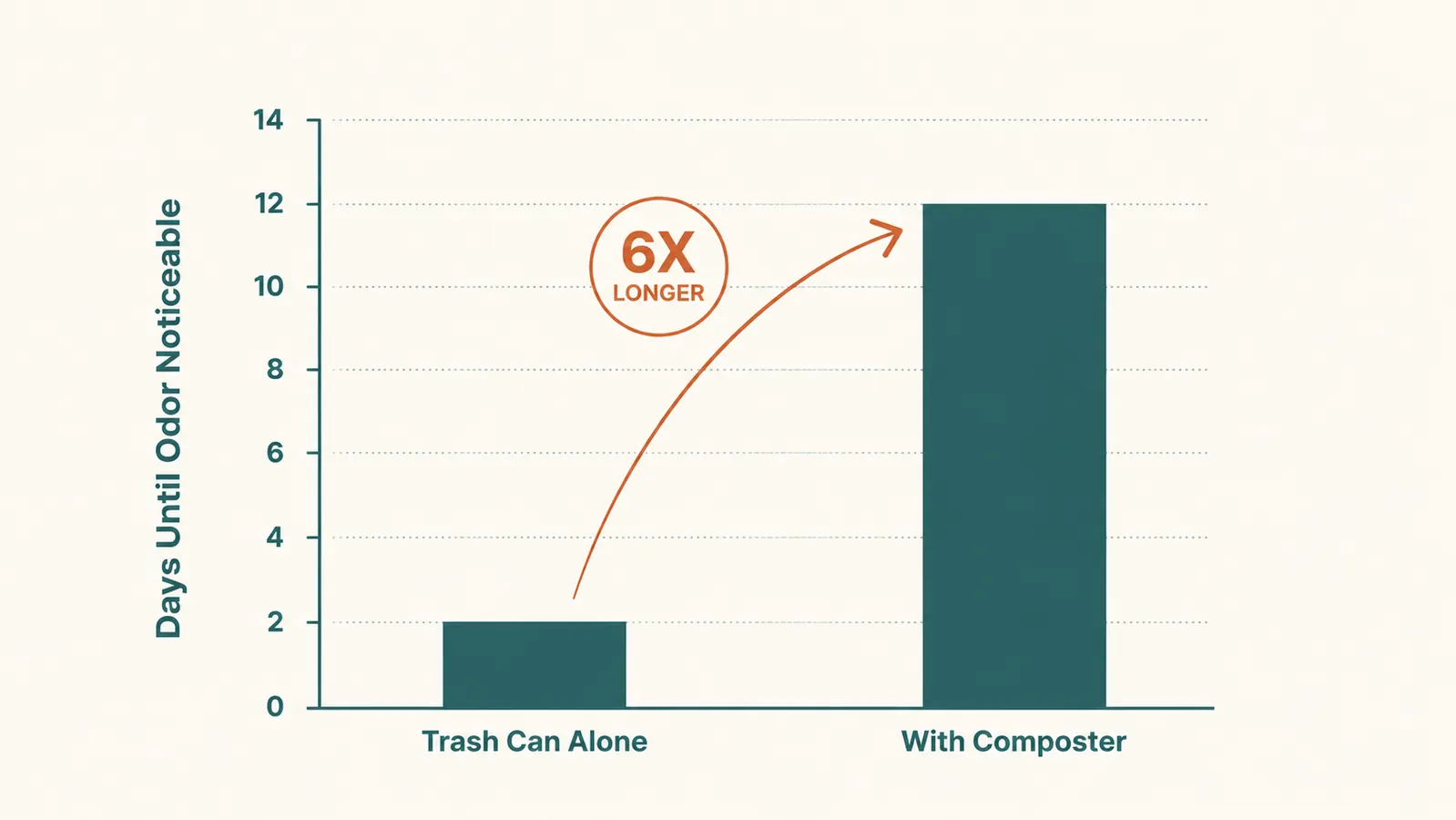
Before I get into the steps, it helps to understand why kitchen trash smells in the first place, because the fix only makes sense once you name the actual problem. It is almost never the dry stuff, the cardboard, the paper towels, the empty cans. It is the wet organic material, the coffee grounds, the vegetable trim, the meat scraps, breaking down at room temperature in a warm kitchen. Arizona kitchens run warm most of the year even with the air conditioning on, so that breakdown happens faster here than it might somewhere cooler. Once I understood that the smell was really just decomposition happening in the wrong place, the solution became obvious: pull that specific category of waste out of the trash stream entirely and process it somewhere controlled. That is the whole job the Ouaken does.
Tired of a trash can that smells by Tuesday?
The Ouaken electric composter is the piece I added that actually broke the cycle in my kitchen. Check today's price and see if it fits your counter.
Amazon Check Today's Price on Amazon →Step 1: Sort Scraps Before They Ever Touch the Trash Can
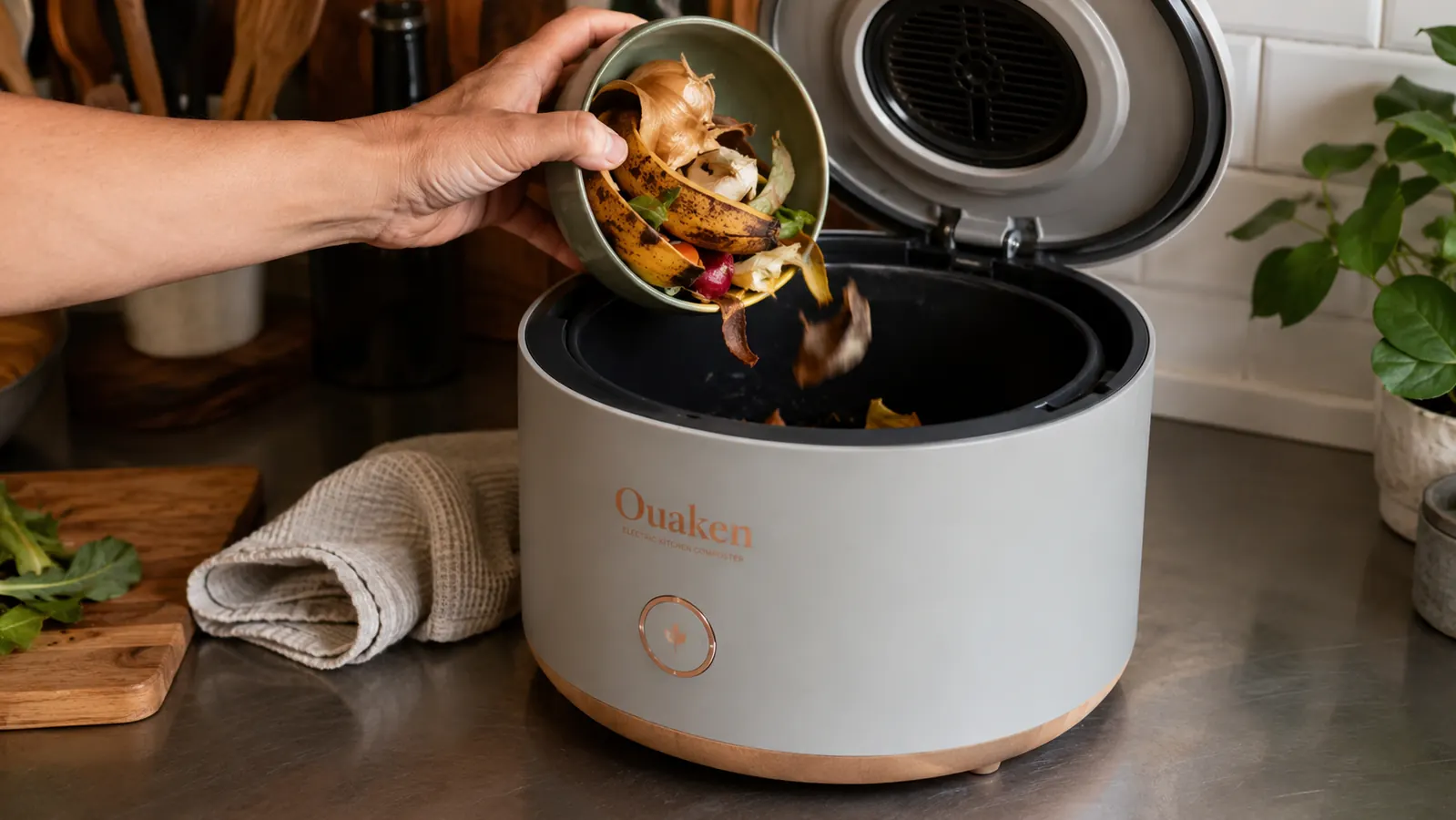
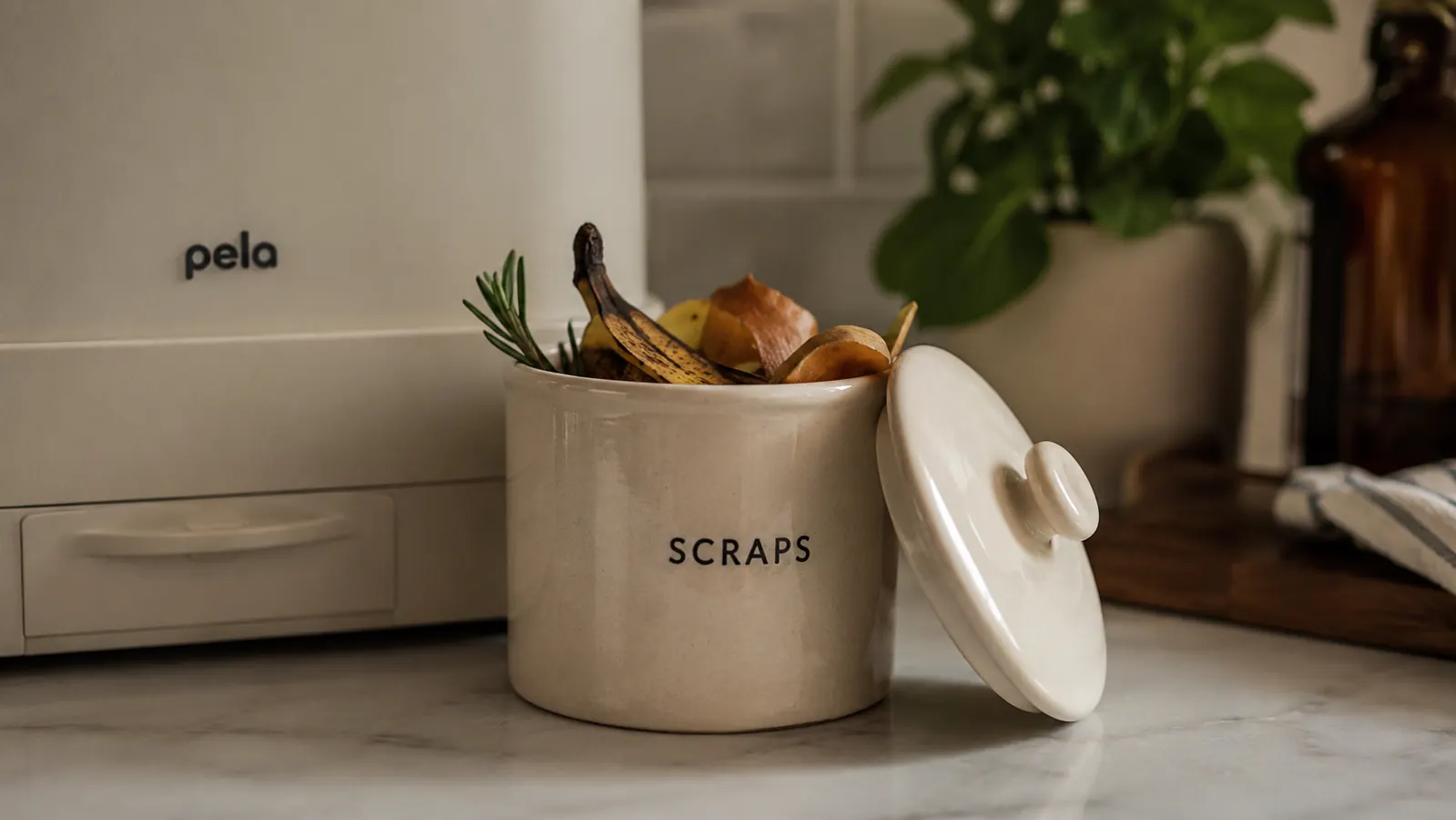
The single biggest change I made was keeping a small closed caddy right next to the cutting board, not across the kitchen by the trash can. If the scrap container is farther away than the trash can, you will use the trash can, guaranteed, no matter how good your intentions are on day one. I keep a lidded ceramic bowl on the counter for the day's coffee grounds, vegetable peels, eggshells, and plate scrapings, and I empty it into the Ouaken once, sometimes twice a day.
Sorting matters because the Ouaken handles most food scraps well, including small bones and dairy in modest amounts, but it does not love excess liquid or huge bones. I learned to drain watery scraps like melon rinds for a minute before adding them, and I break down chicken carcasses instead of dropping a whole one in. That single habit cut my cycle times down and kept the unit from working overtime, which in turn kept it quieter and kept the filter from getting overwhelmed early.
This step sounds small, but it is the difference between a composter that feels effortless and one that feels like a chore. Once the caddy became part of my normal prep routine, the same way I automatically reach for a cutting board, the composter stopped being a project and started being background noise, the good kind. My husband, who was skeptical of the whole idea at first, was the one who started using the caddy without being asked, which told me the habit had actually stuck.
Step 2: Run the Ouaken on a Schedule, Not Randomly
In my first two weeks I ran the Ouaken whenever the bucket looked full, which meant sometimes twice a day and sometimes not for three days. That inconsistency is exactly what let smell creep back in, because uncycled scraps sitting in a warm kitchen do what scraps do. Now I run it every evening after dinner cleanup, whether the bucket looks full or not. That one fixed time slot did more for odor control than any setting on the machine.
A full cycle on the Ouaken takes a few hours depending on the load and the moisture content of what went in, so I set it running while we watch television and it is done before bed. That means I am never opening a bucket of half-processed scraps in the morning rush, which was my biggest complaint with the food-waste routine we had before we owned it.
If your household generates a lot of scraps on a particular day, like a big Sunday cooking session, I have found it is better to run a shorter cycle midday and a full one at night rather than overloading one cycle. The Ouaken handles a full 4-liter load fine, but pushing past that with dense, wet food slows the whole process down and can leave the output feeling underprocessed and slightly damp, which brings back a faint smell you do not want.
Step 3: Handle the Finished Output the Right Way
This is the step nobody tells you about, and it is where a lot of the smell complaints I read online actually come from. What comes out of the Ouaken is not finished garden-ready compost, it is a dry, broken-down grounds material that still needs to finish curing before it goes into soil that is growing anything you plan to eat. Treating it like finished compost too early is where people get disappointed and start blaming the machine for something that was really just a timing mistake.
I empty the output into a covered five-gallon bucket in the garage and let it sit for two to three weeks before I mix it into my raised garden beds. During that curing window it does not smell, because the moisture and the raw food odor are already gone thanks to the machine's cycle. What is left is closer to coffee-ground dirt than kitchen trash, which is honestly the whole point of running the thing every night.
If you do not garden, you do not need the curing bucket at all. I know several neighbors here in Tucson who just bag the output and toss it in with regular yard waste pickup, since most municipal composting programs will take it without complaint. Either way, the key is that emptying the Ouaken's output bin regularly, at least every few cycles, keeps the machine from backing up and keeps that dry grounds smell from building inside the unit itself over time.
Step 4: Clean the Bucket and Filter on an Actual Schedule
I ran a cafeteria kitchen for three decades, and if there is one lesson that applies to any piece of food equipment, home or commercial, it is that nothing self-cleans. The Ouaken's inner bucket and carbon filter need attention, and skipping that is the number one reason people end up saying an electric composter smells. It does not smell because the concept fails, it smells because the filter got ignored for too many cycles in a row.
I wipe down the inner bucket with warm soapy water every week, and I have a reminder set on my phone to check the carbon filter every thirty days. The filter is what actually catches odor during the cycle, so a saturated filter is like running a kitchen hood with no fan, the smell has nowhere to go but out into the room, right when you are standing in it.
I keep one spare filter in the pantry at all times, because there is nothing worse than realizing yours is due for a swap on the same night you have a full bucket of scraps ready to run. That five-minute habit alone has kept the Ouaken smelling like almost nothing at all, even sitting right next to where we cook every night, and it is the single habit I would tell anyone not to skip.

Step 5: Decide What Still Goes in the Regular Trash
A composter is not a replacement for a trash can, and pretending it is leads to overloading it and frustration down the road. Large bones, excessive grease, and packaging still go in regular trash in my house. What changed is that the trash can no longer holds the wet, smelly stuff, coffee grounds, vegetable trim, eggshells, softened produce, so what is left in there is mostly dry and low odor by comparison.
That shift is the real reason the trash-day smell disappeared for us, not because the trash can vanished, but because the Ouaken pulled out the specific category of waste that was causing the smell in the first place. Once you separate those two streams consistently, taking the regular trash out twice a week instead of daily stops being a problem, because there is nothing left in it to rot between pickups.
I also learned to stop treating the Ouaken as an all-or-nothing solution to every kitchen odor. There were a couple of weeks early on when I blamed the machine for a smell that turned out to be a forgotten container of leftovers pushed to the back of the refrigerator, nothing to do with composting at all. Once I started troubleshooting properly, checking the fridge, the disposal, and the drain before assuming the composter was the culprit, I stopped chasing phantom smells and started trusting the routine I had actually built.
What Else Helps
A few small things made this routine easier beyond the composter itself. I keep a box of compostable liner bags for the Ouaken's bucket, which makes cleanup faster on busy weeks and means I am not scrubbing the bucket every single day. I also moved our trash can slightly away from the main prep area once the wet scraps stopped going in it, since it no longer needed to be right at arm's reach for every peeling and scrap. And I keep the kitchen window cracked during the evening cycle, mostly out of habit from years of commercial kitchen ventilation rules, even though the Ouaken's filter usually makes that unnecessary on its own. I also rinse the caddy bowl each morning instead of letting it sit overnight, which sounds fussy but takes about fifteen seconds and keeps the counter itself from ever holding an odor before the scraps even reach the machine.
One more thing worth mentioning: the Ouaken runs quiet enough that we do not think twice about starting it after the kids in the neighborhood have gone to bed, which was not a given when we first looked into countertop composters. A few of the older commercial-style units I researched before buying sounded like they belonged back in my cafeteria kitchen, not on a home counter. That noise level was actually part of why we picked the Ouaken over a couple of other options we considered.
The composter did not make our kitchen smell like nothing. It made our kitchen smell like nothing was rotting in it, which is a different thing and honestly the better one.
Ready to stop dreading trash day in your own kitchen?
The Ouaken electric composter is the one change in this routine that actually matters. Everything else is habit, but the machine does the heavy lifting.
Amazon Check Today's Price on Amazon →