
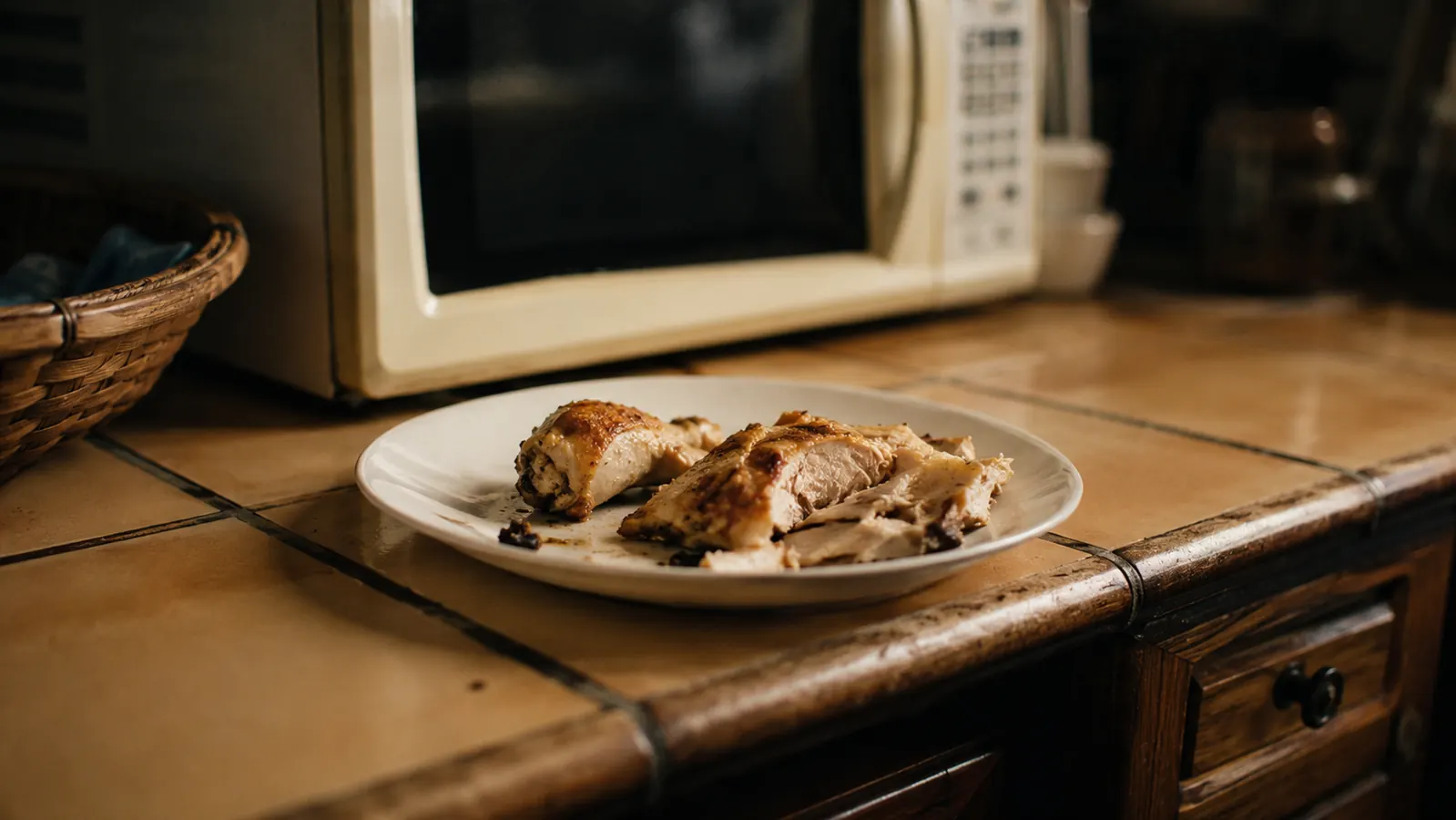
Thirty years I ran the cafeteria line at a middle school here in Tucson, feeding roughly 600 kids a day off industrial ranges and steam tables built to survive a lunch rush. My name is Rosa Delgado, and when I retired two years ago, I figured reheating my own dinner for two would be the easiest part of my day. It was not.
The microwave my husband Hector and I had used for eleven years sat on the counter and did one thing consistently, which was ruin chicken. I'd pull a plate of leftover chicken thighs out of the fridge, punch in ninety seconds, and get edges like rubber bands with a center that was still cold enough to make me nervous. No sensor, no humidity reading, just one power setting that felt more like a suggestion. It took me embarrassingly long to admit that a machine like the Toshiba EM131A5C-BS, the one my sister-in-law kept mentioning, might actually be worth the money.
I told myself for months that it was just how microwaves worked, that reheated chicken was always going to be a little sad. Thirty years running institutional equipment should have made me suspicious of that excuse sooner. I knew good equipment when I saw it, I just hadn't gone looking for a Toshiba or anything else in my own kitchen yet.
What finally pushed me over was a Sunday dinner I'd made for my daughter and her husband when they drove up from Nogales. I reheated a tray of rotisserie chicken and roasted vegetables for the four of us, and half the plate came out lukewarm while the other half was scorched at the edges. My daughter was too polite to say anything, but I saw her poke at the dry parts with her fork, and that was the moment I decided I was done fighting that old microwave.
I spent about a week reading through reviews the way I used to read equipment manuals on the job, looking for something with an actual sensor instead of a timer guessing at doneness. That confirmed the Toshiba EM131A5C-BS, a 1.2 cubic foot countertop model with a humidity sensor, twelve auto menu settings, and a mute function so it wouldn't beep through the whole house at six in the morning when Hector reheats his coffee.
After thirty years around equipment built to survive a school lunch rush, I didn't expect a countertop microwave to teach me anything new. The Toshiba's sensor reheat did, on the very first plate of chicken.
Tired of Chicken That's Rubbery on the Edges and Cold in the Middle?
The Toshiba EM131A5C-BS uses a humidity sensor instead of a guessing timer, so it actually reads when your plate is done. It's the fix that finally got rid of our uneven leftovers.
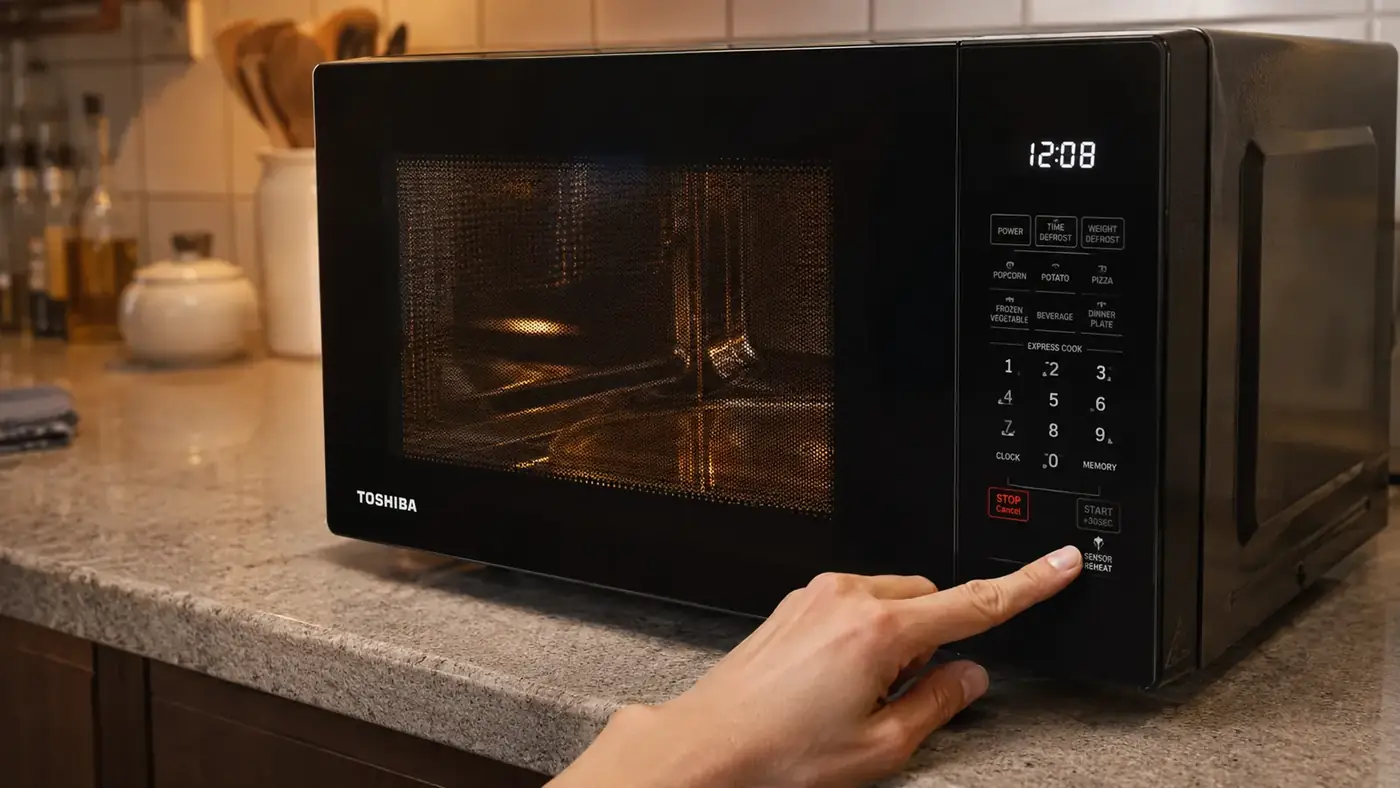
Amazon Check Today's Price on Amazon →The Toshiba arrived on a Wednesday, and I unboxed it right there on the counter where the old one had been for over a decade. Setup was really just plugging it in and wiping down the removable turntable, maybe ten minutes total. That evening I reheated the same kind of chicken thighs that had been disappointing me for years, hit the sensor reheat button instead of guessing at a time, and stood there watching through the door like I used to watch the dish machine on my old job.
The chicken came out warm all the way through, no rubbery ring around the edges, no cold center. I'm not going to pretend it was a religious experience over a piece of poultry, but after years of the same disappointment, it genuinely surprised me. The twelve auto menu settings mean I don't have to think much anymore, whether it's rice, frozen vegetables, or Hector's coffee at an hour when neither of us wants a beep echoing through the house.
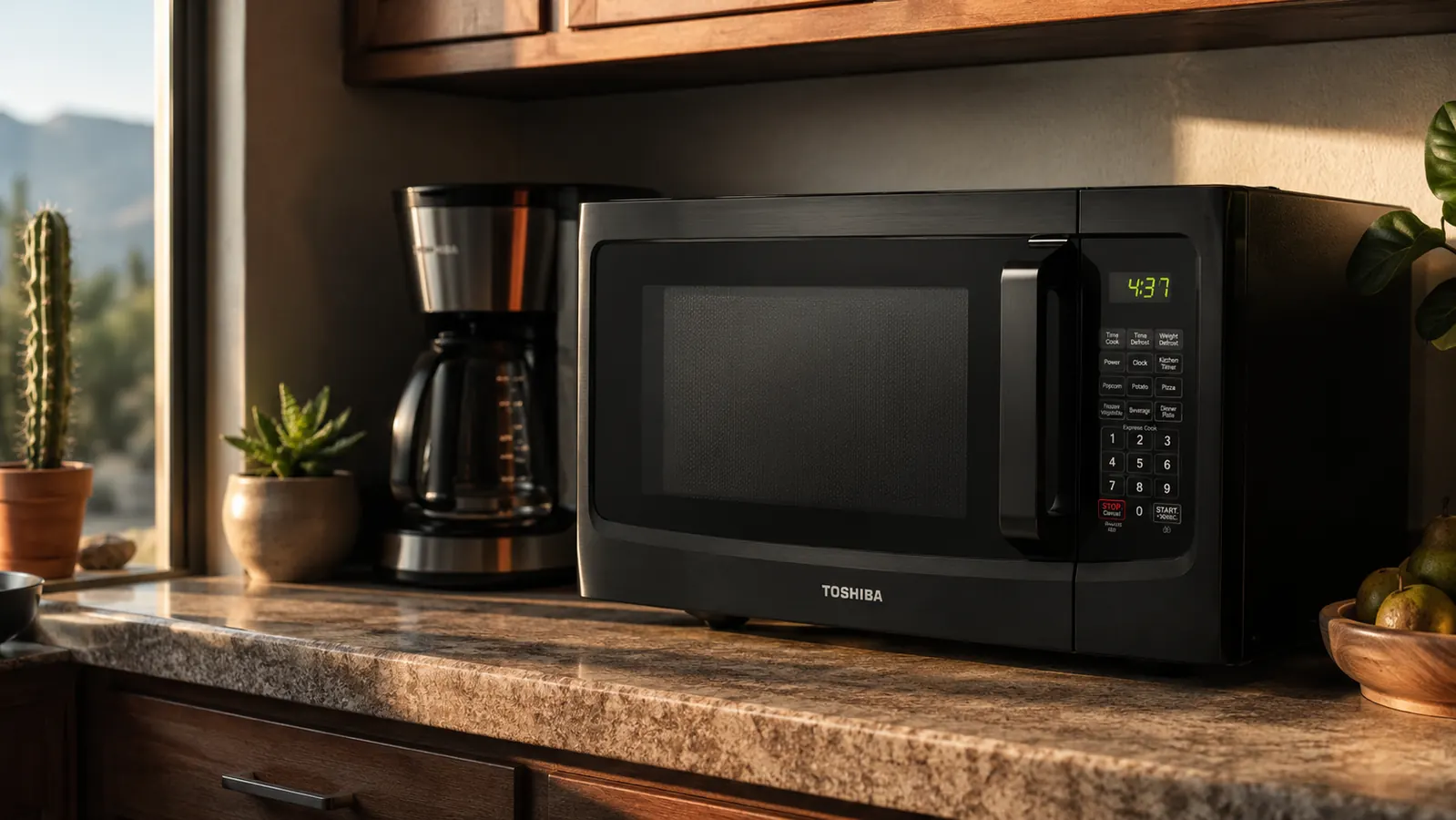
It isn't flawless. The interior light is dimmer than I'd like, and the ECO mode display shuts off between uses in a way that took me a week to stop finding annoying. I've also learned the sensor works best when I actually cover the plate, which is a habit I had to relearn after over a decade of not bothering. Small things, but I'd rather tell you the truth than pretend a microwave changed my life without any friction at all.
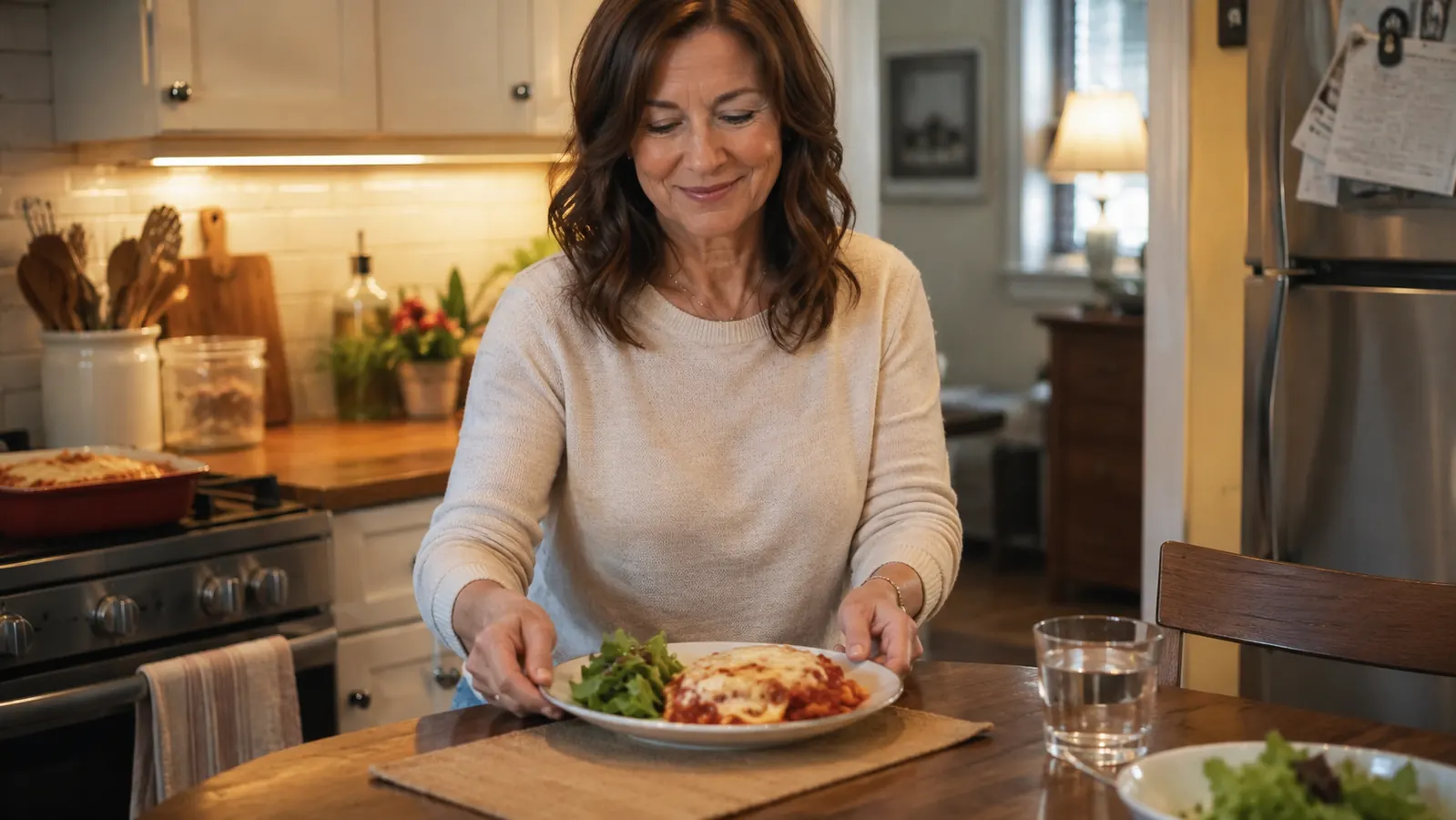
What did change is dinner around here. My daughter came back a month later for another Sunday visit, and I reheated the same kind of tray I'd embarrassed myself with before. This time she cleaned her plate without a single poke of the fork. Hector stopped complaining about cold spots in his lunch leftovers, and I stopped dreading the microwave the way I used to dread a broken piece of cafeteria equipment on a Monday morning.
What I'd Tell You If We Were Sitting at My Kitchen Table
If your leftovers have been coming out rubbery on the edges and cold in the middle for years, I'd tell you it probably isn't your cooking. It's likely the same thing it was for me, a microwave running on a timer instead of an actual sensor. I wouldn't tell you the Toshiba fixes every kitchen frustration you've got, because it won't. But if you're tired of poking at your own dinner wondering whether the center is even warm, I'd tell you it's worth the switch. After thirty years of feeding other people's kids off equipment that actually worked, it felt good to finally get that same reliability in my own kitchen.
Stop Guessing Whether the Middle Is Actually Warm
The Toshiba EM131A5C-BS's humidity sensor is the same fix that got rid of our years of rubbery, unevenly heated leftovers. See today's price before your next reheated dinner.
Amazon Check Today's Price on Amazon →