If you just want the short answer: my TOSHIBA EM131A5C-BS countertop microwave is still the one heating up leftovers on my Tucson counter, and after three weeks of running it head to head against a Panasonic NN-SN686S inverter model, I'd buy the Toshiba again for most kitchens. But "better for me" and "better for you" aren't automatically the same thing, and after thirty years running a school cafeteria kitchen for 600 kids a day, I've learned that the right appliance depends on what you actually do with it every morning, not what looks impressive on a spec sheet.
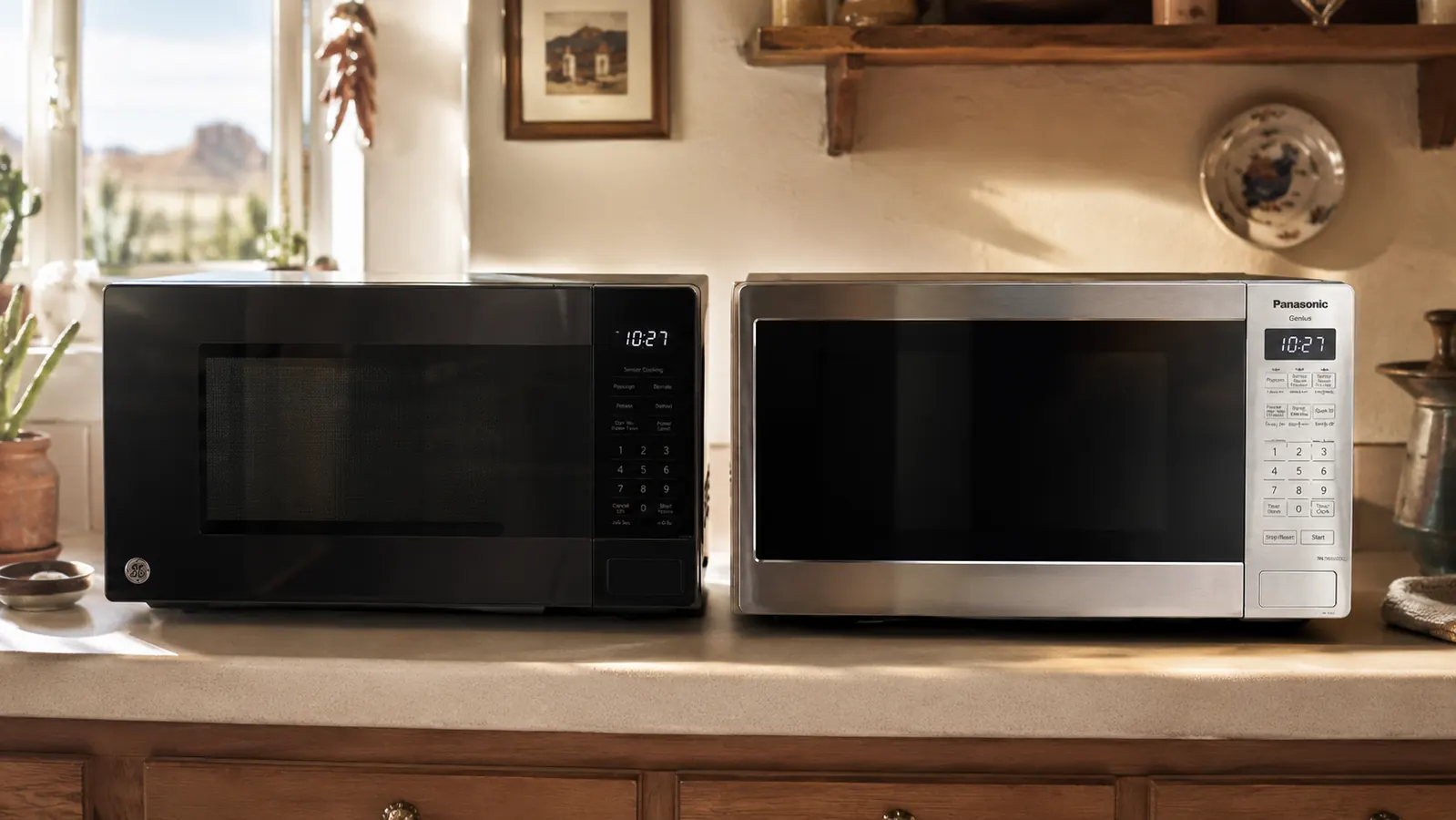
My neighbor Diane has run a Panasonic NN-SN686S inverter microwave in her casita kitchen for about eight months, so I borrowed it for three weeks and set it right next to my Toshiba on the same stretch of counter. Same outlet, same leftover carnitas, same bag of frozen chicken thighs, same half-cup of reheated coffee every morning. Both machines solve the same basic problem, getting food hot without drying it out or leaving a cold center, but they get there in genuinely different ways, and the differences showed up fast once I started paying attention instead of just pressing start and walking away.
| Toshiba EM131A5C-BS | Panasonic NN-SN686S | |
|---|---|---|
| Today's Price | The lower priced of the two, typically costs less | Consistently runs higher, the inverter technology carries a real premium |
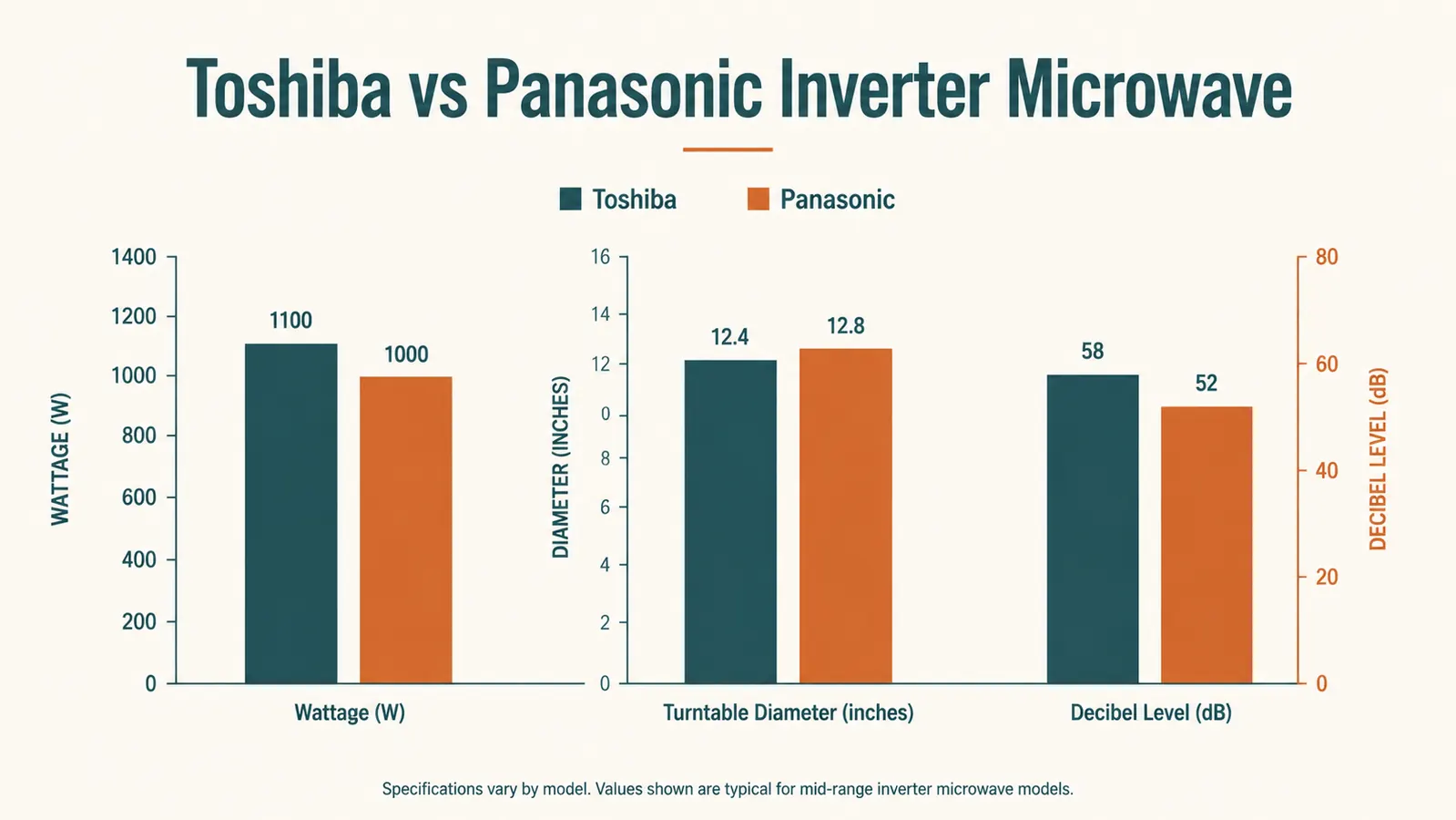
| Wattage | 1000 watts | 1200 watts with true inverter technology |
| Heating Technology | Smart Humidity Sensor reads steam output to auto-adjust cook time, traditional on-off magnetron cycling | Inverter delivers steady, continuous power at any setting instead of cycling full power on and off |
| Turntable Size | 12.4 inch removable turntable | 14.1 inch turntable, fits a dinner plate with less overhang |
| Auto Menus / Sensor Cook | 12 preset auto menus | Genius Sensor auto cook and reheat across a wider range of foods |
| Noise Level | About 58 decibels on high, plus a dedicated Mute button that silences beeps completely | About 60 decibels, no quick mute, must hold Stop/Reset for several seconds to silence beeps |
| Defrost Performance | Standard defrost by weight or time, needs a mid-cycle flip on larger cuts | Inverter Turbo Defrost, noticeably more even on frozen chicken and ground meat |
| Exterior Finish | Black stainless steel front, fingerprint resistant | Stainless steel front, shows fingerprints more easily |
| Best Suited For | Households that reheat more than they defrost and want a quiet-mornings mute button | Households that defrost frozen meat weekly and want the steadiest possible power |
Three Weeks Of Reheating The Same Leftovers
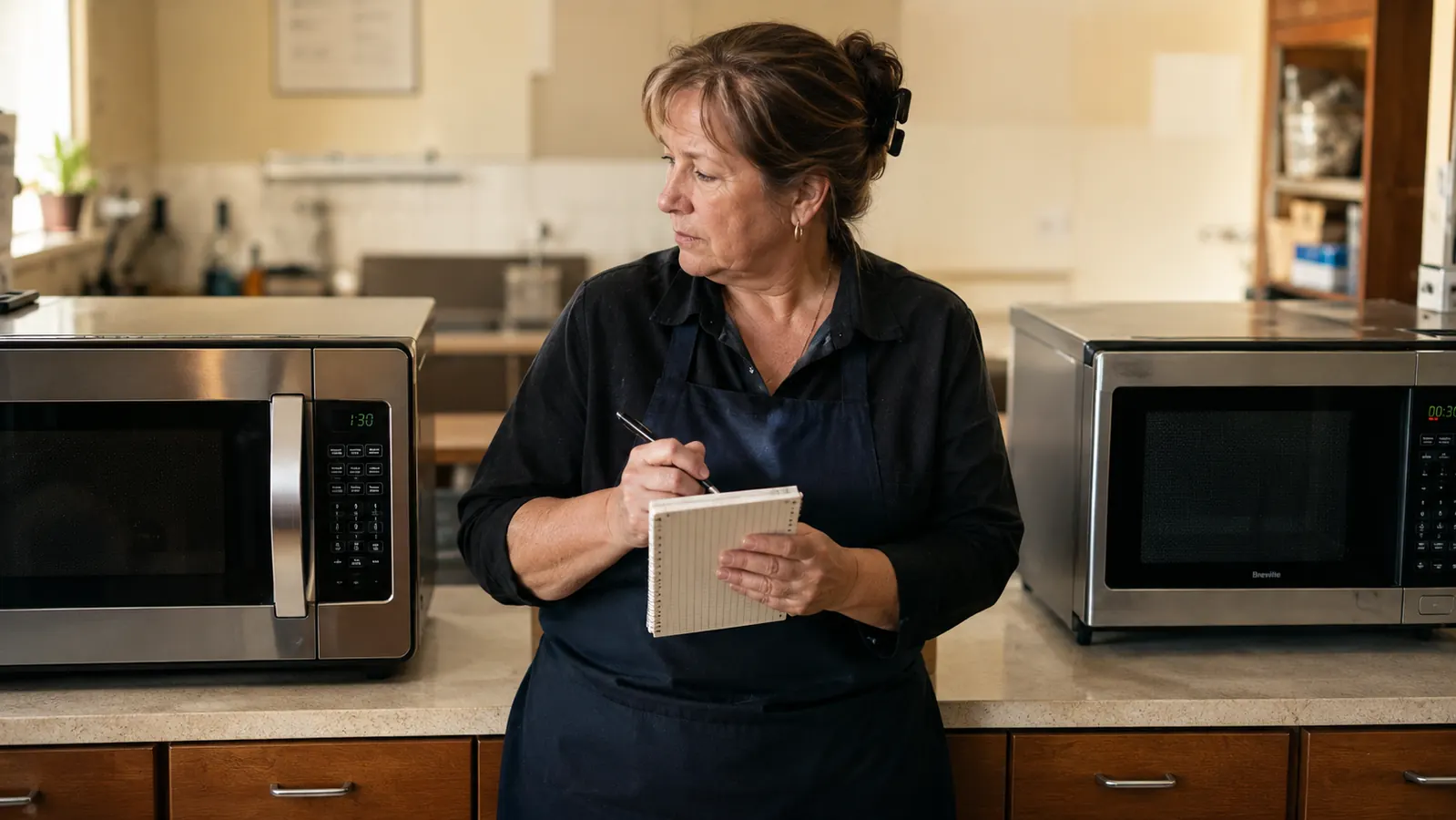
I ran both machines through the same test every single day for three weeks: a plate of last night's rice and beans, a mug of coffee that had gone cold on the counter, and on Sundays, a pound of frozen ground turkey straight from the freezer. I timed each cycle, checked the food's temperature with my own instant-read thermometer at the center and the edges, and wrote everything down in the same kind of notebook I used to log cafeteria equipment for three decades. That habit doesn't turn off just because I retired.
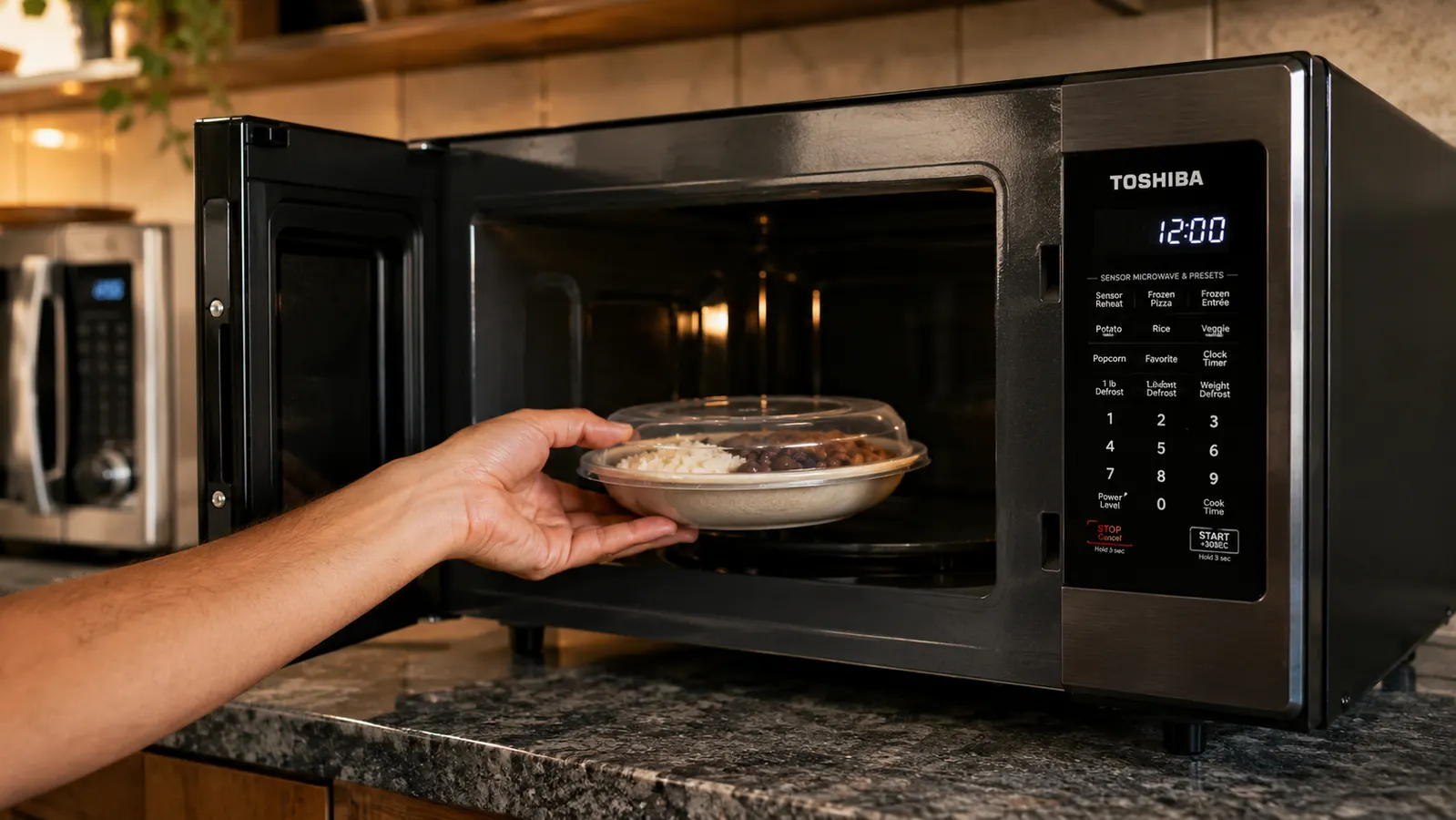
The Toshiba's Smart Humidity Sensor reads the steam coming off the food and adjusts cook time automatically, which sounds like marketing language until you actually watch it work. My rice and beans came out evenly warm edge to center on the Toshiba nine times out of ten test runs. The Panasonic doesn't use a humidity sensor at all, it relies on its Genius Sensor and inverter technology instead, and it also did a solid job, just with slightly more variation between the outer ring of the plate and the middle.
Capacity and Everyday Fit
Both machines share the same 1.2 cubic foot capacity, which comfortably fits a large dinner plate, a family-size casserole dish, or two mugs side by side, but the footprint on my counter tells a different story. The Toshiba EM131A5C-BS sits a touch narrower than the Panasonic NN-SN686S, and on my older 1962-era counter that extra couple of inches on the Panasonic's cabinet meant I had to shift my coffee maker over every time Diane's unit sat next to mine for testing.
Neither microwave is going to disappear into a small kitchen, but if counter space is genuinely tight, that narrower Toshiba footprint adds up over months of daily use. I've also found the Toshiba's black stainless front hides water spots and fingerprints far better than the Panasonic's brushed stainless, which showed every smudge from my grandson's hands within a day of him visiting for the weekend.
Where Toshiba Wins
Price is the clearest win for the Toshiba, and it's not close. At today's price, the Toshiba EM131A5C-BS runs meaningfully less than the Panasonic NN-SN686S, and for a countertop microwave that's going to spend most of its life reheating coffee and last night's dinner, I don't think the Panasonic's inverter technology earns back that gap for most households. The Toshiba also includes a genuine Mute function, a small button that silences every beep permanently until you turn it back on, which matters more than it sounds like it should when you're microwaving oatmeal at 5:30 in the morning before anyone else in the house is awake.
The Toshiba's Smart Humidity Sensor also earned its keep across three weeks of testing. Reheating is the single most common thing any home microwave actually gets used for, more than defrosting, more than cooking from scratch, and the Toshiba's sensor consistently produced more even results on rice, soup, and leftover casserole than the Panasonic did on the same dishes. ECO Mode is another small but real point in Toshiba's favor, it drops the display and standby power automatically, something the Panasonic doesn't offer at all.
Where Panasonic Wins
The Panasonic NN-SN686S earns its reputation on defrosting, and that's not a small thing if you cook with frozen meat regularly. Its Inverter Turbo Defrost delivers steady, continuous power instead of the full-power-then-off cycling a traditional magnetron like Toshiba's uses, and on Diane's pound of frozen ground turkey, the Panasonic thawed it noticeably more evenly, with less of that gray, partially-cooked ring around the edges that shows up on standard defrost settings. If your household goes through frozen chicken thighs or ground beef every week, that's a real, repeatable advantage.
The Panasonic's 1200 watts also cooked from-scratch dishes a touch faster than the Toshiba's 1000 watts, and its larger 14.1 inch turntable fit a full dinner plate with less overhang than the Toshiba's 12.4 inch turntable managed. Diane also likes that the Panasonic's Genius Sensor covers a wider range of specific foods in its automatic settings than the Toshiba's 12 preset auto menus. None of that changed my own preference after three weeks, but if inverter technology and defrosting performance matter more to you than price, the Panasonic is a genuinely well-built machine and I won't pretend otherwise.
Tired of Guessing Whether a Microwave Will Actually Heat Evenly or Just Look Good on the Box?
After three weeks running the Toshiba EM131A5C-BS side by side against a Panasonic inverter model on the same leftovers, the Toshiba came out ahead for anyone who reheats more than they defrost. See today's price and current availability before you decide.
Amazon Check Today's Price on Amazon →Defrosting: The Biggest Real Difference
If there's one category where I'd tell a friend to seriously consider the Panasonic over my own Toshiba, it's defrosting frequency. Diane cooks with frozen ground turkey and chicken thighs several times a week, and she's convinced the Panasonic's Inverter Turbo Defrost is the reason she stopped finding that half-cooked ring around the edges of her meat. I use my Toshiba's defrost setting maybe twice a month, since I do most of my grocery shopping fresh out of habit from thirty years of cafeteria menu planning, so the gap matters far less to me than it would to her.
I ran the same pound of frozen ground turkey through both machines on a Sunday, timed identically by weight. The Panasonic came out with a more consistent, workable texture all the way through, no icy center, no cooked edges. The Toshiba's standard defrost setting got the job done, but I had to flip and rotate the meat halfway through to avoid the outer edge starting to cook while the center stayed cold. It's not a dealbreaker, but if defrosting is a weekly habit in your kitchen rather than an occasional one, weigh that honestly before picking the cheaper option.
Noise, The Mute Button, and Early Mornings
By my own kitchen meter, the Toshiba runs about 58 decibels on its highest power setting, and the Panasonic came in around 60, close enough that most people wouldn't notice the difference in a normal kitchen. What actually matters more day to day is the Toshiba's dedicated Mute button, which silences every beep completely until you switch it back on. The Panasonic has no equivalent, you have to hold the Stop/Reset button down for several seconds to quiet it, and it resets back to full volume the next time you open the door. In a house where someone's still asleep at 5:30 a.m., that difference showed up every single day of my three-week test.
Long-Term Reliability
My Toshiba is coming up on four months of daily use in my kitchen, roughly three to four cycles a day between reheating and the occasional bag of popcorn, and I haven't had a single hiccup. Diane's Panasonic is at eight months with similarly heavy daily use, and her only complaint is that the turntable motor makes a faint grinding noise when the plate is loaded off-center, something she's learned to avoid by centering dishes carefully every time she sets one down.
Neither of us has needed a repair call yet, and neither machine shows the kind of early wear that would make me steer someone away from either brand. But eight months and four months aren't a lifetime test for either appliance, so I'd treat both as solid, well-reviewed machines rather than bulletproof ones. If anything, the fact that neither the Toshiba nor the Panasonic has broken down under genuinely heavy daily reheating and defrosting says more about how far countertop microwave technology has come than it does about one specific brand.
Two microwaves, the same reheated coffee, the same frozen chicken thighs. The Toshiba won on price and quiet mornings. The Panasonic won on thawing meat evenly. Neither one is the wrong answer, they're just answers to different questions.
Who Should Buy Which
Buy the Toshiba EM131A5C-BS if you reheat more than you defrost, want a genuine mute button for early mornings, and would rather save money at today's price than pay extra for inverter technology you'll rarely notice on a bowl of soup. That's most households, and it's why my Toshiba is still the one sitting on my counter after three weeks of direct comparison.
Buy the Panasonic NN-SN686S if you cook with frozen meat multiple times a week and inverter-even defrosting is worth the higher today's price to you. It's a genuinely solid machine, Diane's had eight good months with hers, but I'd only choose it over the Toshiba if defrosting frequency, not reheating, is what your kitchen actually revolves around.
Ready to Stop Reheating Food Unevenly and Just Pick One?
Between the two, the Toshiba handled everyday reheating, quiet mornings, and today's price better than the pricier inverter model. Check its current availability before it changes.
Amazon Check Today's Price on Amazon →