Before I bought the Toshiba EM131A5C-BS, I read something like forty Amazon reviews, and nearly every glowing one read like it was written the first week the box got opened. That's not how you actually learn what a microwave is like to live with. Thirty years running a cafeteria line for six hundred kids a day taught me that any piece of kitchen equipment looks great in month one. The real story shows up on day ninety, day one-forty, the day the novelty wears off and you stop reading the manual and start mashing buttons out of habit like everyone else does. So this isn't the sunny six-month feature tour. This is what nobody selling you a Toshiba countertop microwave bothers to mention, the stuff I only found out by actually living with mine.
My sister Connie talked me into the Toshiba after her old Sunbeam died mid-Thanksgiving, of all the times for a microwave to quit. I'd already been eyeing the EM131A5C-BS for its smart humidity sensor and its 1000 watts, solid numbers for a single-cavity unit at a fair price point. I ordered it in early January, and by the time I sat down to write this, I'd run it through five months of real cooking for two adults and, most weekends, two grandkids who eat like they're still growing into their shoes. I'm not a gadget reviewer. I fed institutional kitchens for three decades. I know when a Toshiba, or any brand, is actually solving a problem versus just slapping a light-up screen on the same old timer.
The Quick Verdict
The Toshiba's humidity sensor is legitimately good at reading wet foods, but the auto-menu buttons oversell precision they don't quite deliver, and the counter footprint is bigger than the spec sheet makes it feel.
Amazon Check Today's Price →Read the glowing reviews, then read this one
The Toshiba EM131A5C-BS is a genuinely capable microwave once you know its quirks going in. Check today's price on Amazon and decide with the full picture, not just the five-star highlight reel.
Amazon Check Today's Price on Amazon →How I Actually Tested It
I didn't keep a paper log this time. I used the Notes app on my phone because that's what actually sticks for me day to day, not a clipboard taped to a cabinet. Over five months I counted 142 uses I bothered to write down, everything from reheating a bowl of albondigas soup to melting butter for cornbread on a Sunday. I didn't log the routine coffee reheats because Connie would've told me I'd finally lost it, and she'd have been right.
The conditions were ordinary, which is the point. Two adults on weekdays, two grandkids most weekends who want mac and cheese reheated and frozen waffles defrosted in a hurry before the bus. I ran the Toshiba through tamales, leftover enchiladas, oatmeal, single baked potatoes, bags of mixed vegetables, and the occasional bag of popcorn on a Friday night, the same mix any two-person household with grandkids around actually cooks, not a lab test menu.
What I cared about wasn't whether the Toshiba could reheat soup. Every microwave can reheat soup. I cared about where it quietly failed, the places the spec sheet and the five-star reviews don't cover, because that's where you actually decide if the appliance was worth the outlet space it took up.
What the Spec Sheet Doesn't Tell You
The humidity sensor is real and it does work, I'll give Toshiba that much credit up front. It reads the steam coming off food and cuts the cycle instead of running blind on a timer. But here's what nobody warns you about, it can overcorrect. Twice in five months I filled a bowl of oatmeal too close to the rim, and the sensor detected steam so fast it stopped the cycle early, leaving the oats underdone in the center. That's not a flaw exactly, it's a limitation of trusting steam readings over actual food temperature, and the box doesn't mention it anywhere.
There's a second wrinkle with the sensor that took me a month to notice. Reheating anything loosely covered in foil, which I do sometimes with tamales to keep the husk from drying out, confuses the humidity reading. The Toshiba either stops way too early, leaving the center lukewarm, or runs long because the foil traps steam unevenly. I had to switch to a microwave-safe cover with a vent instead of foil, which fixed it completely, but that's a workaround I had to figure out myself after two cold-centered batches.
So the honest verdict on the sensor is this. It's a genuine upgrade over a dumb timer for most wet, uncovered foods, casseroles, soups, vegetables with sauce. It gets confused by foil and by very full bowls. Toshiba markets it as smart, and it mostly is, but smart still needs you to load the microwave the way it expects.
The Auto-Menu Buttons Nobody Warns You About
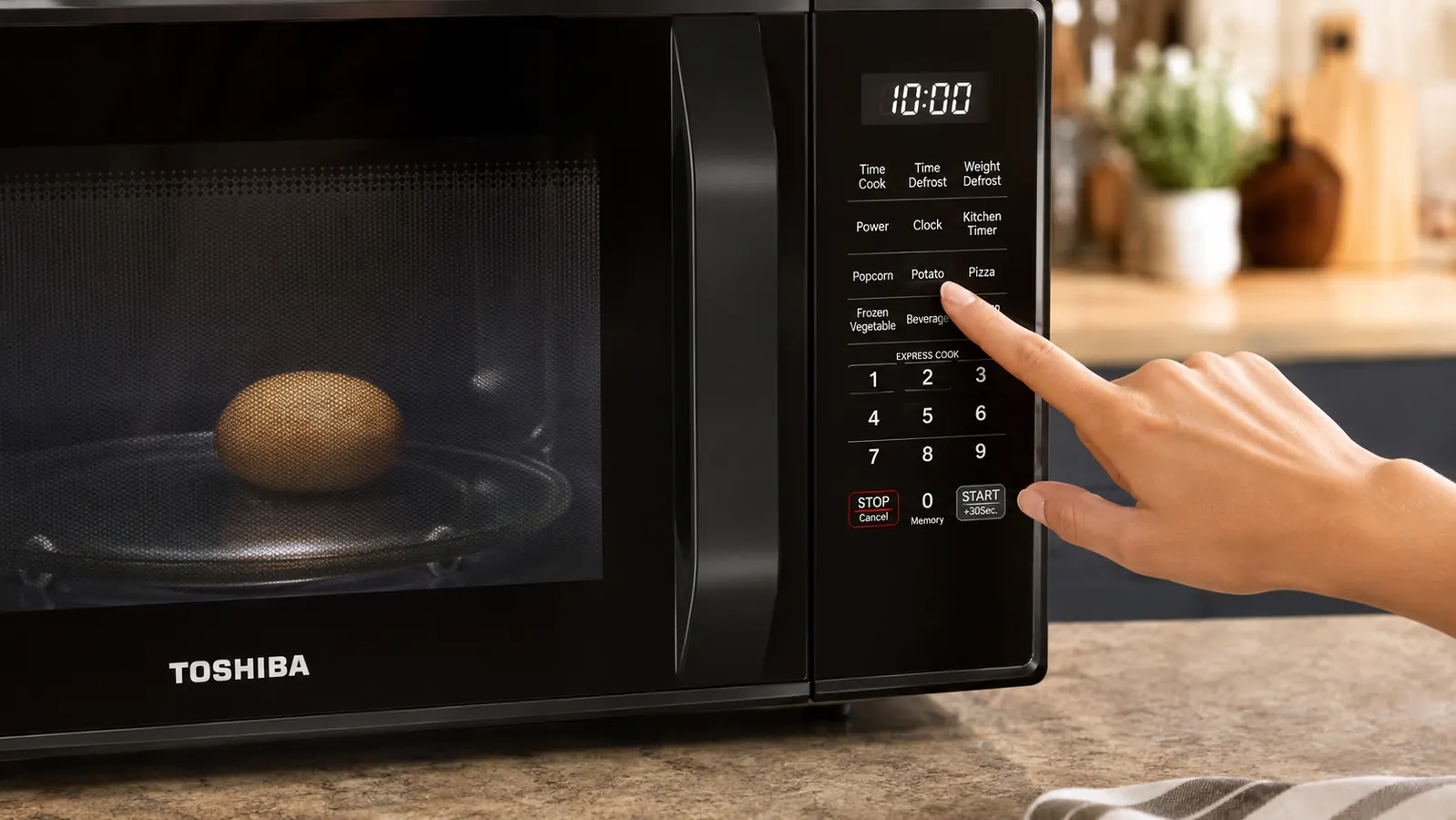
Toshiba built twelve auto-menu buttons into this unit, and the potato button is the one that surprised me most, in a bad way. It's calibrated for what I'd call a standard baking potato, somewhere around eight to ten ounces. Run it on the small red potatoes I usually cook, closer to four ounces, and it overcooks them almost every time, drying the outer inch into something closer to jerky while the center is fine. I tested this six separate times with small potatoes before I gave up and started shaving thirty seconds off the auto cycle manually.
The frozen vegetable button has the opposite problem. It runs a touch aggressive for a single-serving bag, which meant broccoli that came out slightly waterlogged more often than not, edges going mushy before the center caught up. The beverage button, by contrast, is dialed in tightly for one specific mug size, roughly eight ounces. Fill a bigger mug and it consistently underheats. None of this is disclosed anywhere in the manual beyond a vague reference to average serving sizes.
Of the twelve auto-menu buttons on the Toshiba, I ended up relying on exactly three with any real confidence, popcorn, frozen pizza, and the manual sensor-cook setting rather than most of the individual food presets. That's not unusual for microwaves in this price range, but reviewers rarely admit it, and I'd rather you know it going in than discover it the way I did, one overcooked potato at a time.
The First Two Weeks Nobody Talks About
Unboxing gets skipped in most Toshiba reviews, which is odd, because the first two weeks tell you a lot about quality control. Mine arrived with the packaging slightly crushed on one corner from shipping, the turntable support ring rattling loose inside the cavity rather than seated properly. Nothing was cracked, but I spent a good ten minutes on the phone with Connie comparing notes because she'd had the same loose-ring issue with hers, ordered from a different batch entirely. It clicked into place fine once I found the notch, but the instructions never mention that the ring can ship unseated, and I've seen enough Amazon complaints about a cracked turntable arriving in pieces to know ours wasn't the worst outcome by a long shot.
The control panel buttons also needed a break-in period I wasn't expecting. For the first week or so, three of the auto-menu buttons required a firmer press than the rest to register, especially popcorn and potato, the two I use most. By week three that inconsistency had mostly worked itself out, whether from the membrane settling or just my hands learning exactly where to press. Small thing, but if your first impression is a button that seems to skip half your presses, know that it likely isn't defective, it may just need a couple weeks to loosen up.
Alternatives I Actually Considered First
I didn't jump straight to the Toshiba. I looked hard at a Panasonic inverter model first, since inverter technology is supposed to deliver steadier power instead of the on-off cycling most microwaves do. The Panasonic ran close to double what the Toshiba cost at the time, and reviews suggested the sensor cook mode wasn't dramatically more accurate than what Toshiba offers, just a different way of delivering the wattage. For two people and occasional grandkid meals, I couldn't justify the gap.
I also looked at a basic GE countertop model and a Farberware unit, both cheaper than the Toshiba. Neither had a real humidity sensor, just timer-based presets with fancier button labels, which is exactly the trap I spent thirty years watching cafeteria vendors set for school districts. Pretty control panel, same dumb timer underneath. The Toshiba was the only one in my price range with sensor technology that actually reads the food instead of guessing.
What tipped it for me wasn't marketing copy, it was Toshiba's name being attached to commercial kitchen equipment I'd used briefly during a district upgrade years ago. That history bought a little trust, and mostly it held up. Mostly.
The Real Numbers After Five Months
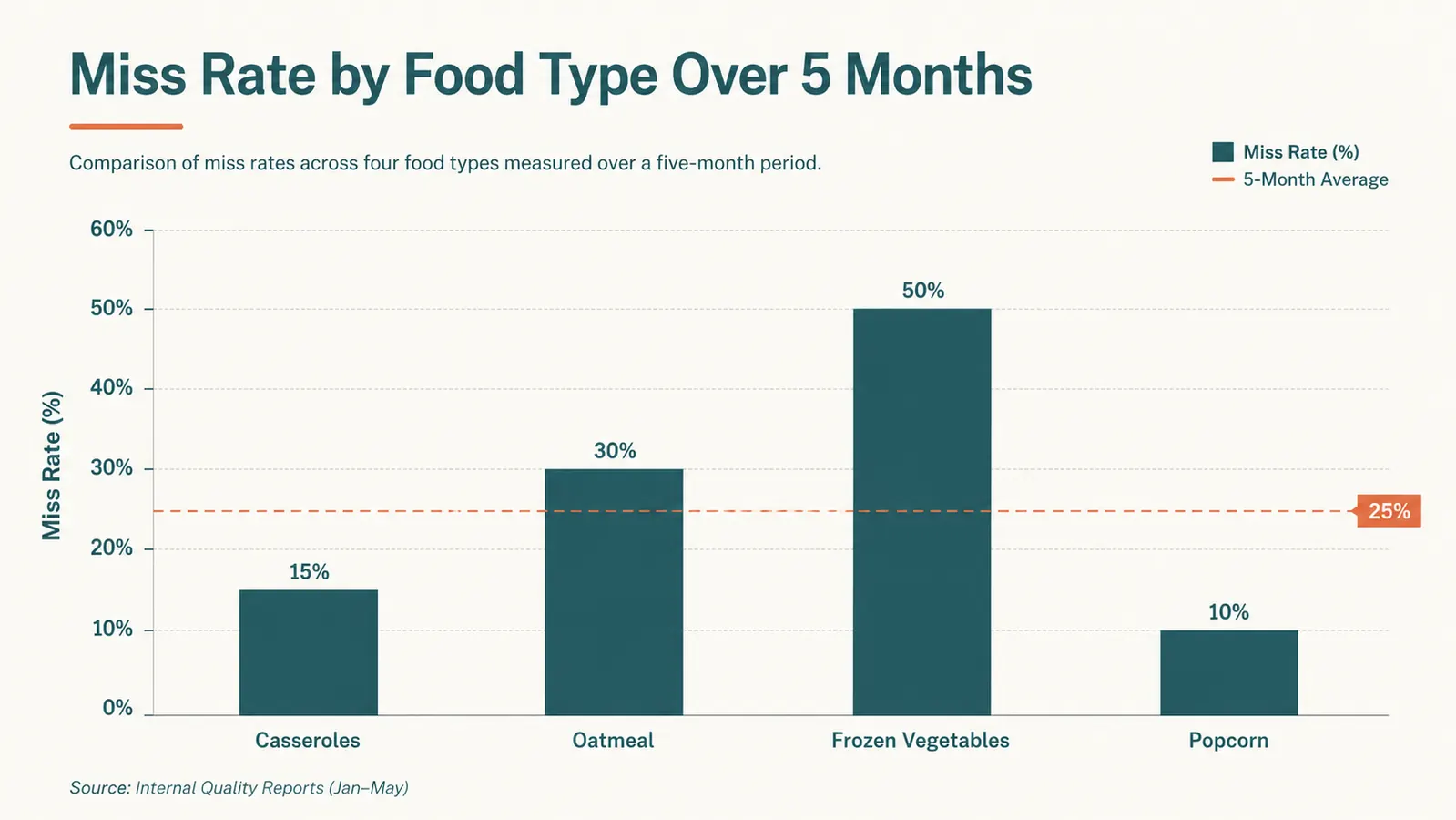
Out of 142 logged uses, I counted 19 misses, meaning the food came out either noticeably uneven, overcooked at the edges, or undercooked at the center in a way that mattered. That's a miss rate right around 13 percent, worse than I expected given how much I liked the sensor mode on paper. Most of those misses clustered around the potato button and the foil-covered reheats I mentioned earlier, not random failures spread evenly across everything.
Defrosting deserves an honest word too. The Toshiba asks for the food's weight before running the weight-based defrost cycle, and when I actually weighed a package of ground turkey or a bag of tamales first, it worked well, no cooked edges, no icy centers. The catch nobody mentions is that estimating weight without a kitchen scale, which is how most people actually use a microwave defrost setting, introduces enough error that results get inconsistent. I own a scale from my cafeteria days. Most people I know don't, and guessing wrong by even two ounces changed the outcome more than I expected.
Popcorn was the one bright spot with almost no asterisk. Across roughly twenty bags over five months, I had exactly one scorched batch, and that was because I grabbed the wrong button in a hurry, not a machine failure. If popcorn is your main use case, the Toshiba earns its keep there without much argument.
Where the Price Tag Catches Up to You
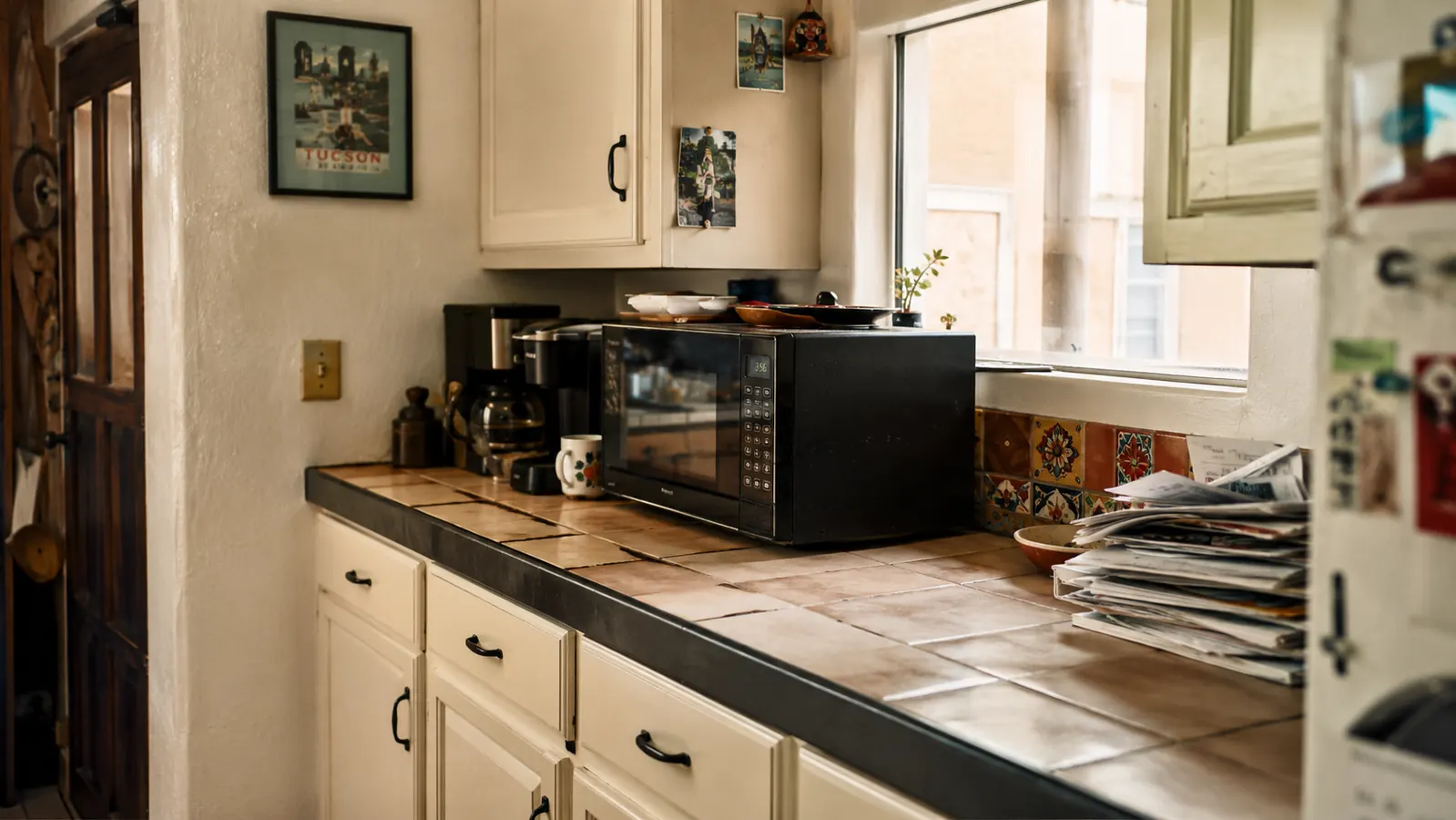
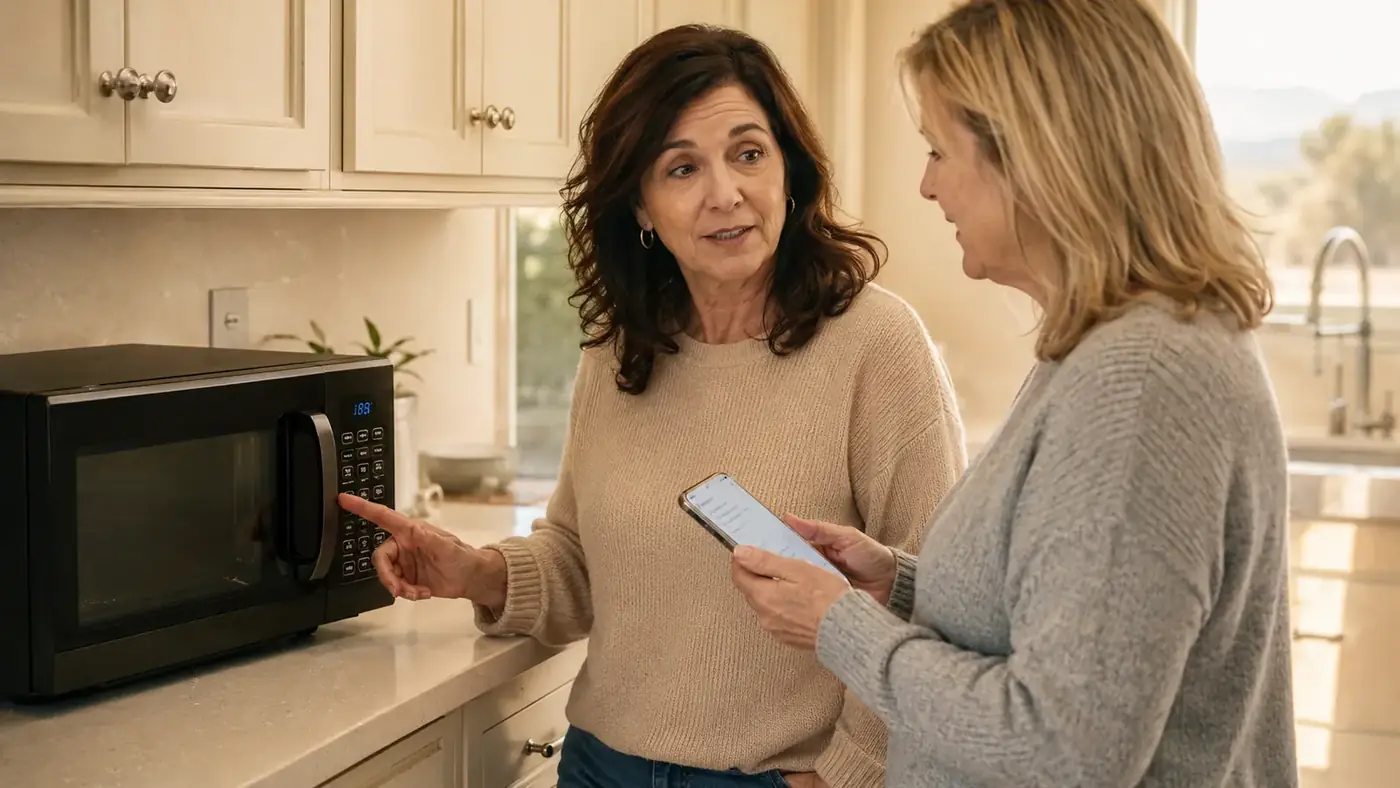
Nobody mentions how much counter space this thing actually eats. The spec sheet lists 1.2 cubic feet like it's compact, but the exterior footprint is wider and deeper than that number suggests once you account for ventilation clearance on both sides. In my galley kitchen it crowds the coffee maker enough that I have to slide one appliance over every time I use the other, which gets old faster than I expected for a microwave marketed toward smaller kitchens.
Plate size is the other thing nobody warns you about. My everyday dinner plates, a plain ten-inch set I've had for years, don't sit flat on the removable turntable without tilting slightly against the interior wall. I have to angle them just right or the turntable catches. It's a small annoyance you only discover after the box is already unpacked and the return window feels less appealing than it did on day one. The door also swings toward my stove rather than away from it, an orientation issue that has nothing to do with performance and everything to do with kitchen layout, but it's exactly the kind of detail that never shows up in a five-star review written the first week.
None of this makes the Toshiba a bad microwave. It makes it a microwave with real tradeoffs that the glowing reviews skip past because most people write those reviews before the quirks have had time to surface.
What I Liked
- Humidity sensor genuinely reads moisture on uncovered wet foods and adjusts the cycle accordingly
- Popcorn button performed reliably across roughly twenty bags with only one user-error scorch
- Weight-based defrost is accurate when you actually weigh the food first
- Toshiba's commercial-kitchen pedigree held up better than cheaper timer-only competitors I considered
- ECO mode and mute function are real, functional additions, not just marketing bullet points
Where It Falls Short
- Potato and frozen vegetable auto-menu buttons are calibrated for one serving size and miss noticeably outside that range
- Humidity sensor gets confused by foil covering, leading to cold centers or overrun cycles
- Actual counter footprint is larger than the 1.2 cubic foot spec implies once you add clearance
- Standard ten-inch dinner plates don't sit fully flat on the turntable without careful angling
- Some units arrive with the turntable support ring seated loose and need a short break-in period on the control panel
Every microwave can reheat soup. What I cared about was where the Toshiba quietly failed, the places the five-star reviews never mention because nobody's owned it long enough to find them.
Who This Is For
If you cook uncovered, sauced, moisture-heavy meals, casseroles, soups, vegetables, the Toshiba's sensor genuinely earns its reputation and will beat a timer-only microwave at the same price without much of a contest. It's also a strong pick if popcorn or basic reheating is your main use, and if you already own a kitchen scale or don't mind buying a cheap one to make the defrost setting worth using. Anyone coming from a purely dumb-timer microwave, the kind that just runs blind for however long you punch in, will notice the difference within the first week the way I did.
Who Should Skip It
If your kitchen counter is already tight, measure the real footprint before you buy, not just the cubic foot number, because it runs bigger in practice than the listing suggests. If you cook a lot of foil-wrapped leftovers or reheat food covered rather than open, the sensor's main advantage gets undercut and you'll be better served by a straightforward timer model at a lower price. And if you're hoping the auto-menu buttons will handle odd serving sizes without adjustment, plan on tweaking them yourself the way I eventually did, because Toshiba calibrated most of them to one standard portion, not to how your actual household eats.
Now you know what the five-star reviews left out
The Toshiba EM131A5C-BS earns its price once you know its quirks going in. See today's price on Amazon and decide with the full picture.
Amazon Check Today's Price on Amazon →